


Chichibu & Nagatoro Self-Drive Route: A Day from Tokyo for the Misotsuchi Icicles or Hitsujiyama Moss Phlox
The short answer first: you cannot see the Misotsuchi icicles and the Hitsujiyama moss phlox on the same day. The ice peaks in January and February, the flowers from mid-April to early May. These are two different trips, so this article gives you two different one-day plans.
The second thing to know is that the toughest competitor on this route is not the road but Seibu Railway. The limited express from Ikebukuro reaches Seibu-Chichibu in about 80 minutes, which is no slower than driving. GoodCars rents cars, yet if you only want the flowers or only want Nagatoro, we will tell you to take the train. A car earns its keep when you have snow-driving experience and want to link a remote stop like Misotsuchi with Nagatoro in one day. All timings here assume a GoodCars pick-up at Kinshicho Station, where the booking page offers 08:00–20:00. Those twelve hours shape everything below.

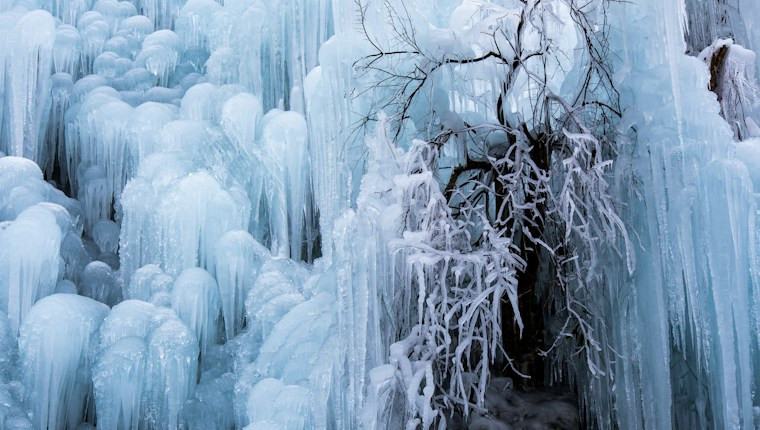
The ice needs days of hard cold, so check the official photos of the season before you set off (illustrative image)
Check the season: ice and flowers are two trips, not one
| Compare | Misotsuchi icicles | Hitsujiyama moss phlox |
|---|---|---|
| Best time | Usually mid-January to mid-February | Usually mid-April to early May |
| Open (last season) | Jan 9–Feb 23, 8:30–17:00; lit up until 19:00 on weekdays, 20:00 on weekends and holidays | Paid period from Apr 10, 8:00–17:00 |
| Admission (last season) | Adults 300 yen, elementary pupils 200 yen | 500 yen, free for junior high age and under |
| Parking (last season) | Paid lots beside the site; the official flyer lists no price | Standard cars 700 yen, about 300 spaces |
| Main road problem | The road surface may be icy | Traffic jams |
| Worth driving? | Only with snow-driving experience | No; the city itself asks you to use trains |
Everything in this table comes from last season, so go by the official notice for the next one. Admission and parking for the moss phlox went up only last season. The flowers do not wait either: by May 2 the city showed every area as past its peak and made entry free from May 1, so do not treat Golden Week as a sure thing.
Car or Seibu train: an honest comparison
The driving column below starts at Kinshicho Station and the train column at Ikebukuro. If you are staying in east Tokyo, add your trip to Ikebukuro.
| Destination | Driving | Train |
|---|---|---|
| Hitsujiyama Park | About 1.5 to 2 hours to Hanazono IC, then about 25 km | About 80 minutes by limited express, then a walk of about 20 minutes from Seibu-Chichibu |
| Nagatoro | About 1.5 to 2 hours to Hanazono IC, then about 30 minutes | About 80 minutes by limited express, a 5-minute walk, then about 20 minutes on the Chichibu Railway |
| Misotsuchi | About 1.5 to 2 hours to Hanazono IC, then about 2 hours according to the official flyer | About 80 minutes by limited express, then about 40 minutes on the Mitsumine Shrine bus, which runs only a limited number of times a day |

The train reaches small stations deep in the hills with no ice to worry about and no parking to find (illustrative image)
The money tells the same story. A Laview limited express ticket from Ikebukuro to Seibu-Chichibu costs 900 yen. Holders of non-Japanese passports can buy the SEIBU 1Day Pass + Nagatoro for 2,000 yen, covering Seibu lines plus the Chichibu Railway from Nogami or Nagatoro to Mitsumineguchi; limited express tickets are extra and buses are not included. By car, round-trip expressway ETC tolls come to about 6,400–6,780 yen. Add 860 yen return for the Minano-Yorii Toll Road after you leave the expressway and the total is about 7,300–7,600 yen. With the toll road included, that is roughly what two people pay for the pass plus return limited express tickets, before any rental cost or fuel. Come back through Nagatoro without the toll road and you pay 430 yen less.
So this is how GoodCars sees it. Driving in winter has two preconditions: you already have real snow-driving experience, and you can confirm winter tyres when you book. If either is missing, take the train and bus. Only when both are met do the benefits count: you can link Misotsuchi and Nagatoro on the same day without several changes by train and bus, and groups of three or more, or people travelling with children or older relatives, can cut down on changes and walking. In other cases, including the moss phlox season, the train is better. For a two-day trip, compare the Karuizawa and Nikko self-drive routes, which use the same Gaikan Expressway.
Driving from Kinshicho: the real work starts after Hanazono IC
Take the outer route rather than crossing central Tokyo: Shuto Expressway Route 7 eastbound, then Keiyo Road, the Gaikan Expressway and the Kan-Etsu Expressway. NEXCO's official toll search gives about 111 km to Hanazono IC and about 1 hour 22 minutes in free-flowing traffic. With forecast traffic and a start around 08:00, allow about 1 hour 30 to 50 minutes on Saturdays and about 2 hours on weekdays, when the Gaikan backs up in the morning; Sundays show no forecast delay. One-way ETC tolls for a standard car are about 3,200 yen at weekends and about 3,390 yen on weekdays, and long weekends may not get the holiday discount. The route through the city center is 19 km shorter. It saves only 5 to 7 minutes in free-flowing traffic and up to nearly 30 minutes on a weekday morning, but it takes you onto the Inner Circular Route. We still suggest the outer route because it is easier to drive, not because the times are similar. For more on leaving town, see Kinshicho vs Chiba Station pick-up; for expressway basics, see the Tokyo and Kanto car rental guide. Whether an ETC card is available depends on the supplier; if it is, we suggest taking one, for the reasons in our expressway and ETC guide.

The outer route is straightforward; the sticking points come after you leave the expressway (illustrative image)
- Have cash or Suica ready for the Minano-Yorii Toll Road. The operator lists only cash, coupon tickets and transit IC cards such as Suica, and ETC is not on the list. A standard car pays 430 yen and saves about 15 minutes on average.
- A section of Route 140 in Chichibu city is closed. Work to remove the Chichibu Overpass has moved traffic onto a detour around Roadside Station Chichibu, and the official schedule still has more than a year to run.
- You need not cross the city to reach Misotsuchi. Saitama Prefecture publishes a wide detour: from the Otsuka intersection in Minano, take Prefectural Routes 44 and 72 to the Tomoegawa Bridge intersection, then rejoin Route 140. Use it to sanity-check your navigation.
- Navigation targets. The official address for Hitsujiyama Park is 6360 Omiya, Chichibu. The city asks you to stay on the main national road because the side streets are narrow and scrapes are common. For Misotsuchi, enter the Woodroof Okuchichibu Auto Camp site at 4066-2 Otaki, Chichibu, phone 0494-55-0500.
Check Kinshicho Station pick-up
A winter day: how to plan the Misotsuchi icicles
The Misotsuchi icicles form on the right bank of the Arakawa River, about 50 m wide and 8 m high, from water seeping through the rock. A few warm days are enough to spoil them. During the season, the city's official tourism site Chichibu Kanko Navi posts daily photos, so look before you go.
| Time | Plan |
|---|---|
| 08:00 | Collect the car at Kinshicho Station and check the tyres in person |
| Around 10:00 (weekdays about 10:15) | Leave the expressway at Hanazono IC with cash or Suica ready for the toll road |
| Around 12:00 (weekdays about 12:15) | Reach Misotsuchi and spend about 1 hour at the ice |
| 13:15 | Leave; Roadside Station Otaki Onsen nearby has a restaurant |
| Around 14:45 | Nagatoro for the rocks or the ropeway (skip it if you are tired) |
| 16:00 | Leave Nagatoro on Route 140 towards Hanazono IC |
| Around 18:15 | Back near Kinshicho to refuel and return the car |
That is more than 7 hours behind the wheel for about 1 hour at the ice. If this is your first drive in Japan, or you have no snow-driving experience, GoodCars advises against this plan. Mitsumine Shrine lies in the same direction at about 1,100 m, and it also asks for winter equipment. Please do not add it to this day; in winter, go by bus.

The ice changes daily, and in a warm winter it shrinks noticeably towards the end (illustrative image)
Winter tyres are a condition, not a bonus
Chichibu city's official winter page is blunt: the road may be icy, so come with winter equipment such as studless winter tyres. Saitama police also warn that driving on snow or ice without anti-skid measures is a violation, with a 6,000 yen penalty for a standard car. Japan Meteorological Agency normals put the January minimum in Chichibu city at about minus 3.8 degrees, with 5 to 6 days of snow in each of January and February, and Misotsuchi lies deeper in the mountains.
GoodCars is a booking channel for Japanese suppliers. Whether a Kinshicho car has winter tyres, or whether they can be added, depends on the supplier and the vehicle, so confirm when you book. If you cannot confirm it, assume there are none and go by train and bus. For limits on 4WD and chains, see the winter tyre section of our Kusatsu and Ikaho route.

A clean-looking road can still hide ice in the shade (illustrative image)
If you want ice without gambling on the road, the Ashigakubo Icicles are one of Chichibu's three famous ice sites. The next season has been announced as January 8 to February 23. They are about a 10-minute walk from Ashigakubo Station on the Seibu Chichibu Line and are lit up on some evenings; see the Yokoze Town official page for dates and prices.
A spring day: how to plan the Hitsujiyama moss phlox
The hill at Hitsujiyama Park covers about 17,600 square meters with more than 400,000 plants. Chichibu city's official access page says it plainly: traffic jams are severe in bloom, so use trains or other public transport, traffic is controlled inside the park, and parking may fill up. GoodCars agrees. Kinshicho pick-up starts at 08:00, so when the hill opens you are still in Tokyo, and a car gives you no head start.

The bloom is short, so check the city's official bloom updates first (illustrative image)
If you must drive:
- Pick a weekday and avoid Golden Week. Weekday mornings are slower on the Gaikan, so plan on Hanazono IC around 10:15 and the park around 11:15 (estimated from weekday forecasts up to March, bloom-season traffic not included), leaving at 13:00, with Nagatoro in the afternoon.
- There are two kinds of parking. The temporary lot inside the park costs 700 yen for a standard car. Last season a free lot behind Roadside Station Chichibu also opened on weekends and holidays, but the walk to the hill takes 40 to 50 minutes, there is no shuttle, and it closes at 17:00.
- To beat the crowds. The only way is a two-day rental: collect the car the day before, stay in Chichibu city, and walk up the next morning.
Nagatoro: add it as one easy stop
The Minano-Yorii Toll Road is a bypass for the congested stretch of Route 140 between Yorii and Minano, and Nagatoro sits on the old road. So if you want Nagatoro on the way back, skip the toll road. Head north from Minano on Route 140, pass through Nagatoro and carry on to Hanazono IC, which the local tourism association puts at about 30 minutes. You also save 430 yen.
| Activity | When | Price and time |
|---|---|---|
| Kotatsu heated boat | January to end of February | Adults 1,100 yen, about 20 minutes, boarding desk open 10:00–14:00, stops in strong wind |
| Nagatoro river boat | March 10–December 4 | Adults from 2,000 yen, about 3 km, about 20 minutes |
| Mt. Hodo ropeway | All year, with an inspection closure in winter | Adults 1,200 yen return; wintersweet at the summit from late December to late February |
On the winter plan above you reach Nagatoro around 14:45. The kotatsu boat desk has closed by then and the river boat is out of season, so that day leaves the Iwadatami rocks on foot or the ropeway for the wintersweet. If you want the kotatsu boat, plan it separately.

A walk over the rock and its layered bands is enough; there is no need to fill the day with attractions (illustrative image)
The Iwadatami rocks are about 3 minutes on foot from Nagatoro Station. If you drive, the Nagatoro tourism association suggests using the parking of its member businesses; check prices on site. The Mt. Hodo foot parking has about 150 spaces, at 500 yen on weekdays and 700 yen on weekends and holidays for a standard car.
The 20:00 return: plan the day backwards
| Point | Latest time | Basis |
|---|---|---|
| Return the car | 20:00 | Time slots on the booking page |
| Back at Kinshicho | 19:00 | One hour for fuel, paperwork and surprises |
| Join the expressway at Hanazono IC | 17:00 | NEXCO estimate of about 1 hour 46 minutes on a Saturday evening |
| Leave Nagatoro | 16:30 | About 30 minutes (official) |
| Leave Hitsujiyama Park | 16:00 | Our estimate from the distance; leave earlier in bloom season |
| Leave Misotsuchi | 15:00 | About 2 hours (official flyer) |
This is why you cannot see the Misotsuchi night illumination. It starts at 17:00. Even if you left at that moment, you would reach Hanazono IC at 19:00 and Kinshicho around 20:45. If you want the illumination, rent for two days and stay nearby. The icy mountain road after the lights go off is the last stretch of this trip you should be driving.
These figures leave out accidents and long weekends. In a past Golden Week forecast by NEXCO East, the longest inbound jam formed in the early evening near Takasaka SA on the Kan-Etsu, reaching 40 km, so allow at least one more hour on long weekends. We could not find how late arrivals are handled. Overtime and extensions follow your booking terms, and GoodCars cannot guarantee anything on the supplier's behalf. If you know you will be late, use the contact details on your booking as early as you can.
Pick-up and documents
The exact pick-up location and procedure at Kinshicho Station are as stated in your booking confirmation. Winter tyres, ETC cards and child seats all depend on the supplier, so confirm when you book. Insurance details are as shown on the booking page, so read them before you book through GoodCars.
Most visitors need a 1949 Geneva Convention International Driving Permit, their home licence and their passport. Japan accepts only the Geneva format; a Vienna-format permit is not valid. Switzerland, Germany, France, Belgium, Monaco and Taiwan are the exception: drivers from these places need their licence plus an official Japanese translation from JAF or their embassy, and a self-made translation does not count. Licences from mainland China and Indonesia cannot be used in Japan, even with a permit. You may drive for up to one year from entry, within your licence's validity. Details are in the complete guide to renting a car in Japan.
Frequently asked questions
Q1. Can I see the Misotsuchi icicles and the Hitsujiyama moss phlox on the same day?
No. They are more than two months apart. What works in one day is Misotsuchi plus Nagatoro, or Hitsujiyama plus Nagatoro, and GoodCars suggests going no further than that.
Q2. Do I really need winter tyres for Misotsuchi?
The official page asks drivers to use winter equipment because the road may be icy. GoodCars cannot guarantee winter tyres on a supplier's behalf. If you cannot confirm them when booking, take the train and bus.
Q3. Can I see the illumination and still return the car at Kinshicho?
No. The lights start at 17:00 and you would reach Kinshicho around 20:45, too late for 20:00. Rent for two days and stay nearby, or take the train to Ashigakubo.
Q4. Do I need a car just for Nagatoro?
No. From Seibu-Chichibu, a short walk and about 20 minutes on the Chichibu Railway take you to Nagatoro Station, and the Iwadatami rocks are about 3 minutes away. GoodCars suggests saving the car for trips with remote stops.
Q5. Does the Minano-Yorii Toll Road accept ETC?
The operator lists cash, coupon tickets and transit IC cards such as Suica, not ETC. A standard car pays 430 yen, so keep change handy.
Q6. What time should I arrive to find parking in bloom season?
The city does not say when the lot fills, only that it may fill and that drivers may be sent to other lots. Kinshicho pick-up starts at 08:00, so you cannot arrive early. Choose a weekday, or collect the car the day before and stay in Chichibu.
Q7. What documents do I need to drive in Japan?
Most visitors need a 1949 Geneva Convention permit, a home licence and a passport. Drivers from Switzerland, Germany, France, Belgium, Monaco and Taiwan need an official Japanese translation instead. Licences from mainland China and Indonesia cannot be used.
Book a Kinshicho Station pick-up
- Narita Airport / Chiba Station / Kinshicho Station (Tokyo and Kanto)
- New Chitose Airport (Hokkaido)
- Fukuoka Airport (Kyushu)
- Naha Airport (Okinawa)