'%3e%3cpath%20fill='red'%20d='M0%200h720v480H0z'/%3e%3cpath%20fill='%23000095'%20d='M0%200h360v240H0z'/%3e%3cg%20fill='%23fff'%3e%3cpath%20d='m154%20126.9-2.5%209.6%209.4%202.6-1.8-7.1zm46.9%205.1-1.8%207.1%209.4-2.6-2.5-9.6zm-41.8-24-5.1%205.1%201.9%206.9z'/%3e%3cpath%20d='m155.9%20120-1.9%206.9%205.1%205.1z'/%3e%3cpath%20d='m154%20113.1-6.9%206.9%206.9%206.9%201.9-6.9zm14%2027.8%205.1%205.1%206.9-1.9zm18.9%205.1%209.6%202.5%202.6-9.4-7.1%201.8z'/%3e%3cpath%20d='m192%20140.9%207.1-1.8%201.8-7.1zm-31.1-1.8%202.6%209.4%209.6-2.5-5.1-5.1zm19.1%205%206.9%201.9%205.1-5.1z'/%3e%3cpath%20d='m173.1%20146%206.9%206.9%206.9-6.9-6.9-1.9zm-12.2-45.1-9.4%202.6%202.5%209.6%205.1-5.1zm-1.8%2031.1%201.8%207.1%207.1%201.8zm45-12%201.9-6.9-5.1-5.1z'/%3e%3cpath%20d='m168%2099.1-7.1%201.8-1.8%207.1zm32.9%208.9-1.8-7.1-7.1-1.8zm5.1%2018.9%206.9-6.9-6.9-6.9-1.9%206.9z'/%3e%3cpath%20d='m200.9%20108-8.9-8.9-12-3.2-12%203.2-8.9%208.9-3.2%2012%203.2%2012%208.9%208.9%2012%203.2%2012-3.2%208.9-8.9%203.2-12z'/%3e%3cpath%20d='m200.9%20132%205.1-5.1-1.9-6.9zm5.1-18.9%202.5-9.6-9.4-2.6%201.8%207.1zm-6.9-12.2-2.6-9.4-9.6%202.5%205.1%205.1zm-26-6.9-9.6-2.5-2.6%209.4%207.1-1.8zm6.9%201.9-6.9-1.9-5.1%205.1z'/%3e%3cpath%20d='m186.9%2094-6.9-6.9-6.9%206.9%206.9%201.9z'/%3e%3cpath%20d='m192%2099.1-5.1-5.1-6.9%201.9zM173.1%20146l-9.6%202.5%204.5%2016.6%2012-12.2zm-5.1%2019.1%2012%2044.9%2012-44.9-12-12.2zm-7.1-26-9.4-2.6-4.4%2016.4%2016.4-4.4z'/%3e%3cpath%20d='m147.1%20152.9-12%2045.1%2032.9-32.9-4.5-16.6zm-12-20.9L102%20165.1l45.1-12.2%204.4-16.4z'/%3e%3cpath%20d='m154%20126.9-6.9-6.9-12%2012%2016.4%204.5zm0-13.8-2.5-9.6-16.4%204.5%2012%2012z'/%3e%3cpath%20d='M135.1%20108%2090%20120l45.1%2012%2012-12zm90%2024-16.6%204.5%204.4%2016.4%2045.1%2012.2z'/%3e%3cpath%20d='m199.1%20139.1-2.6%209.4%2016.4%204.4-4.4-16.4zm-12.2%206.9-6.9%206.9%2012%2012.2%204.5-16.6zm19.1-19.1%202.5%209.6%2016.6-4.5-12.2-12z'/%3e%3cpath%20d='m192%20165.1%2033.1%2032.9-12.2-45.1-16.4-4.4zm7.1-64.2%209.4%202.6%204.4-16.4-16.4%204.4z'/%3e%3cpath%20d='M225.1%20108%20258%2075.1l-45.1%2012-4.4%2016.4zm-12.2-20.9L225.1%2042%20192%2075.1l4.5%2016.4zm12.2%2044.9%2044.9-12-44.9-12-12.2%2012z'/%3e%3cpath%20d='m206%20113.1%206.9%206.9%2012.2-12-16.6-4.5zm-38-38L135.1%2042l12%2045.1%2016.4%204.4z'/%3e%3cpath%20d='m160.9%20100.9%202.6-9.4-16.4-4.4%204.4%2016.4z'/%3e%3cpath%20d='m147.1%2087.1-45.1-12%2033.1%2032.9%2016.4-4.5zm39.8%206.9%209.6-2.5-4.5-16.4-12%2012z'/%3e%3cpath%20d='M192%2075.1%20180%2030l-12%2045.1%2012%2012z'/%3e%3cpath%20d='m173.1%2094%206.9-6.9-12-12-4.5%2016.4z'/%3e%3c/g%3e%3ccircle%20cx='180'%20cy='120'%20r='51.1'%20fill='%23000095'/%3e%3ccircle%20cx='180'%20cy='120'%20r='45.1'%20fill='%23fff'/%3e%3c/g%3e%3c/svg%3e)
'%20d='m0%200%2016%2011h61%2061%2061%2061%2060L47%2037h61%2061%2060%2061L16%2063h61%2061%2061%2061%2060L47%2089h61%2061%2060%2061L16%20115h61%2061%2061%2061%2060L47%20141h61%2061%2060%2061L16%20166h61%2061%2061%2061%2060L47%20192h61%2061%2060%2061L16%20218h61%2061%2061%2061%2060L0%200'/%3e%3c/svg%3e)

'%20d='M-50-12v24m6%200v-24m6%200v24m76%200V1m0-2v-11m6%200v11m0%202v11m6%200V1m0-2v-11'/%3e%3cpath%20transform='rotate(-33.69006752598)'%20d='M-50-12v24m6%200V1m0-2v-11m6%200v24m76%200V1m0-2v-11m6%200v24m6%200V1m0-2v-11'/%3e%3c/g%3e%3cg%20transform='rotate(33.69006752598)'%3e%3cpath%20fill='%23cd2e3a'%20d='M12%200a18%2018%200%2011-36%200%2024%2024%200%201148%200'/%3e%3cpath%20fill='%230047a0'%20d='M0%200a12%2012%200%201124%200%2024%2024%200%2011-48%200%2012%2012%200%201024%200'/%3e%3c/g%3e%3c/svg%3e)


- Self-Drive Tour
[Taiwan Car Rental Tutorial] Learn about car rental recommendations, necessary documents, and self-driving precautions at once!

固得編輯
2025 / 03 / 31
![[Taiwan Car Rental Tutorial] Learn about car rental recommendations, necessary documents, and self-driving precautions at once!](https://BackendSys.gdrentcars.com/storage/Product//71/71_1743487229_i7EG7fTbM1.png)
Table of Contents
Advantages of Self-Driving Tours in Taiwan
Traveling in Taiwan, renting a car for self-driving is definitely the top choice to enhance the quality of your
trip.
Compared to public transportation, self-driving greatly increases the flexibility and freedom of your
itinerary. It not only saves you from waiting for buses and walking long distances, but also allows you to stop
anytime to enjoy scenic views along the way and sample local delicacies.
Over the course of your trip, the time saved on transportation alone can be enough to visit one or two
additional attractions, making your journey more efficient and enriching.
In addition to saving time, self-driving is especially ideal for exploring destinations that are hard to reach
by public transportation.
Places like the seaside Keelung Heping Island Park, Tamsui Fisherman’s Wharf, the must-visit Yehliu Geopark
for international travelers, the mountain-hidden Cingjing Farm in Nantou and Alishan in Chiayi, and even
Sanxiantai in Taitung and Qixingtan in Hualien — all are perfect destinations to explore freely with a rental
car.
Whether you're planning a round-the-island adventure, a weekend getaway, or a business trip, renting a car can
add convenience and efficiency to your journey.
This Taiwan car rental guide will walk you through everything you need to know — from rental requirements
and insurance types to step-by-step procedures and driving tips. Get fully prepared for your self-driving
adventure and explore Taiwan with peace of mind!
Common Questions Before Renting a Car in Taiwan — Explained All at Once|Brought to You by GoodCars
Q: How old do you have to be to rent a car in Taiwan?
A: Rental requirements may vary between companies in Taiwan. At GoodCars , you can rent a standard vehicle if you meet the following conditions: you are at least 20 years old, have held a valid driver’s license for at least one year, have no outstanding fines with the Motor Vehicle Office, and have no criminal or civil records. Foreign visitors need a credit card in their own name; Taiwanese nationals can pay by card or in cash. Please refer to the specific vehicle detail page for exact requirements.
Q: What documents do I need to rent a car in Taiwan?
A:
✔ For Taiwanese nationals: National ID card or ARC (Alien Resident Certificate) valid for at least 6 months, and
a valid driver’s license.
✔ For foreign travelers: Passport, valid International Driving Permit (IDP), original driver’s license from your
home country, and one of the following: visa, ARC (Alien Resident Certificate), or proof of entry/exit; plus a credit card in your own name.
✔ For travelers from Hong Kong or Macau: a valid Hong Kong driver’s license (Macau residents: a valid Macau driver’s license) is enough to rent, and an IDP is recommended; also bring your passport and one of the following: visa, ARC (Alien Resident Certificate),
proof of entry/exit, or Entry Permit to Taiwan; plus a credit card in your own name. (For travelers from Mainland China: Mainland China passport, a valid Hong Kong driver’s
license or International Driving Permit (IDP), and one of the following: visa, ARC (Alien Resident Certificate),
proof of entry/exit, or Entry Permit to Taiwan; plus a credit card in your own name.)
✔ For Japanese nationals: Passport, Japanese driver’s license, official Chinese translation of the license, and
a credit card.
※ It’s very important to check the validity of your driver’s license and ensure that your International Driving Permit or its translation meets the required standards!
Q: What types of insurance does GoodCars offer?
A: All compact cars include the following basic insurance (GoodCars' own vehicle insurance policy), and you can add the GO Worry-Free Protection Plan:
You can add the GO Worry-Free Protection Plan to lower the amount you owe after an accident!
For details of the basic insurance and the GO Worry-Free Protection Plan, please refer to the booking page or contact our customer service team.
Q: How much does it cost to rent a car in Taiwan?
A: Rental prices in Taiwan vary depending on the vehicle type, rental duration, and travel season. With GoodCars, economy cars start from NT$1,199 a day on weekdays and NT$1,399 on weekends and holidays (actual prices vary by pickup location and date — see the live quote on our website); for other car types, see the live quote on our website. Long-term rental packages are also available.
Required Documents for Renting a Car in Taiwan
Taiwanese Nationals:
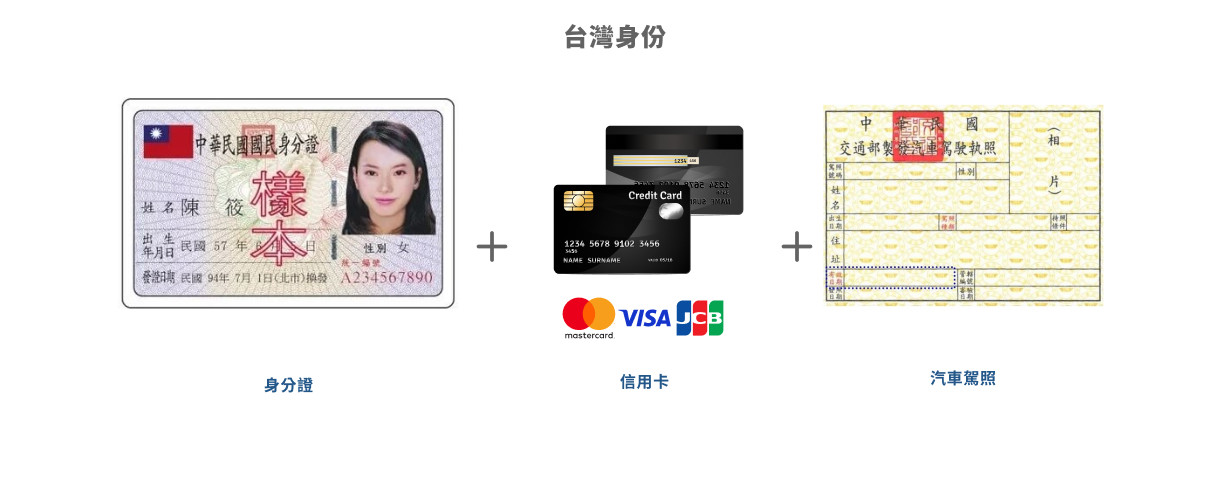
| Item | Document Name | Description |
|---|---|---|
| 1 | ID Card | Republic of China (Taiwan) National ID Card |
| 2 | Credit card or cash | Pay by credit card or in cash (at self-service car park stations, pay online during booking) |
| 3 | Driver’s License | Driver’s license issued by the Directorate General of Highways, Ministry of Transportation and Communications, R.O.C. (Taiwan) |
Foreign Traveler
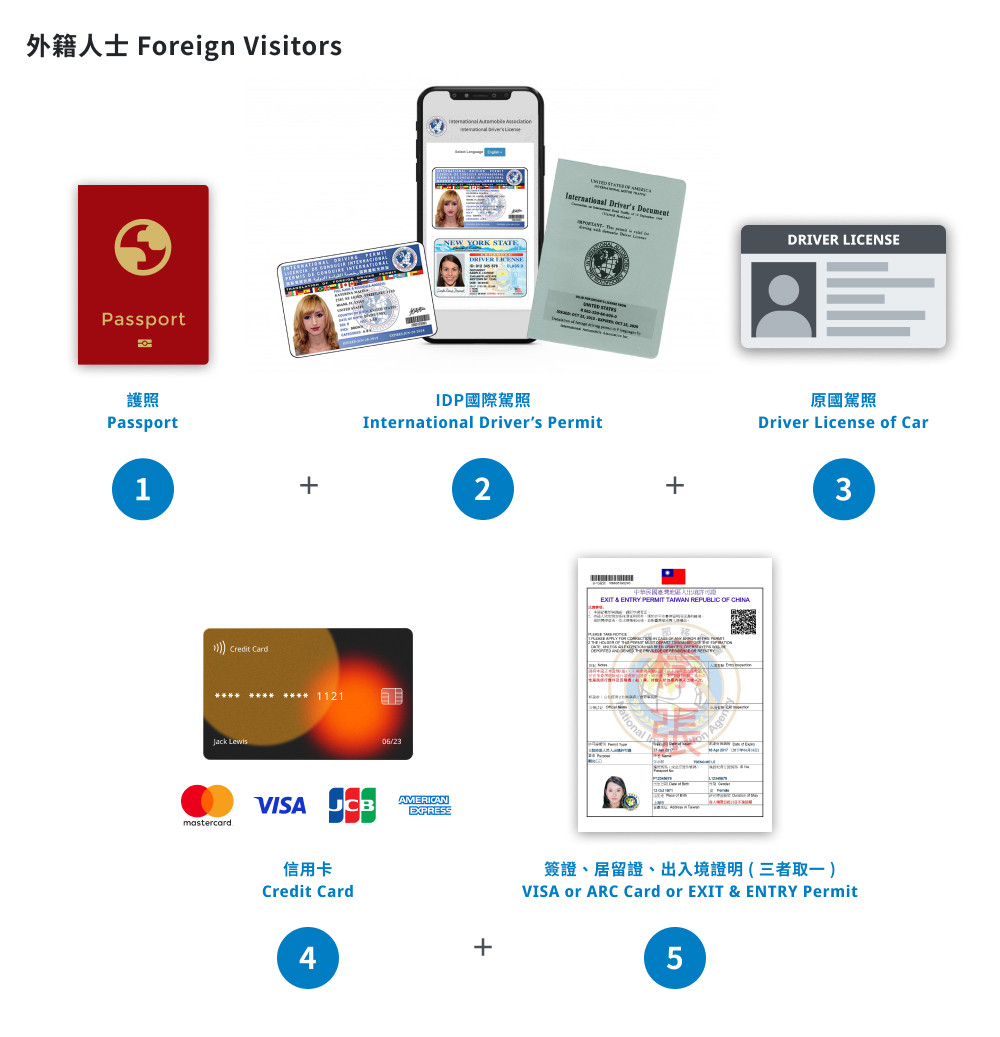
| Item | 證件名稱 | English | Description |
|---|---|---|---|
| 1 | 護照 | Passport | A valid passport under the traveler's name within the validity period. |
| 2 | IDP國際駕照 | International Driver’s Permit | Must be used together with the original driver’s license from the home country; both documents are required. |
| 3 | 原國駕照 | Driver License of Car | Valid driver’s license to be used in conjunction with the IDP (International Driving Permit) |
| 4 | 信用卡 | Credit Card | A credit card in your own name is required. |
| 5 | 簽證、居留證、出入境證明(三者取一) | VISA or ARC Card or EXIT & ENTRY Permit | A document proving legal stay in Taiwan; only one of the following is required. |
Mainland China, Hong Kong, and Macau Travelers
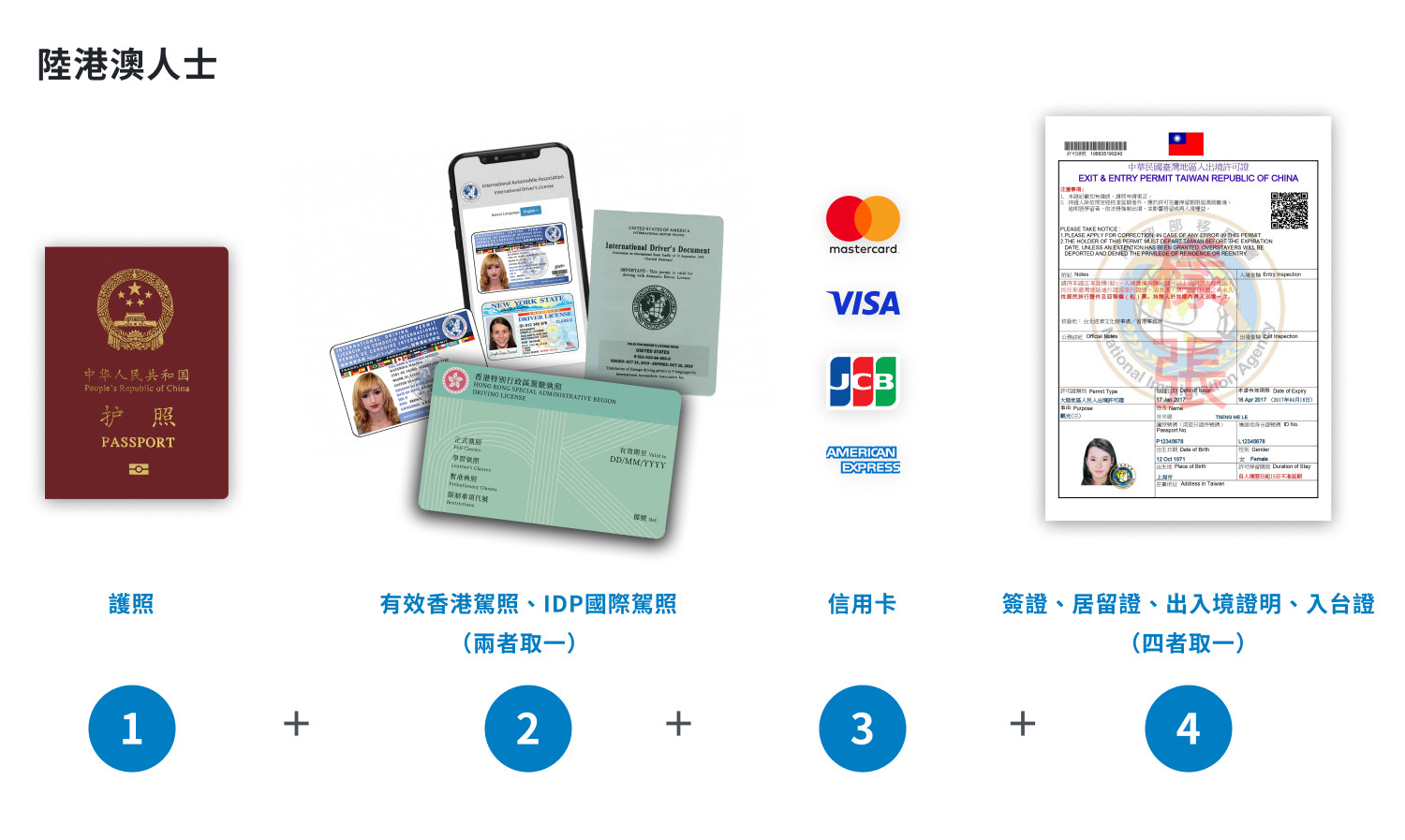
| Item | Document Name | English | Description |
|---|---|---|---|
| 1 | Passport | Passport | A valid passport of the People’s Republic of China is required. |
| 2 | A valid Hong Kong / Macau driver’s license or an International Driving Permit (IDP); either one is acceptable. | HK / Macau Driver’s License or International Driver’s Permit | You may provide either a valid Hong Kong / Macau driver’s license or an International Driving Permit (IDP); only one is required. Hong Kong and Macau travelers can rent with a valid local license; an IDP is recommended. |
| 3 | Credit Card | Credit Card | A credit card in your own name is required. |
| 4 | Visa, ARC (Alien Resident Certificate), Entry/Exit Record, or Entry Permit to Taiwan (any one of the four is acceptable). | VISA / ARC / Entry Permit / Taiwan Permit | A document that permits legal entry into Taiwan; any one of the four options is acceptable. |
Japanese Traveler
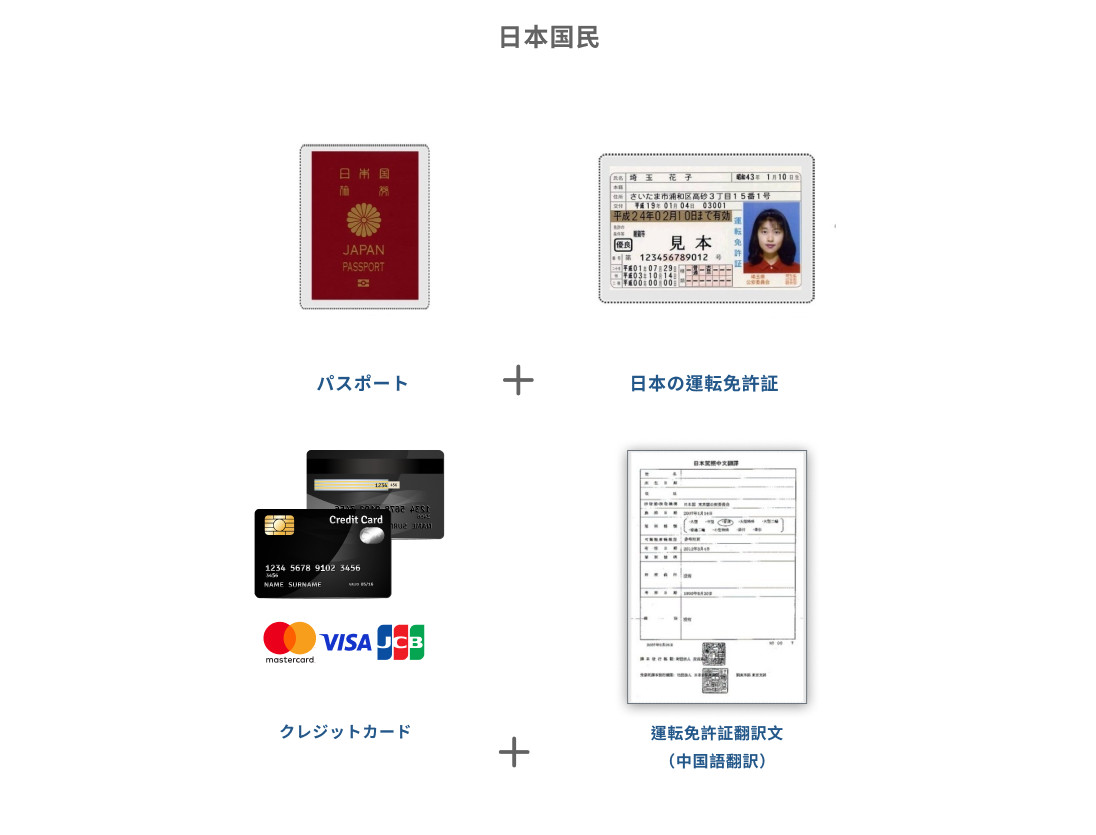
| Item | Document Name | Japanese Name | Description |
|---|---|---|---|
| 1 | Passport | パスポート | A valid Japanese passport is required. |
| 2 | 日本的運転免許証 | 日本の運転免許証 | A valid Japanese driver’s license is required. |
| 3 | Credit Card | クレジットカード | A credit card in your own name is required. |
| 4 | Driver’s License Translation Document (Chinese Translation) | 運転免許証翻訳文(中国語翻訳) | A Chinese translation of the driver’s license issued by the Japan-Taiwan Exchange Association or an authorized translation agency is required. |
To comply with traffic regulations and ensure driving safety, the required documents for renting a car in
Taiwan may vary slightly depending on the traveler’s nationality.
In general, all renters must provide a passport and a valid driver’s license, along with additional
documents such as an international driving permit, translation documents, credit card, or visa, depending on
their nationality.
For example, foreign travelers are required to provide a passport, original driver’s license from their
home country, an international driving permit (IDP), and proof of entry into Taiwan.
Travelers from Mainland China, Hong Kong, or Macau must provide a passport, a valid Hong Kong / Macau driver’s
license or an IDP (Hong Kong and Macau travelers can rent with a valid local license; an IDP is recommended), and an Entry Permit to Taiwan.
Japanese nationals are required to present their Japanese driver’s license along with an official Chinese
translation.
Taiwanese nationals must provide a National ID card or ARC and a valid driver’s license.
Travelers are advised to verify the required documents in advance to avoid any disruptions to their
travel plans.
Taiwan Car Rental Price Comparison|Using TOYOTA Vios 1.5 as an Example (GoodCars)
| Item | GoodCars 固得租車 | Class A Rent a Car | HeYun Rent a Car |
|---|---|---|---|
| Daily Rental Price / Per Day | Economy cars from NT$1,199 a day on weekdays and NT$1,399 on weekends and holidays (actual prices vary by pickup location and date — see the live quote on our website) | See each company's official website | See each company's official website |
| Available Vehicle Models | 5-seater cars, 7-9 seater cars, motorcycles, imported cars | See each company's official website | See each company's official website |
| Drop car off at different location | Available; the fee differs by pickup and return location — see the live quote on our website (select “Drop car off at different location” when booking) | See each company's official website | See each company's official website |
| Child seat | Available as an add-on (advance reservation required); fee as shown on the booking page or at the branch | See each company's official website | See each company's official website |
| Dashboard camera (Dash cam) | Available as an add-on; fee as shown on the booking page or at the branch | See each company's official website | See each company's official website |
| Basic Insurance | Compulsory Insurance + Third-Party Liability Insurance + Vehicle Damage Insurance + Passenger Insurance, etc. (GoodCars' own vehicle insurance policy) | See each company's official website | See each company's official website |
| Add-on plan | GO Worry-Free Protection Plan: NT$400 / 600 / 800 per day (by car model) | Provided by the car rental company. | Provided by the car rental company. |
Taiwan Car Rental Insurance Guide
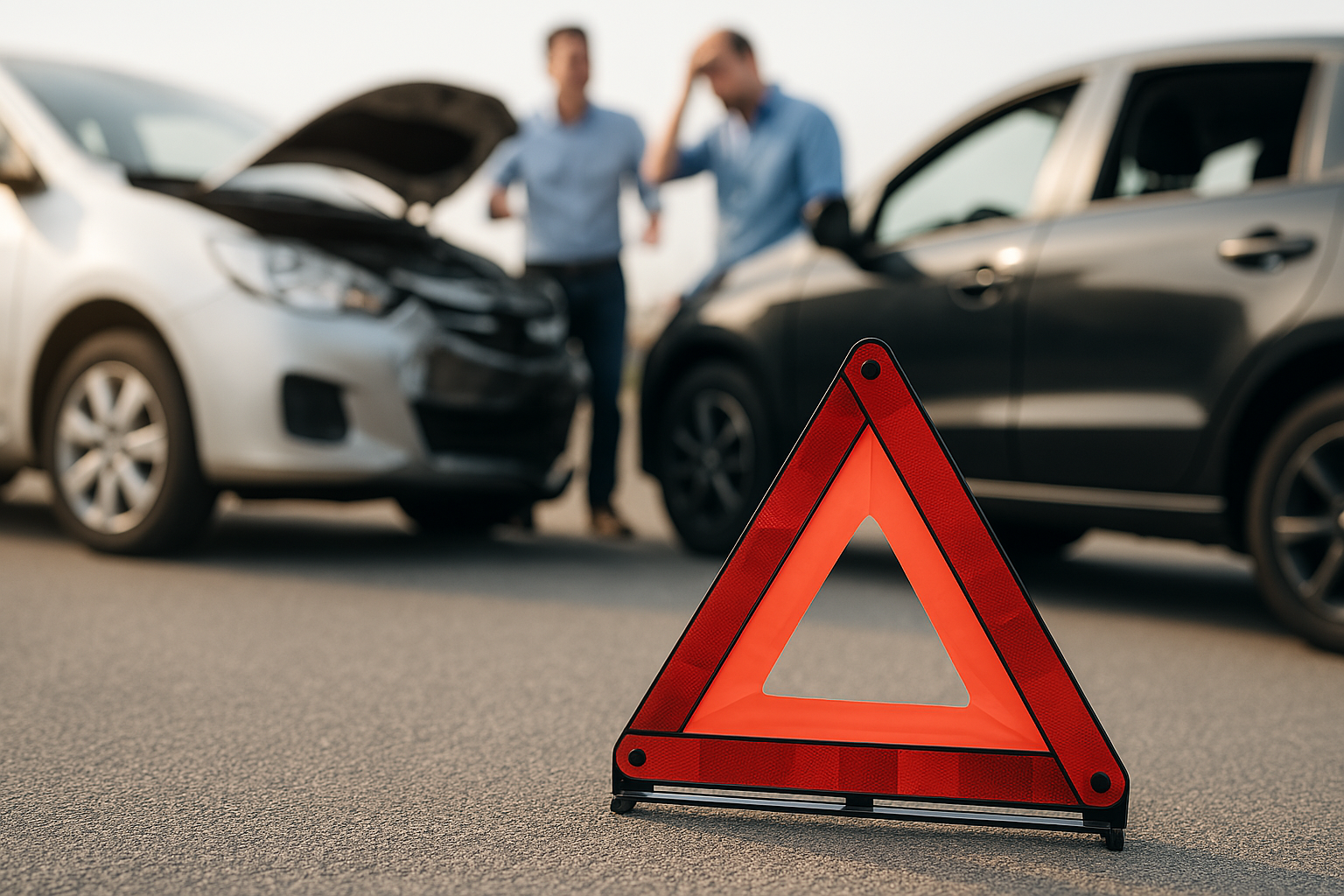
When traveling abroad by car, insurance is definitely something
that you "hope you never have to use, but it's much more reassuring to have."
Although no one wants to encounter unexpected situations, having insurance can significantly ease the burden
if something does happen, allowing you to enjoy your entire trip without letting a small accident ruin the
experience.
At GoodCars, all of our compact cars come with basic insurance, including compulsory insurance and third-party
liability insurance, covering essential risks.
If you want to reduce the out-of-pocket expenses in case of an incident, we also offer the optional
GO Worry-Free Protection Plan, which reduces the amount you owe for vehicle damage or
theft, allowing you to travel with peace of mind.
Here’s a simple breakdown of some common insurance types. Understanding them before your trip will help you
travel with more peace of mind:
Compulsory Insurance
According to Taiwanese law, all vehicles on the road are required to have compulsory automobile liability
insurance.
This insurance primarily protects victims in traffic accidents, with a maximum payout of NT$2,000,000 per
person.
Vehicle Damage Insurance
Vehicle Damage Insurance is designed to cover damage to the vehicle itself.At
GoodCars
, if an accident occurs, the renter is responsible for the vehicle repair costs, with an excess of
up to NT$50,000.
This insurance applies to accidents involving collisions with other vehicles, but does not cover business
losses or 20% depreciation costs. To reduce this amount, you can add the GO Worry-Free Protection Plan — please contact an in-store representative.
Theft Insurance
If the rental vehicle is stolen, the renter is responsible for an excess of 10% of the vehicle's current value.
This insurance does not cover the loss of items or parts inside the vehicle, so it is recommended to
properly safeguard personal belongings.
Driver Injury Insurance
This insurance covers the driver for losses caused by injury or disability resulting from a car accident, with a maximum payout of NT$1,000,000.
Passenger Insurance
Passenger insurance covers passengers (excluding the driver) in the vehicle for injuries or death resulting from
an accident.
At GoodCars, within the allowed passenger limit, each passenger is covered with a maximum payout of
NT$1,000,000.
Third-Party Liability Insurance
This insurance covers the driver for damages caused to third parties (including other vehicles, pedestrians, etc.) in the event of an accident. At GoodCars, the coverage for third-party accident liability insurance is as follows:
*The detailed coverage is subject to the specific policy of each vehicle. The above coverage does not apply to motorcycles and trucks.
GO Worry-Free Protection Plan
-
Your liability for vehicle damage is reduced from NT$50,000 to NT$5,000, and the vehicle depreciation fee is waived.
-
The amount equal to 10% of the vehicle's current value payable in the event of theft is waived.
-
The NT$10,000 amount payable for third-party property damage is waived.
- The renter is responsible for business losses.

For detailed information
, please refer to the official
GoodCars website.
。
Before renting a car, understanding the details and coverage of each insurance option will help you choose the
most suitable protection plan, ensuring a worry-free journey.
| Insurance Types | Driver Injury or Death Coverage (for our driver) | Passenger Injury or Death Coverage (for our passengers) | Damage to Our Vehicle | Theft of Our Vehicle | Injury or Death of the Other Driver/Passenger | Damage to the Other Vehicle | Injury or Death of a Pedestrian |
|---|---|---|---|---|---|---|---|
| Compulsory Insurance | ❌ | ✅ | ❌ | ❌ | ❌ | ❌ | ✅ |
| Vehicle Damage Insurance (Basic) | ❌ | ❌ | ✅ (Excess limit NT$50,000, including depreciation fees) | ❌ | ❌ | ❌ | ❌ |
| Theft Insurance | ❌ | ❌ | ❌ | ✅ (Excess is 10% of the vehicle's current value) | ❌ | ❌ | ❌ |
| Driver Injury Insurance | ✅ (Maximum payout NT$1,000,000) | ❌ | ❌ | ❌ | ❌ | ❌ | ❌ |
| Passenger Insurance | ❌ | ✅ (Up to NT$1,000,000 per person) | ❌ | ❌ | ❌ | ❌ | ❌ |
| Third-Party Liability Insurance | ❌ | ❌ | ❌ | ❌ | ✅ (NT$1,000,000 per person for injury or death, NT$2,000,000 total per accident) | ✅ (Maximum property damage coverage of NT$500,000) | ✅ |
| GO Worry-Free Protection Plan (Optional Add-On) | - | - | ✅ Vehicle-damage liability reduced to NT$5,000, depreciation fee waived. | ✅ The 10% of the vehicle's current value payable on theft is waived. | ✅ | ✅ | ✅ |
🔍 Reminder:
Is there no "liability waiver" system for car rentals in Taiwan? GoodCars explains it clearly for you!
⚠️ Special Reminder ⚠️
When renting a car in Taiwan, even with insurance, there are still some items that are not covered by the
compensation, with the most common being:
🛠️ How is the business loss fee calculated?
According to the standard contract terms regulated by the government, if the vehicle needs repairs due to an accident and is unable to operate, the renter is responsible for covering part of the rental fee during the downtime as "business loss compensation." The calculation method is as follows:
| Repair days | 1 to 10 days | 11 to 15 days | 16 to 20 days |
|---|---|---|---|
| The renter is responsible for a proportion. | 70% of the daily rental price | 60% of the daily rental price | 50% of the daily rental price |
⛔ The business loss fee will be calculated for a maximum of 20 days.
🔧 What is the depreciation cost for repairs?
In the event of an accident or vehicle damage, even with insurance compensation, the insurance company will not
cover the vehicle's "depreciation" value. Therefore, the rental company will calculate the depreciation amount
after repairs based on the extent of the damage and issue a quotation for the renter to bear.
If you have added our GO Worry-Free Protection Plan, the vehicle depreciation fee and the amount payable for third-party property damage will
be waived, significantly reducing your out-of-pocket risk after an accident.
✅ GoodCars Reminder:
All compact cars include basic insurance, but to avoid high out-of-pocket risks, we recommend adding
the GO Worry-Free Protection Plan.
Please carefully read the contract before renting. If you have any questions regarding business loss or
insurance coverage, feel free to directly inquire with the store staff to confirm the details!
GoodCars Rental Process Guide | Complete Your Car Rental in 3 Simple Steps
You can refer to the video above or this article
✅ Step 1: Online booking for vehicles in Taiwan.
Visit the
GoodCars official website
or use your mobile phone for quick operations. Choose your pick-up and drop-off locations and times
to view available vehicles and prices. From 5-seater cars, 7-9 seater vehicles, motorcycles, to imported cars,
we offer flexible options for you!
Our website clearly displays vehicle specifications and daily rental rates. Some vehicles also offer real photos
and detailed information to help you make the best choice. We recommend booking in advance, as vehicles can be
in high demand during peak periods (holidays and weekends)!
✅ Step 2: Pick up your car (staffed branch or self-service car park station).
Staffed branches (open 09:00–21:00): arrive at the agreed time and present your documents (Taiwan residents: ID card and driver's license; foreign visitors: passport, home-country license plus International Driving Permit — Japanese visitors: Japanese license with an official Chinese translation — and a credit card in your own name) with your booking information. The staff will verify the details, have you sign the rental agreement, and explain the insurance and add-on plans (such as the GO Worry-Free Protection Plan), fuel policy and return time.
Self-service car park stations: there is no counter or staff on site. Complete your documents and contract online as instructed by the system, then collect the car from the designated car park shown in your booking confirmation.
Either way, inspect the car and take photos at pickup — it protects you and makes the return easier. Then you can set off with peace of mind!
✅ Step 3: Return the vehicle on time to successfully complete your rental journey.
At the end of your journey, simply return the car at the agreed time and place (the original pickup point, or the designated drop-off location for one-way rentals): at a staffed branch, hand back the keys; at a self-service car park station, park in the designated spot as instructed and leave the key in the car. Check the vehicle’s condition and mileage. ETC tolls (NT$1.2 per km for rental cars) are settled when you return the car; late returns are charged according to the rental agreement — if your plans change, contact your pickup branch first.
In just 3 simple steps, you can easily start a flexible and enjoyable self-driving journey in Taiwan. Don't
worry if it's your first time renting a car—at staffed branches our team will walk you through it, and for self-service stations see our Self-Service Car Pickup & Return Guide. Feel free to take
advantage of our services!
GoodCars Car Rental | Pick-up Process Explanation
※ The counter steps below apply to our staffed branches (open 09:00–21:00). Self-service car park stations have no counter or staff: complete your documents and contract online as instructed, then collect the car from the designated car park shown in your booking confirmation. New to self-service? See our Self-Service Car Pickup & Return Guide.
🚗 Step 1: Check-in at the counter
Upon arriving at the GoodCars store, provide your order number or booking information. The on-site staff will assist in confirming your reservation details and guide you through the car rental process.
🪪 Step 2: Verify Document Information
Please prepare the following documents for verification by the staff:
📝 Step 3: Sign the Rental Agreement
🔍 Step 4: Vehicle Inspection
Conduct the vehicle inspection with the staff, ensuring the exterior and interior are free from any damage.
✅ Step 5: Get Ready to Depart
Confirm that you have received:
GoodCars Car Rental | Return Process Explanation
※ The steps below are for staffed branches. At a self-service car park station, simply park in the designated spot as instructed in your booking confirmation and leave the key in the car — no need to find staff.
⏰ Step 1: Return the Vehicle on Time
Please return the vehicle at the agreed time and location. Late returns are charged according to the rental agreement — if your plans change, contact your pickup branch first.
⛽ Step 2: Check Fuel Level and Mileage
👜 Step 3: Remove Personal Belongings
Please carefully check the vehicle to ensure no valuable items are left behind, especially documents, phones, keys, etc. If the vehicle is excessively dirty, a cleaning fee may apply.
🔁 Step 4: Vehicle Condition Check
Upon return, you will check the vehicle's condition with the staff, comparing it to the pick-up condition record to confirm if there are any new damages. If there are new damages, they will be handled according to the insurance and contract terms.
💳 Step 5: Complete the Settlement
The mileage fee and ETC tolls (NT$1.2 per km for rental cars) are settled when you return the car. Late returns are charged according to the rental agreement — if your plans change, contact your pickup branch first. A receipt is then issued to complete the return process!
Taiwan Car Rental | Important Things to Know at a Glance
🚦 Traffic Habits & Driving Style
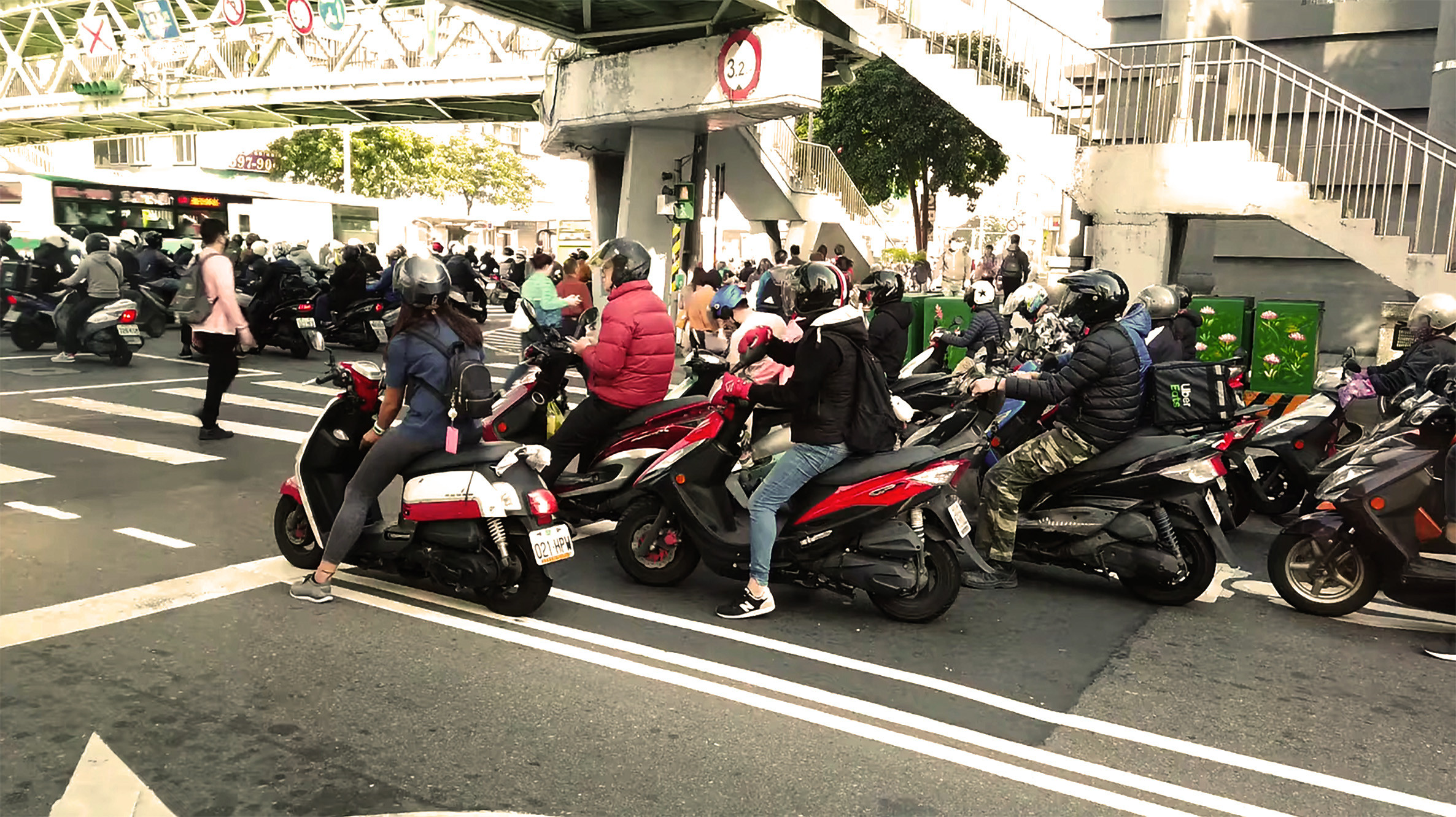
Driving in Taiwan is quite different from driving in Japan, Hong Kong, Macau, or the United States! In addition to being a left-hand drive country (steering wheel on the left), Taiwan's streets are narrower, and with a high density of motorcycles and many alleyways, it's recommended for newcomers to drive slowly at first and get accustomed to the environment.
✅ How to Determine Right of Way?
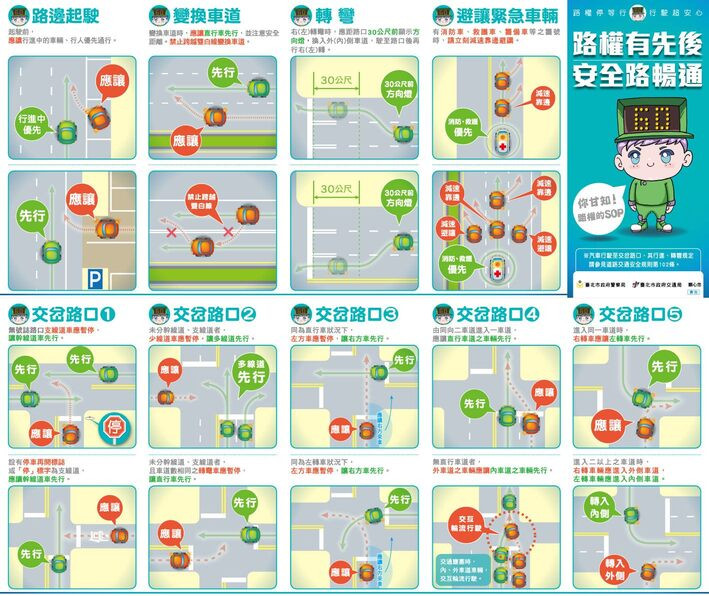
When turning, remember: straight ahead has the highest priority, followed by left turns, and right turns last.
When entering or exiting intersections, don’t forget the principle of "secondary roads yield to main roads." The
side with more lanes is usually the main road and should be given priority.
✅ Basic Driving Rules

No speeding, no drunk driving, and always wear seat belts for everyone in the car.
Drunk driving is punished severely under Article 35 of Taiwan’s Road Traffic Management and Penalty Act: on top of the fine, the car is impounded on the spot and your driver’s license is suspended, and even passengers can be fined.
✅ Things to Keep in Mind for Motorcycles
Motorcycles are everywhere in Taiwan, and they are accustomed to weaving between cars and changing lanes. It’s recommended for car drivers to maintain a steady speed and avoid sudden acceleration or deceleration, as this is the safest approach.
✅ Yield to Pedestrians
Starting from 2023, Taiwan has imposed heavy fines for "failing to yield to pedestrians." As long as there is someone on the crosswalk, you must stop and let them pass, regardless of the traffic light. Otherwise, a fine will be issued.
✅ Horn Usage Reminder
In Taiwan, "loud horn = impolite." It's recommended to use a short, gentle tap on the horn to avoid unnecessary misunderstandings or complaints!
✅ Speed Limits and Penalties
City roads: Speed limit is 50–60 km/h.
Expressways: Speed limit is 70–80 km/h.
Highways: Speed limit is 100–110 km/h.
📸 Taiwan has a high density of speed cameras, including "section speed cameras." It’s recommended to use
navigation apps (such as Google Maps or Speed Camera Radar) for reminders.
Taiwan Parking Rules
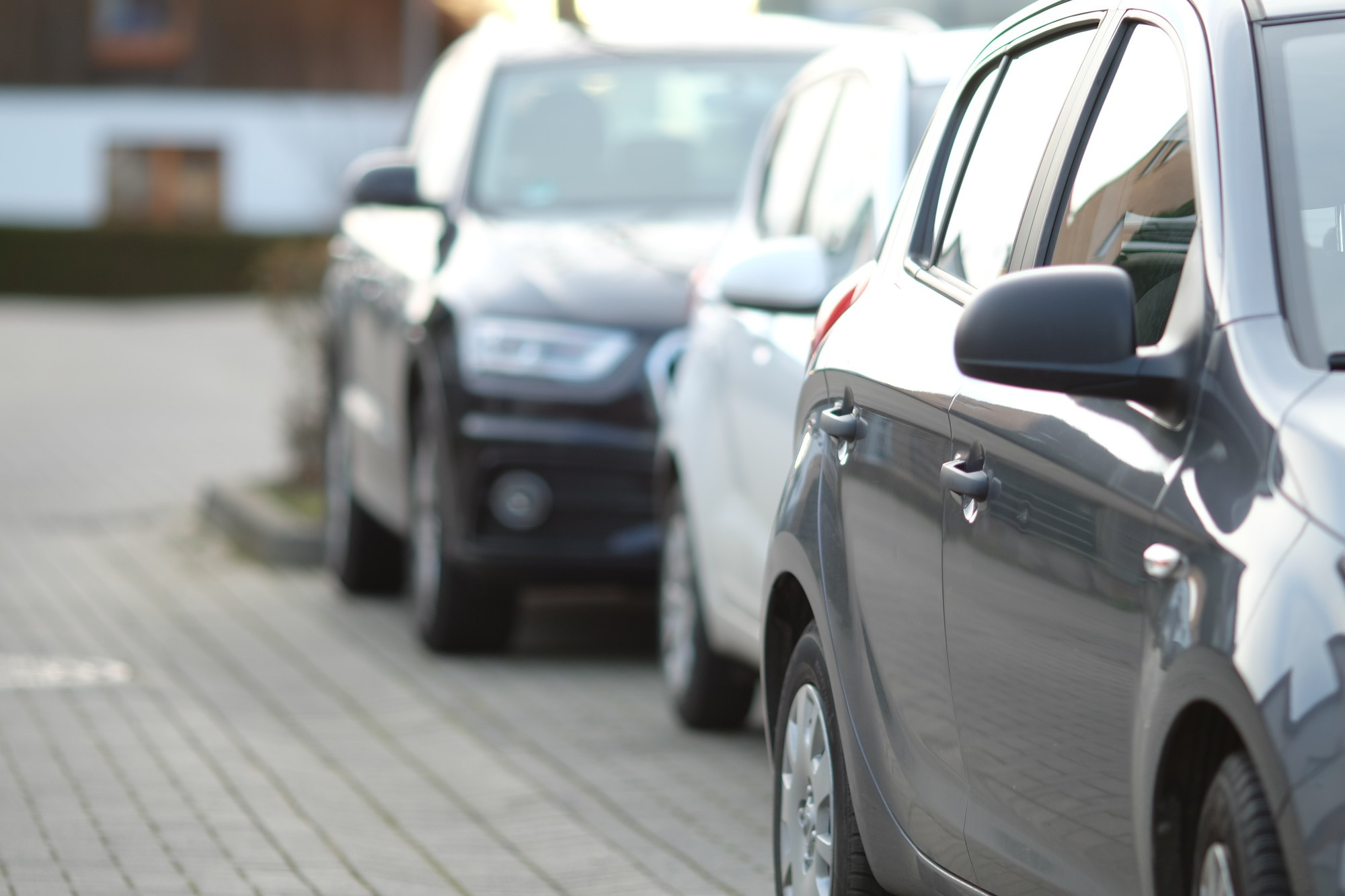
🅿️ How to Park Without Getting a Fine?
Check the parking line colors here:
White line:You may park, but make sure to park straight and close to the curb, without crossing the lines!
Yellow line:You may park briefly for up to 3 minutes to pick up or drop off passengers (without turning off the engine), but parking is prohibited during certain hours (7:00 AM - 8:00 PM). Outside of these hours, you may park overnight.
Red line:Parking is completely prohibited; no stopping for pick-up or drop-off is allowed!
🚗 Parking Direction:
You must park in the direction you are driving!
Never park in the opposite direction, as it will result in an immediate fine.
How Well Do You Know Taiwan's Traffic Signals?
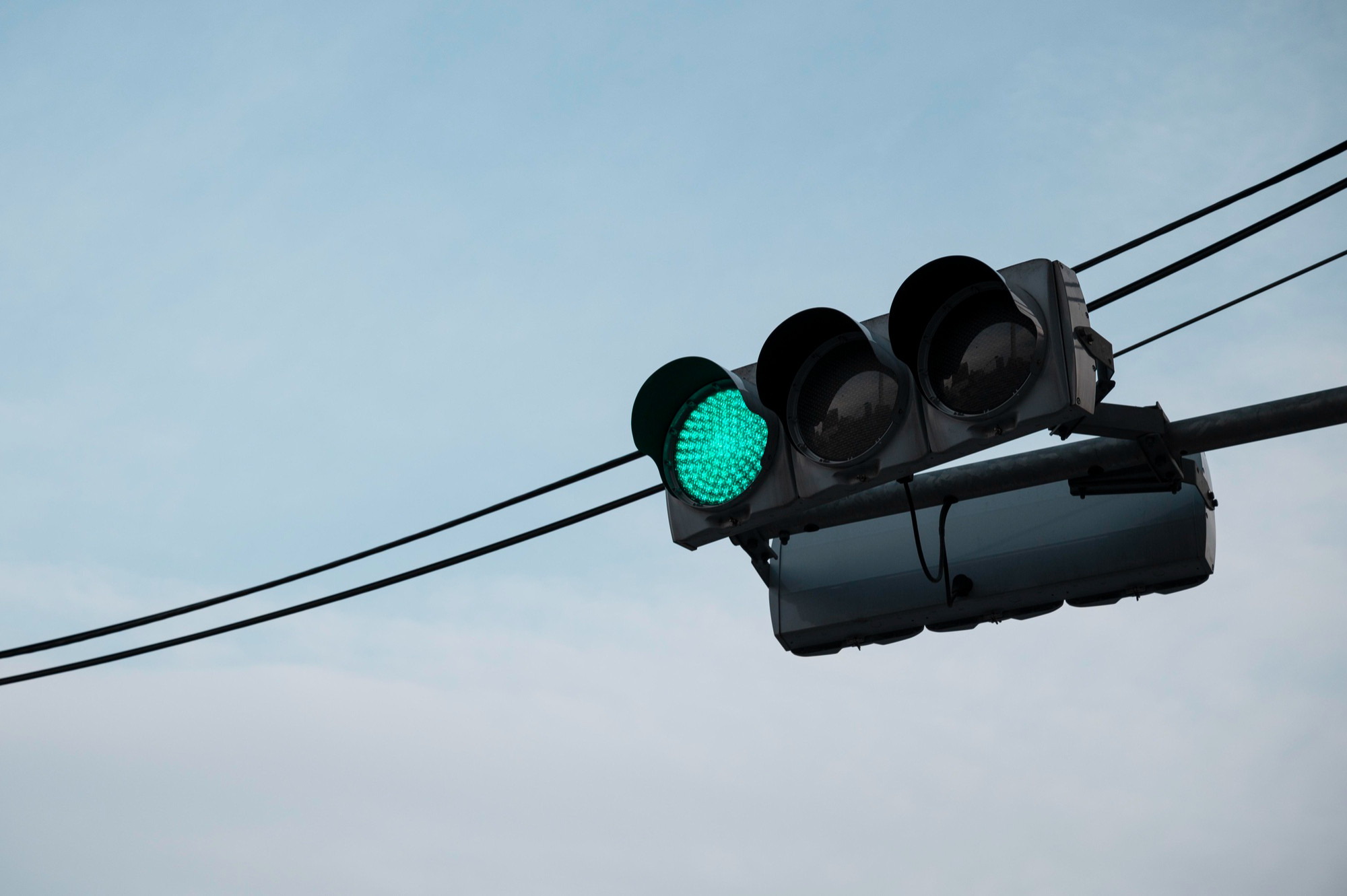
🚧 Understanding Taiwan Traffic Signals at a Glance
How to Interpret Traffic Lights
Green Light: You may go straight or turn left or right.
Red Light + Arrow: You can only turn in the direction of the arrow; other directions are not allowed.
Straight Arrow + Right Arrow: You can only go straight or turn right; left turns are prohibited.
Paying for a parking ticket
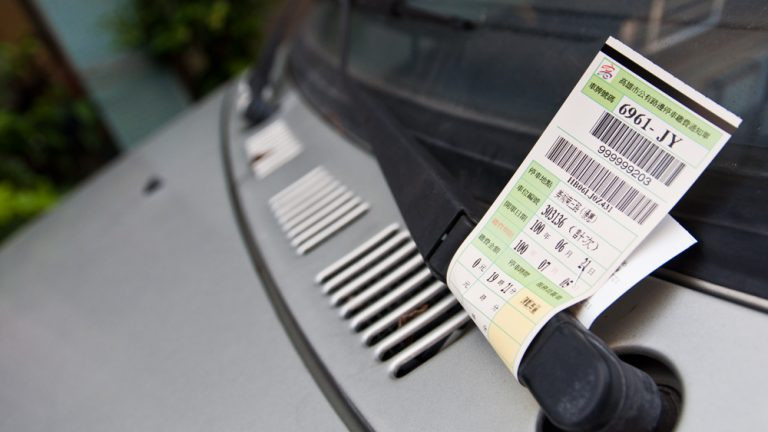
🧾 How to Pay Parking Fees?
In some areas, if you receive a parking ticket (placed under the windshield wiper), you can easily pay it by taking it to a convenience store (7-11, FamilyMart, OK, or Hi-Life).
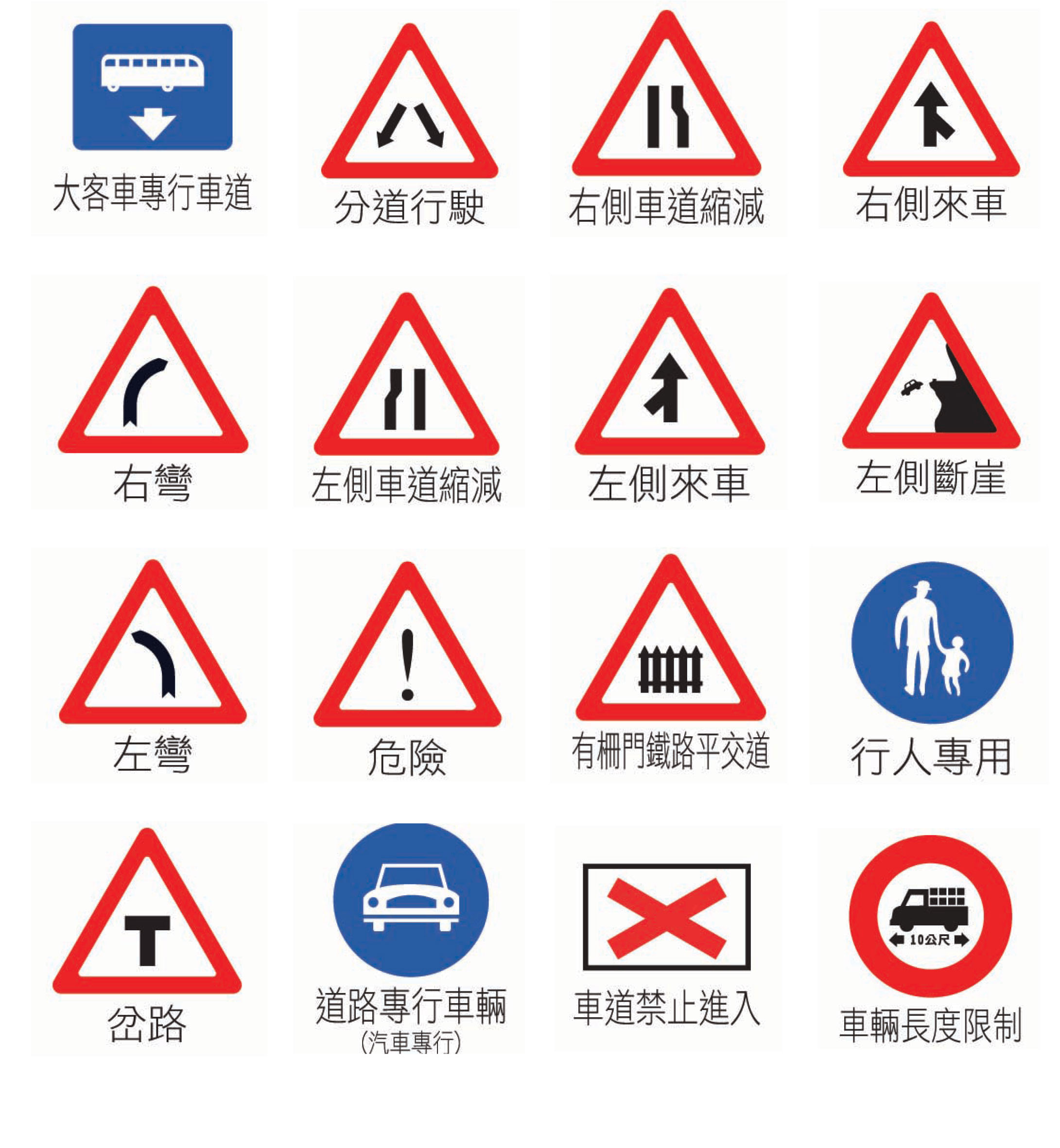
Traffic Sign Overview
Here is an overview of common traffic signs and signals found on Taiwan's roads. Please follow the instructions to ensure safe travel and avoid violations or accidents.
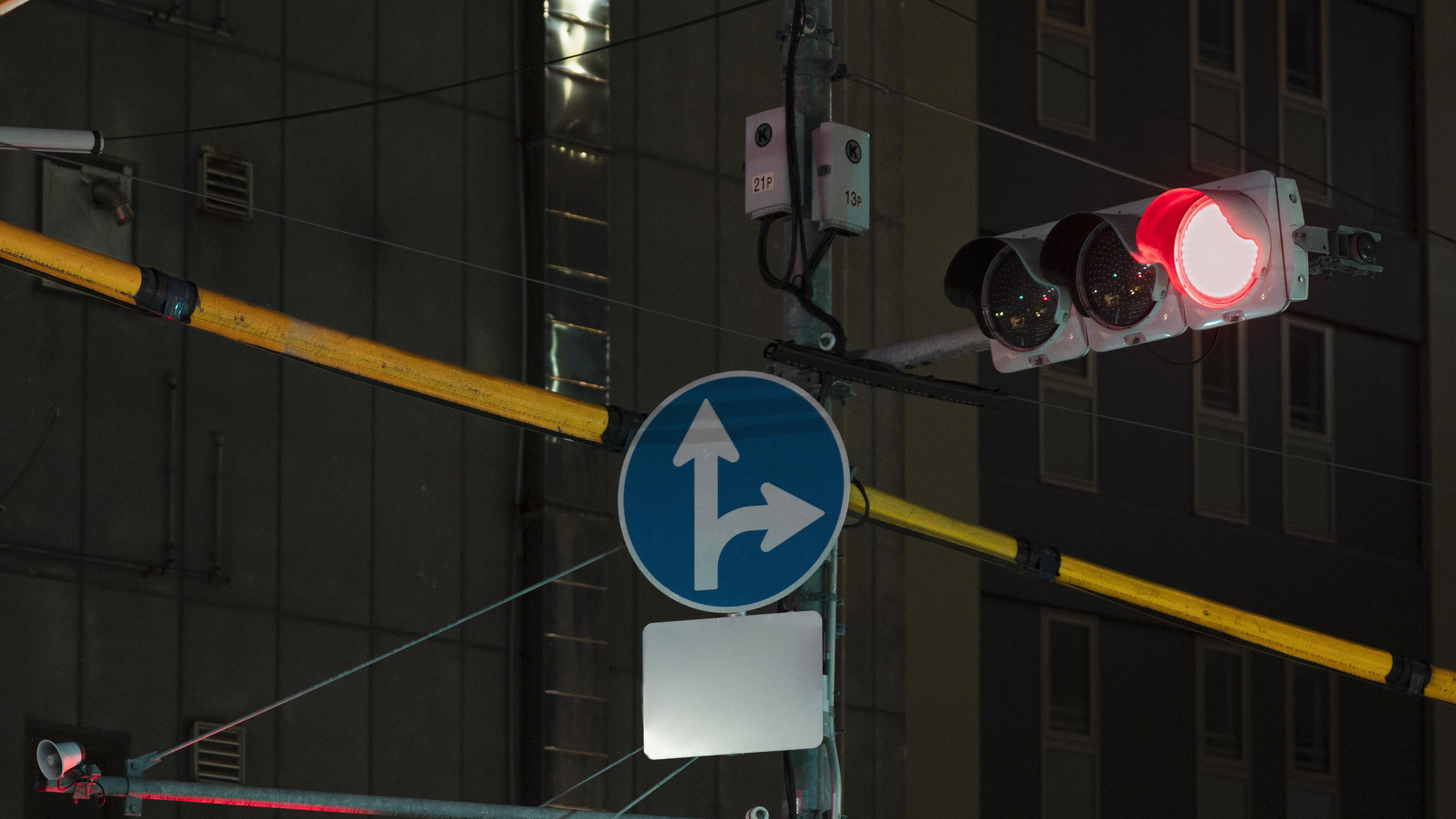
In Taiwan, some intersections have flashing red or
yellow lights. These are not broken lights or Christmas decorations; they are used to distinguish between main
roads and secondary roads!
Flashing Yellow Light: This indicates that you are on a main road. You can continue driving, but you must slow
down and watch for vehicles coming from the left or right. Proceed only when it is safe.
Flashing Red Light: This indicates you are coming from a secondary road. You must come to a complete stop, check
for any oncoming traffic, and only proceed onto the main road when it is clear. This is one of the key points of
the "yielding principle"!
👉 Remember the tip: "Flashing red means stop, flashing yellow means look."
When you see a flashing red light, you must stop. With a flashing yellow light, proceed slowly. Keep your eyes
open, and you won't make a mistake!
🚫 In most areas of Taiwan, right turns on red are not allowed!
No Left Turn vs No U-turn?
No Left Turn = You cannot turn left, nor can you make a U-turn.
No U-turn = You cannot make a U-turn, but you can turn left.
Taiwan Car Rental on Highways & Expressways/h2>
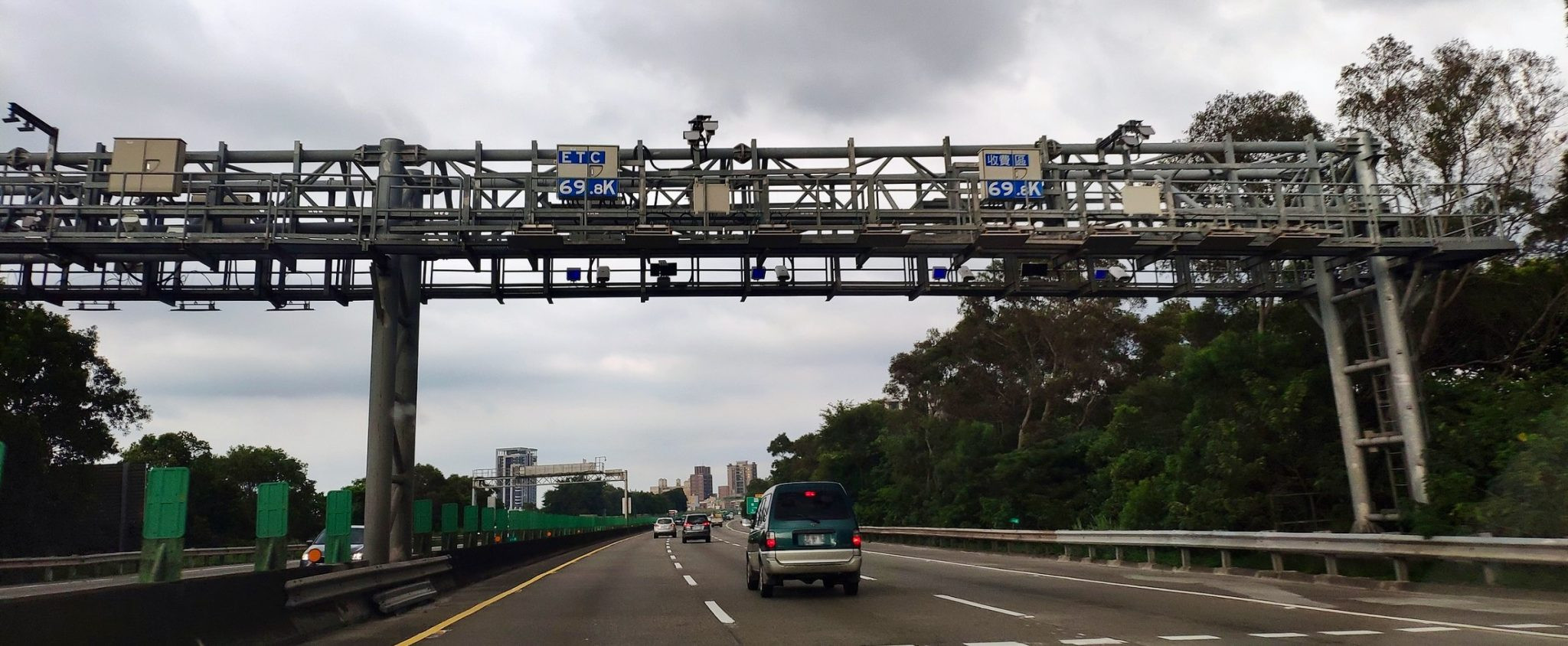
🛣 ETC Automatic Toll Collection
All rental vehicles are equipped with an ETC (Electronic Toll Collection) sticker. You don’t need to slow down or wait in line to pay; just drive through the toll booth.
🚗 How are the lanes divided?
Inner lane: Overtaking lane. After passing, remember to return to the center lane.
Center lane: The most commonly used lane for general driving.
Outer lane: For slower vehicles or those preparing to exit the interchange.
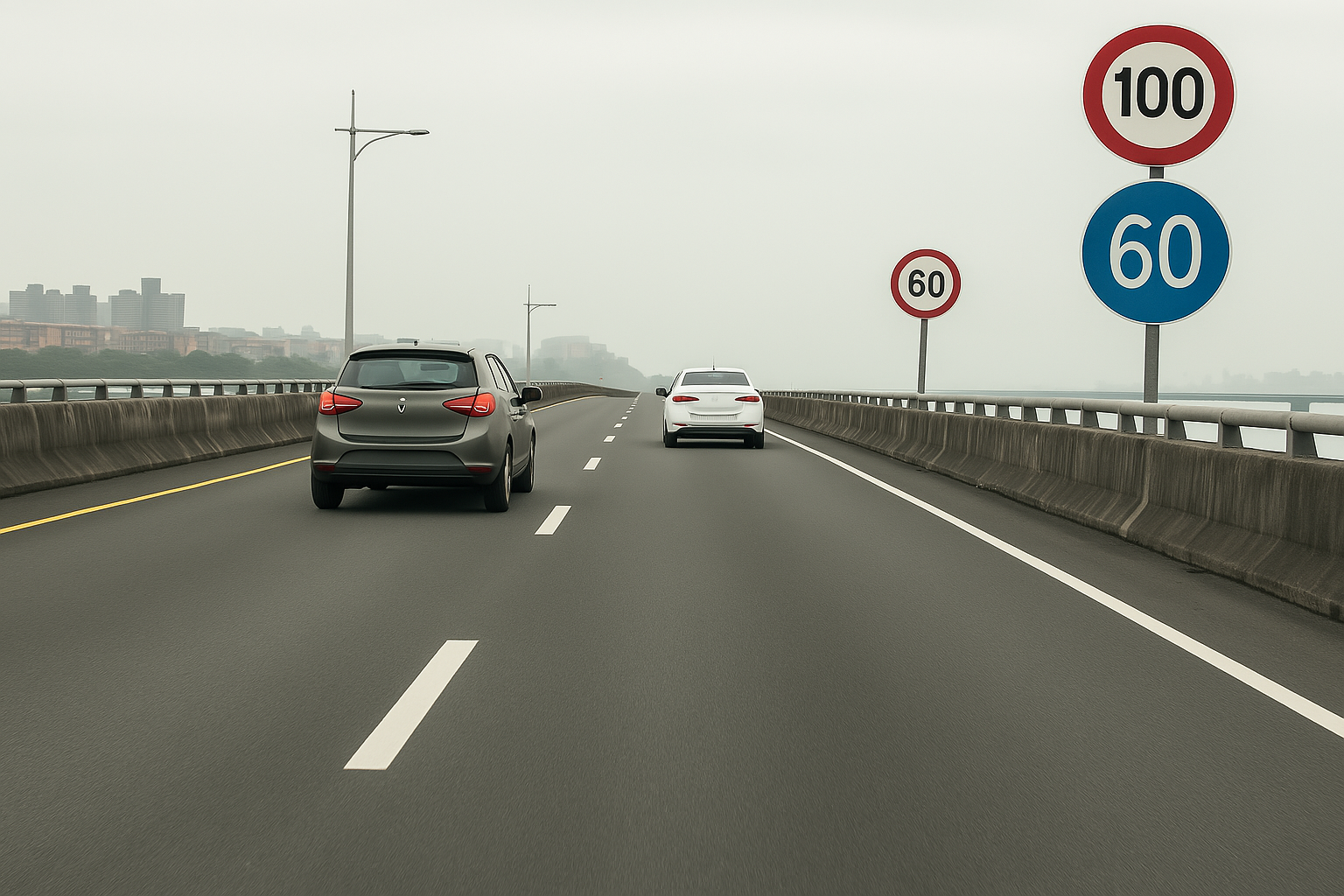
⚠️ Speeding Penalties
Speeding is fined under Taiwan’s Road Traffic Management and Penalty Act.
The more you exceed the speed limit, the heavier the fine.
The actual fine depends on the violation and the type of road.
Serious speeding counts as dangerous driving: on top of the fine, your driver’s license will be suspended.
📛 Shoulder Lane Prohibited
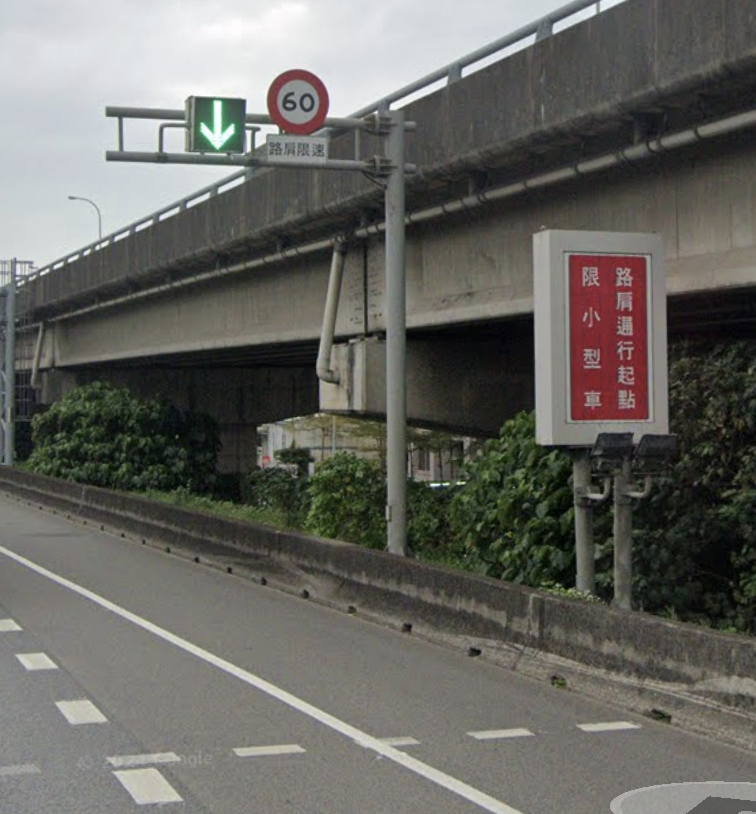
A red cross = no entry, a green circle = allowed to pass (usually opened during traffic congestion periods).
🚙 High Occupancy Vehicle (HOV) Lane
On certain roads during holidays or peak hours, vehicles with 3 or more passengers (including the driver) are required to use specific lanes. Be sure to pay attention before heading out!
Taiwan Car Rental | Navigation Settings
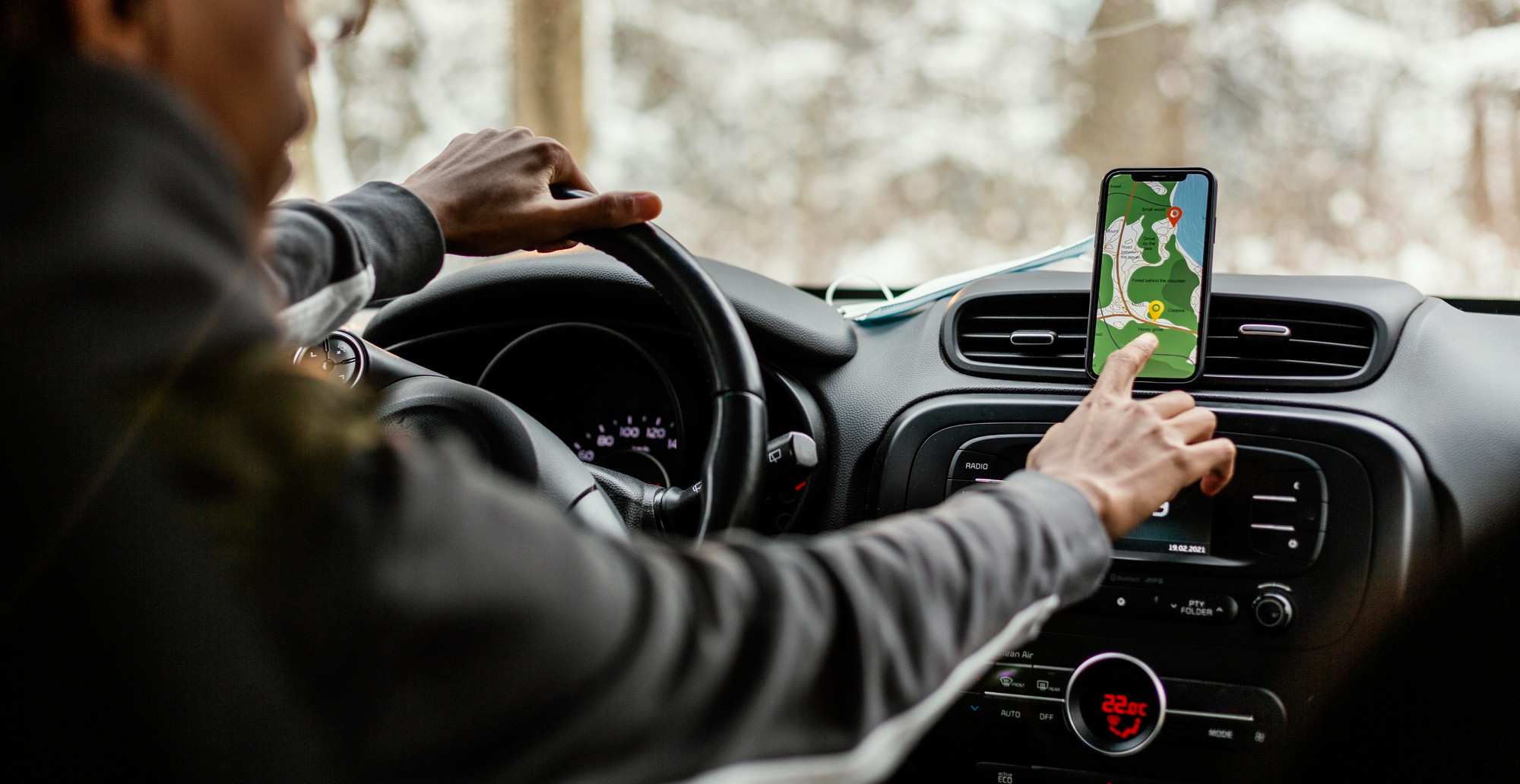
🗺 Navigation Settings Recommendations
Google Maps
Applicable to all mobile systems, supports Chinese/English search, and provides complete traffic information.
Apple Maps
For iPhone only, the search may not be as accurate as Google, but it has a "speed camera alert" feature.
⛽ What type of fuel to use for car rentals in Taiwan? Where is the fuel cap?
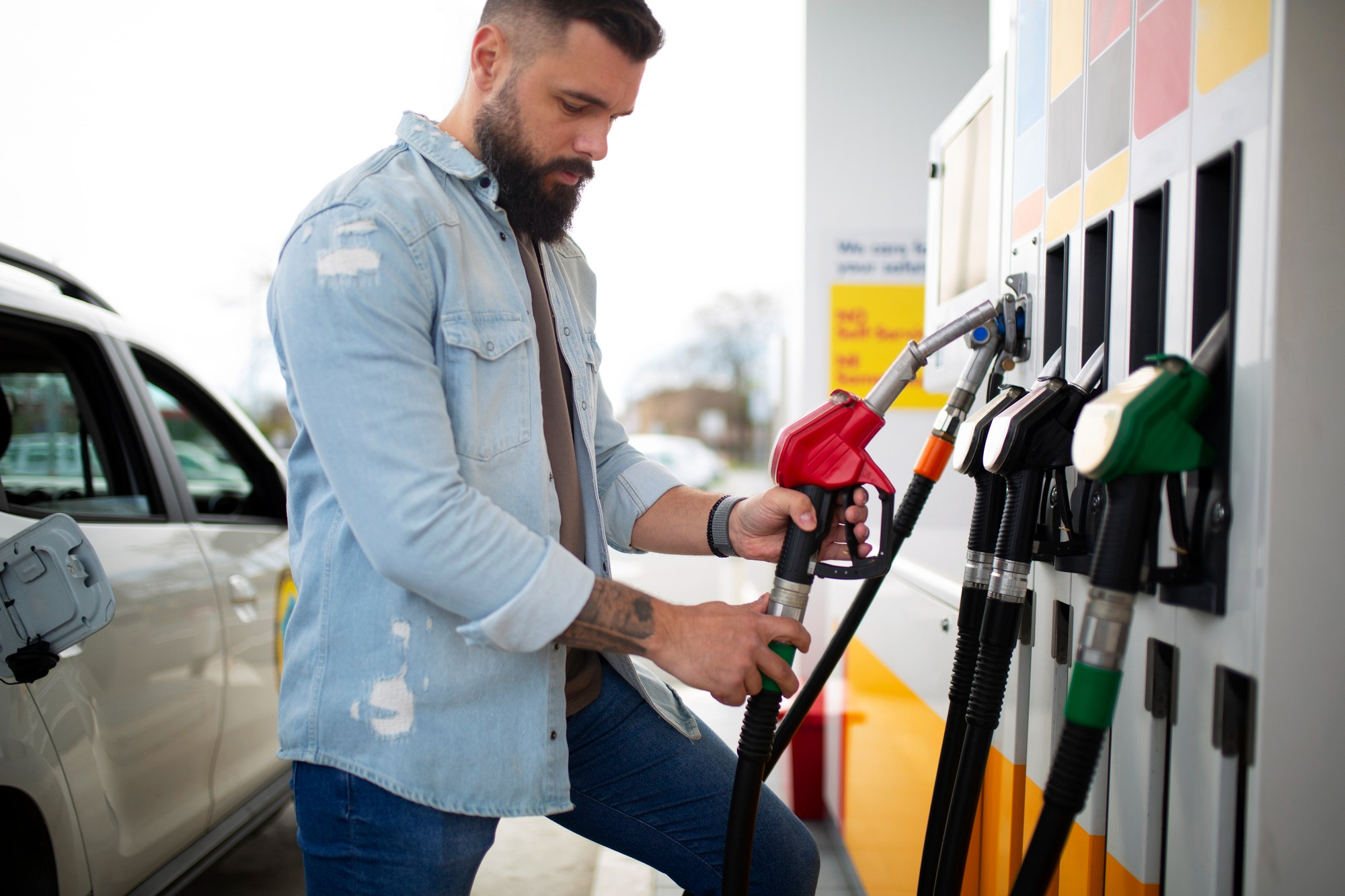
Common fuel types include: 92, 95, and 98 octane unleaded gasoline, as well as diesel.
If you're unsure which type of fuel to use, remember to ask when picking up the car or check the fuel gauge symbol on the dashboard. The arrow next to the fuel icon indicates which side the fuel cap is on!
Fuel Type Comparison Chart/h2>
Fuel Type
Fuel Pump Marking
Cantonese
Japanese
English
Regular Gasoline (92)
Green
Unleaded Gasoline
レギュラー
Regular 92
Regular Gasoline (95)
Yellow
Unleaded Gasoline
レギュラー
Regular 95
Premium Gasoline (98)
Red
Premium Unleaded Gasoline
ハイオク
Premium 98
Diesel
Blue, Black
Eco Diesel
軽油
Diesel
| Fuel Type | Fuel Pump Marking | Cantonese | Japanese | English |
|---|---|---|---|---|
| Regular Gasoline (92) | Green | Unleaded Gasoline | レギュラー | Regular 92 |
| Regular Gasoline (95) | Yellow | Unleaded Gasoline | レギュラー | Regular 95 |
| Premium Gasoline (98) | Red | Premium Unleaded Gasoline | ハイオク | Premium 98 |
| Diesel | Blue, Black | Eco Diesel | 軽油 | Diesel |
Self-Service Refueling Steps (Common in Taiwan)
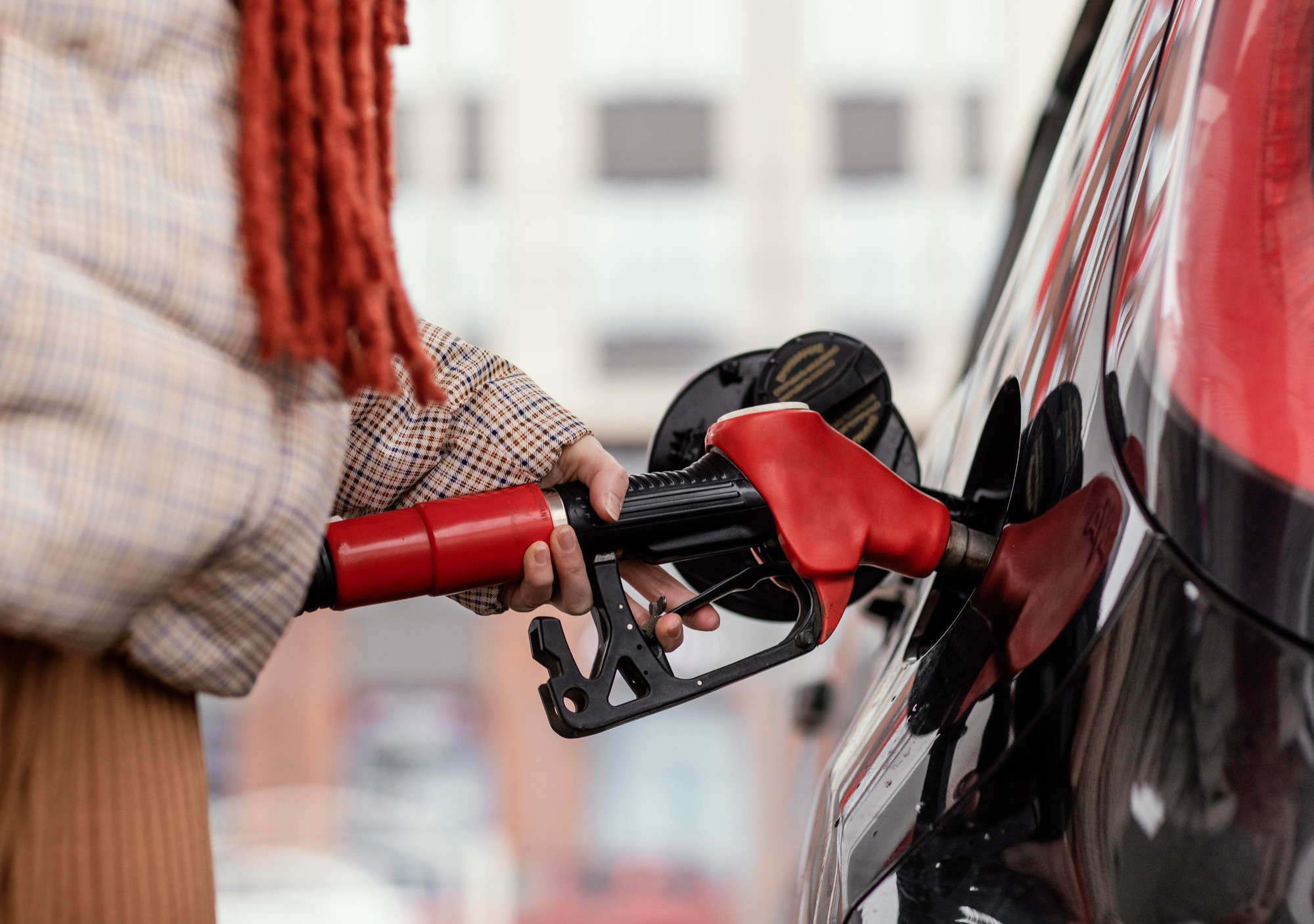
First time refueling in Taiwan? Don’t worry, just follow these steps and you’ll have it done in no time! (These steps are for when you pay for fuel yourself. With a GoodCars rental, ask the station attendant to fill up and pay with the dedicated fuel card in the car — it may not work at self-service pumps.)
1️⃣ Insert your card for payment and select the invoice option.
1.First, insert your payment card into the machine for authorization, then choose whether you want a
paper receipt, electronic invoice, or mobile barcode receipt.
2.After the authorization is complete, your card will be returned, and you can start fueling!
2️⃣ Start refueling.
1.Open the car's fuel tank cover.
2.Choose the correct fuel nozzle (pay attention to the fuel type labels: 92, 95, 98, or diesel).
3.After inserting the fuel nozzle into the fuel tank, lift the handle or press the lever to start refueling
(there are usually visual instructions next to the machine).
4.Once the tank is full, release the lever and return the fuel nozzle to its holder.
3️⃣ Keep the receipt and close the fuel tank cover.
After fueling, remember to close the fuel tank cover, take your invoice or receipt, and you're all set!
Taiwan Car Rental FAQ - Frequently Asked Questions
❓ Q: What should I do if I get into a car accident while renting a car in Taiwan?
❓ Q: What should I do if I get into a car accident while renting a car in Taiwan?
Because to activate insurance claims, you usually need the "accident triplicate form" issued by the police. If
you don’t report the incident to the police, insurance will not cover the claim, and you will have to bear the
costs yourself.
❓ Q: What should I do if I receive a fine during my car rental in Taiwan?
A: A: If you receive an on-the-spot fine (such as a parking violation ticket), you can directly take the ticket
to any of the four major convenience stores (7-11, FamilyMart, Hi-Life, OK) to pay.
If it’s a speeding or red light violation captured by a camera, the fine will usually be sent to the rental
company a few days later. Fines are handled according to the rental agreement — ask your pickup branch for details.
❓ Q: Can I rent a car in Taiwan and return it at a different location?
A: Yes, you can! GoodCars offers flexible "pick-up at one location, drop-off at another" service. The one-way fee varies by pickup and return location, so check the live quote on our website: choose “Drop car off at different location” when booking and select your pick-up and drop-off locations to see the fee.
❓ Q: How is the toll fee calculated for ETC on highways?
A: Taiwan's highways use an ETC automatic toll collection system, so there’s no need for manual payment. With a GoodCars rental,
ETC tolls (NT$1.2 per km for rental cars) are settled when you return the car; if you need an itemized record, just ask the branch staff. It’s very simple and convenient!
Taiwan Car Rental Conclusion | Master the Key Points for a Safer, More Enjoyable Self-Drive!
This is the complete Taiwan car rental guide, covering everything from vehicle selection, rental process, price
comparison, to common insurance explanations and self-driving travel tips. Whether you're a first-time visitor
to Taiwan or a local traveler looking to plan a flexible itinerary, this article will help you quickly
understand how to rent a car in Taiwan, what’s the most cost-effective option, and what traffic rules to be
aware of.
We’ve also specially compiled many useful tips, including "How to read traffic signals in Taiwan?", "How are ETC
toll fees calculated?", "How to operate self-service refueling?", as well as common rental FAQs and return
process reminders, so you can truly enjoy a hassle-free self-driving experience!
We hope this article helps you start a comfortable and flexible self-driving journey in Taiwan with peace of
mind. If you're ready to rent a car, feel free to visit the GoodCars official website for the easiest online
booking experience, and complete the entire process from pick-up to return and self-service rental, making your
trip even smoother!
Related Suggestions
- Self-Drive Tour