


Okinawa Winter Road Trip Guide: What to Do from December to February, and How to Plan Whale Watching and Illuminations
The short answer: winter in Okinawa is good for driving, not for swimming. Naha averages about 17°C in January, the normals show no snow, and ice on the road is not a concern. But grey and rainy days are common, the wind is steady, and most beaches have ended their swimming season. GoodCars suggests changing the main event: whale watching in the morning, illuminations at night, indoor sights when it rains, and the beach as scenery.
This guide covers only what winter changes: the weather numbers, whether you can go in the sea, how to plan whale watching and the illuminations, and the traffic issues that appear between December and February. For costs, car types and local driving rules, see the Okinawa car rental complete guide. For a day-by-day framework, see the Okinawa 4-day 3-night self-drive itinerary.

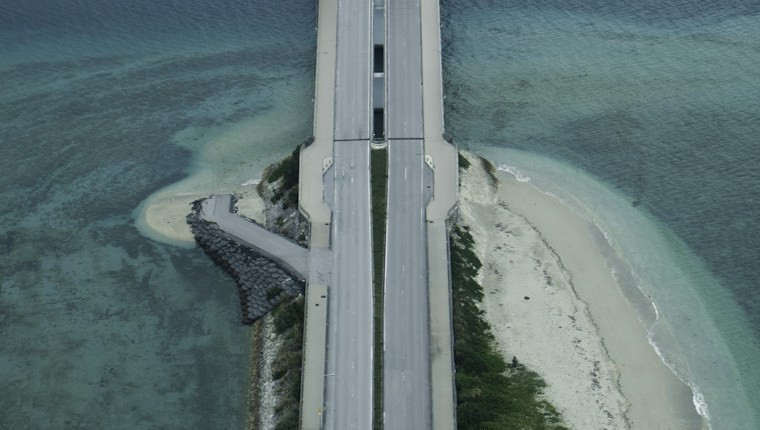
Winter is for seeing the sea from the road; treat the beaches as scenery (illustrative image)
The official numbers: what Naha is like from December to February
These are Japan Meteorological Agency 30-year normals for Naha. "Sunny days" means days with at least 40% of possible sunshine. "Windy days" means days when the maximum wind speed reached 10 m/s or more.
| Month | Mean / high / low (°C) | Rain 1 mm+ (days) | Sunny (days) | Windy (days) | Sun (hours) |
|---|---|---|---|---|---|
| Dec | 19.0 / 21.5 / 16.8 | 9.3 | 12.4 | 8.7 | 107.4 |
| Jan | 17.3 / 19.8 / 14.9 | 10.2 | 10.0 | 8.8 | 93.1 |
| Feb | 17.5 / 20.2 / 15.1 | 9.9 | 9.5 | 7.6 | 93.1 |
Three things stand out. First, sunshine in January and February is less than half of July's 227 hours. The agency explains that cold continental air picks up cloud as it crosses the warm East China Sea, and that cloud settles over the islands. Second, only about 10 days a month count as sunny, so do not build a trip around one day of good weather. Third, the most common wind direction is north-northeast to north, the northeast monsoon. Naha's average wind speed stays near 5 m/s all year; the difference in winter is the lower temperature, so the wind makes it feel colder than the numbers suggest.

On windy days, the coast tends to look like this (illustrative image)
Pack long sleeves and a windproof jacket, plus one more layer for boats and evening illuminations. When the monsoon is strong, the coast gets rough, so move sea views to a calmer day. Snow is not an issue on the road, but rain is: keep a longer following distance, and use the air conditioner to clear a fogged windscreen.
Can you go in the sea? Enjoy the view, but do not plan on swimming
You can, but it is not worth building into the trip. The Okinawa tourism site Okinawa Monogatari says the swimming season runs from about late March to October, and most beaches close for swimming at the end of October. After November swimming is not impossible, but it feels cool, and activity shifts to diving and snorkeling in wetsuits.
| Sea temperature (JMA normals) | Dec | Jan | Feb | Aug |
|---|---|---|---|---|
| 3 points around the main island | 23.5–24.2°C | 22.2–22.9°C | 21.5–22.2°C | About 29°C |
The water is actually warmer than the air. The hard part is getting out: the air is around 15 to 21°C, and the wind is blowing. Emerald Beach at Ocean Expo Park lists its swimming period as ending on October 31, and the same tourism site's sea safety advice says to swim only in designated areas and follow the lifeguards. Once the swimming period ends, that condition usually no longer applies.

After the swimming season, an empty lifeguard tower is normal (illustrative image)
GoodCars suggests that if you want to get in the water in winter, you go with a guided operator, wear a wetsuit, and confirm that day's conditions first. For a walk on the shore, wear non-slip shoes on wet rock and stay back from the water when the waves are high.
What to do from December to February: a month-by-month table
| Month | What is on | What to check first |
|---|---|---|
| December | Illuminations; Shuri Castle Seiden interior; whale watching starts only in the second half of the month | Naha Marathon on the first Sunday; Sefa-Utaki restricted by the current works; separate illumination prices from Christmas to New Year |
| January | Main whale season; illuminations; northern kanhizakura blossoms start around mid to late month, and timing varies each year | Cars in short supply over New Year; Okinawa Expressway works in the north from January 6 |
| February | Whale watching; illuminations; Japanese pro baseball spring camps (usually from February; follow team announcements) | Okinawa Marathon; cars in short supply around Lunar New Year; expressway works continue |
How to choose: December is a little warmer and sunnier; if whales are the goal, go from January. On rainy or windy days, go indoors. Churaumi Aquarium: you may still see "closed on the first Wednesday and Thursday of December" online, but the official site currently says there are no scheduled closures until March 31, apart from emergencies such as typhoons, and that it stays open over New Year. Hours are 8:30–18:30, with last entry at 17:30. Wednesdays (or the next weekday if Wednesday is a holiday) are partial opening days at Ocean Expo Park until March 31 on a trial basis: the aquarium opens, but the Tropical Dream Center and some other facilities close. For parking, see the northern Okinawa route.
Shuri Castle: the interior of the Seiden main hall opens on November 23, and you must book a date and time online (no extra charge). Without a booking you can see the exterior and the rest of the paid area only. From December to March the paid area is open 8:30–18:00, with last entry at 17:30, and adults pay 1,000 yen. The official estimate is about 90 to 120 minutes in total. Because nearby roads are expected to be busy, the site recommends public transport, and its parking is limited to 3 hours. The easiest plan is to go by monorail on a day you stay in Naha; see the Naha city car rental guide.
Check Naha Airport Pickup Options
Whale watching: start by choosing your departure point
First, the season. Japan's Ministry of the Environment says humpback whales are in the Kerama area from late December to around April. The Zamami Village Whale Watching Association ran tours from January 8 to March 25 last season, and the dates change each year. Operators in Naha and Chatan ran from around December 20 to early April last season. In early and mid December most tours have not started; for a safer bet, go between January and March.
| Departure | Getting there by car | Times and fees (examples found) |
|---|---|---|
| Naha port area | About 10 minutes from the airport; port parking about 500 yen a day | About 9:00–12:00 or 13:30–16:30; adults about 5,500–6,000 yen |
| Chatan | Meet at Uminchu Wharf or Hamagawa fishing port; parking depends on the operator | Morning departure at about 9:00; adults about 6,000–8,000 yen |
| Zamami Island | Park at the Tomarin multi-storey car park at Tomari Port; there is no parking by the high-speed boat pier, a walk of about 10 minutes | High-speed boat leaves at 9:00 and arrives around 10:00; returns around 16:00, reaching Naha at 17:10 (timetable published monthly). Adult return 7,510 yen, plus a 100 yen island tax. Tours last about 1–2 hours; the association's standard price last season was 7,700 yen for adults, plus a 600 yen whale-spotting fee |
For a first trip, GoodCars suggests the Naha port area: it is close to the airport, and a morning tour leaves you the whole afternoon. If you stay in Chatan or Onna, leave from Chatan and skip the drive back to Naha. Zamami costs more and takes most of the day, but the whales are closer. A same-day trip needs the high-speed boat, because the ferry (leaves 10:00, arrives 12:00, returns 14:00) gives you too little time on the island. Many Naha operators offer city pickups; if you have a car, go straight to the port.

A tail like this takes luck; whales are wild animals, and operators cannot promise a sighting (illustrative image)
- Book the morning of your first full day. The tourism site warns that tours can be cancelled for strong wind even when it is sunny, so check that morning. Going early leaves time to rebook.
- Do not book it for the day you return the car. Return times can shift, and a missed flight is not worth the risk.
- Windproof matters more than sunscreen. The sea wind is cold and spray is likely. Operators also note that waves are higher in winter than in summer, so take seasickness medicine if you need it.
- Read the terms. Terms we found say pregnant guests cannot board, and small children and older guests may be refused depending on the sea. Refunds for no sighting vary; the example we found only offered them from February to mid-March.

It is much colder on the boat than on land, so bring enough layers (illustrative image)
How to plan the Southeast Botanical Gardens illuminations
Southeast Botanical Gardens is in Okinawa City, just off the Okinawa-Kita IC. Its Okinawa Tropical Illumination runs until May 23 this season, so it covers all of December to February. Check the official site for the next edition; these are this season's details:
| Item | Official details |
|---|---|
| Lighting hours | 17:00–22:00, last admission 21:30; night tickets allow entry from 16:30 |
| Night ticket | Adults 2,500 yen, ages 4–14 900 yen, 3 and under free |
| Special dates | December 19 to January 3 and January 9 to 11 have Christmas and New Year events with different prices; follow the official site |
| Laser show | 18:00–20:40, every 20 minutes |
| Parking | Up to 350 cars, free |
| Navigation | Mapcode 33 742 510 or phone 098-939-2555 |
The official drive time is about 30 minutes on ordinary roads from Naha Airport to the Naha IC, about 25 minutes on the Okinawa Expressway to the Okinawa-Kita IC, and about 5 more minutes, or roughly 1 hour in total. Without a car, the bus takes about 1 hour 25 minutes plus a taxi, and getting back to Naha at night is awkward. This is where having a car pays off most.
Do not arrive the moment the lights go on. National Astronomical Observatory data puts sunset in Naha at about 17:40 in December, 18:10 at the end of January and 18:30 at the end of February, so it is still light at 17:00. GoodCars suggests arriving around sunset, watching one laser show, and allowing about 2 hours. Free umbrellas can be borrowed at the counter, first come, first served. In heavy rain or strong wind, check the official site first.

Large flower lights in a garden look best once the sky has darkened, so do not go in too early (illustrative image)
Winter-only traffic issues: check your dates first
| When | Where | Effect | What to do |
|---|---|---|---|
| First Sunday of December (next: December 6) | Naha Marathon: central Naha, Kokusai-dori, Haebaru, Yaese, Itoman, Tomigusuku | Road closures ran about 8:15–15:15 last time, varying by section | Avoid the south that day; the official site has detours to the airport, so check them before returning your car |
| Current works, until January 5 (planned) | Sefa-Utaki | No entry beyond the Ujoguchi gate near the entrance | Leave it out; see the southern Okinawa day drive |
| January 6 to March 31 (current works) | Okinawa Expressway, Ginoza IC to Kyoda IC | Two-way traffic all day, with 4 lanes reduced to 2; about 1 km of congestion is possible toward Naha on holiday evenings | Allow extra time on the way back from Churaumi and avoid holiday evenings |
| Next: February 21 (Sunday) | Okinawa Marathon: starts and finishes in Okinawa City | Some road closures in central Okinawa | Limit daytime driving in the central area and follow event notices |

Traffic at a junction on a grey day; during marathons and roadworks, check conditions before you set off (illustrative image)
Building the trip: whales first, with a spare day
Winter planning comes down to one rule: put the weather-dependent activity first, and use indoor sights and the illuminations as your buffer. The table shows how GoodCars would fit both into one trip. For the first day and the day you return the car, follow the framework in the 4-day 3-night itinerary.
| Day | Daytime | Evening | If it is windy or rainy |
|---|---|---|---|
| Day 2 | Morning whale watching, then head to central Okinawa after landing at noon | Take the Okinawa Expressway to the Okinawa-Kita IC and see the illuminations around sunset | If the boat is cancelled, switch to Churaumi or Shuri Castle and still go to the illuminations |
| Day 3 | If you saw whales, head north or south; if not, book another morning tour | Back to Naha, avoiding the evening rush | Stay with indoor sights and skip the coast |
In early and mid December there are no whale tours yet, so swap the morning for the aquarium or Shuri Castle. On your Churaumi day, remember that it gets dark early: if you stay until closing, nearly the whole drive back is at night, and the official estimate is about 2 hours even by expressway. If you would rather avoid night driving, leave earlier.
Pickup and documents
GoodCars pickup in Okinawa is at Naha Airport Station, and there is no city location. See the Naha Airport pickup guide for the process. Cars are in short supply around New Year and Lunar New Year, so book your car when you book your flight. ETC and child seats depend on the supplier and vehicle, so confirm them when booking. For insurance, go by what the booking page shows.
Most visitors need an International Driving Permit in the 1949 Geneva Convention format, plus their home license and passport. Japan accepts only the Geneva format; permits in the Vienna Convention format are not valid. You may drive for up to 1 year from entry, within the validity of your license. Licenses from Switzerland, Germany, France, Belgium, Monaco and Taiwan use the original license plus an official Japanese translation instead of an IDP, and self-made translations are not accepted. Licenses from mainland China and Indonesia cannot be used to drive in Japan, even with an IDP. For details, see the Japan car rental complete guide.
Frequently asked questions (FAQ)
Q1. Is Okinawa cold in December, January and February?
It is mild rather than cold. Naha normals show highs of about 20 to 21°C and lows of about 15 to 17°C, but a wind of around 5 m/s makes it feel cooler. Long sleeves and a windproof jacket are the baseline. Short sleeves only suit a sunny midday.
Q2. Can I swim in Okinawa in winter?
It is possible, but most beaches end their swimming period in late October, the water is around 21 to 24°C, and it is cold once you get out. If you want to go in, use a guided operator and a wetsuit. GoodCars does not recommend swimming on your own.
Q3. Can I see whales in December?
Tours only start in the second half of the month; last season, operators began around December 20. For a safer bet, go between January and March and keep a spare day. Whales are wild animals, so nobody can guarantee a sighting.
Q4. Do I need a rental car for whale watching?
Not always, since many Naha operators offer city pickups. A car lets you link a morning tour with the illuminations that evening, and lets you stay in Chatan or Onna. If you drive to the port, confirm parking and the meeting point with the operator.
Q5. Is Churaumi Aquarium closed in December?
The official site currently says there are no scheduled closures until March 31, apart from emergencies such as typhoons, and that it opens over New Year. On Wednesdays Ocean Expo Park is partly open, but the aquarium still operates. Check the official site for the latest notice.
Q6. How long do the Southeast Botanical Gardens illuminations run?
This season runs until May 23, with lights from 17:00 to 22:00 and last admission at 21:30. This season's prices differ from December 19 to January 3 and from January 9 to 11, so check the official site before you go.
Q7. Do I need snow tires to drive in Okinawa in winter?
No. Naha's normal number of snow days is zero, and the only records for the main island region are sleet in Kumejima and Nago. The real hazard is wet roads. GoodCars explains this in the Okinawa car rental complete guide.
- Naha Airport Station (Okinawa)
- Narita Airport / Chiba Station / Kinshicho Station (Tokyo and Kanto)
- New Chitose Airport (Hokkaido)
- Fukuoka Airport (Kyushu)