


Car Accident, Flat Tire or Breakdown in a Japan Rental: What to Do and Who to Call
When something goes wrong on the road abroad, the hard part is not the problem itself. It is not knowing what to do first. GoodCars wrote this guide for use at the scene, so it skips the theory and gives you the order. There is only one order: protect people, get clear of traffic, then make your calls. If you are on the roadside right now, check the phone table below and jump to the section you need.

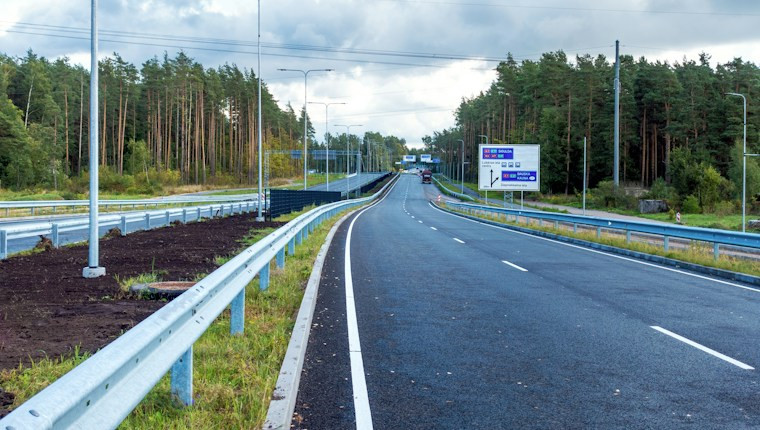
If you stop on an expressway, leave the car and move behind the guardrail (illustrative image)
Save This First: Who to Call for What
Japan does not use 911, 999 or 112 as its main numbers. Police and ambulance are two separate numbers.
| Situation | Call | Good to know |
|---|---|---|
| Someone is injured, or a vehicle is on fire | 119 | Fire and ambulance. Most areas can add a phone interpreter to the call; languages vary by area |
| Any traffic accident, even a minor scrape | 110 | Police. An interpreter may be connected. This can take time, so stay on the line |
| Stopped on an expressway, or debris or damage on the road | #9910 | Road emergency line, 24 hours, toll free. Does not work from satellite phones or 050 IP phones. For an accident you still call 110 |
| At the side of an expressway | Emergency phone | Lift the handset to reach the road control center |
| Flat tire, breakdown, need a tow | Emergency number on your rental contract | Handled by the supplier providing the car. Confirm the number at pickup |
| Roadside help when you cannot reach the supplier | JAF #8139 0570-00-8139 | 24 hours; call charges apply. Non-members can use it for a fee, and may be turned away at peak times. From an overseas mobile, JAF says to call the nearest call center instead: Kanto 03-5730-0111 (also Hokkaido and Tohoku), Chubu 052-889-5300, Kansai 06-6455-0123 (also Chugoku and Shikoku), Kyushu 092-841-5000 (also Okinawa) |
| Advice in an emergency such as an accident or illness | 050-3816-2787 | Japan Visitor Hotline by the Japan National Tourism Organization, 24 hours, English, Chinese and Korean. As a rule it does not do three-way interpreting, and it does not replace 110 or 119 |
Whoever you call will need three things: where you are, what happened, and whether anyone is hurt. On ordinary roads, give the nearest address or landmark from your map app. On expressways, give the road name, direction of travel and the kilometer marker at the roadside, or the last interchange you passed. GoodCars suggests taking a screenshot of this table before you set off, so you still have it where the signal is weak.

Stop the car before you call; using a handheld phone while driving is illegal (illustrative image)
Accident on an Ordinary Road: Seven Steps
Japanese law requires everyone involved in an accident to stop at once, help the injured, prevent further danger and report to the police. GoodCars combined this with the published accident procedures of Japanese rental companies into an order you can follow at the scene:
- Stop and turn on your hazard lights. Do not drive off, however small the contact was.
- Check for injuries. If anyone is hurt, call 119 and follow the instructions. Mention even injuries that look minor.
- Photograph the scene, then move the car out of traffic if it is safe to do so. Capture the damage, license plates and surrounding road. If the car cannot move safely, leave it.
- Call 110. You must report even if nobody is hurt.
- Call the emergency number on your contract, explain what happened, and follow the supplier's instructions from then on.
- Write down the details: the other party's name, phone number, plate and insurer, plus the police unit that attended.
- Do not settle privately. Do not promise to pay or sign anything at the scene.

Even a small scrape must be reported. Take photos before moving the car (illustrative image)
The question we hear most is why a small scrape needs the police at all. GoodCars covered the penalties, and why no police report means no accident certificate and possibly no coverage, in our guide to Japan's traffic rules and fines. One point to add here: this applies even when there is no other party. Hitting a guardrail, a utility pole, a parking garage pillar or an animal all count. That matters especially on the long rural roads covered in our Hokkaido car rental guide.
On an Expressway: Your Car Is Not a Safe Place
This is the most important section of this guide. NEXCO, the expressway operator, repeatedly warns of fatal crashes into stopped vehicles, and its official wording is that the inside of the car is not a safe zone. If you are stopped on the main lanes or the shoulder, this is the order:
- Get to the shoulder or an emergency parking bay, and stop on the left. Japan drives on the left, so the shoulder is on the left, which is the opposite of what many visitors are used to. If you can still drive safely to a rest area or off at an interchange, do that. Stopping on an expressway is only allowed when an accident or breakdown leaves no choice.
- Warn traffic behind you: hazard lights, a road flare (hatsuentou) and a warning triangle. Walk back on the outer side of the guardrail to place them, and skip this if it is too dangerous.
- Everyone gets out and moves behind the guardrail, to the rear of the car. Nobody stays inside.
- Report only once you are safe: call 110 or #9910, or use an emergency phone. Report even if a tow is already on its way. After an accident, make sure 110 has been called: #9910 and emergency phones only reach the road operator.
- Then call the emergency number on your contract.
On NEXCO roads, emergency phones stand roughly every 1 km along the shoulder and every 200 m inside tunnels. Walk to them on the outer side of the guardrail. Some NEXCO East sections have taken their shoulder phones out of service and now direct drivers to call #9910 by mobile, so do not rely on them alone.
If It Happens in a Tunnel

Tunnels have their own reporting equipment. In a fire, follow the announcements to an emergency exit (illustrative image)
The basic order is the same. NEXCO Central tunnels have push-button alarms about every 50 m, which report a fire automatically once pressed until the lamp lights, and emergency phones about every 200 m. If you must abandon the car, for example in a fire, the official instruction is: pull to the left, apply the parking brake, stop the engine, leave the key in the car and leave the doors unlocked, so that the car can be moved for emergency vehicles. Then follow the tunnel announcements to an emergency exit or the tunnel mouth.
Flat Tire: Stop Safely Before You Think About Changing It
If the steering suddenly pulls to one side, the car shakes, or you hear a rhythmic thumping, you may have a tire problem. Do not brake hard. Hold the wheel firmly, slow down gradually, signal and pull over. On an expressway, follow the order in the section above.

Do not judge for yourself whether a flat tire can still be driven on (illustrative image)
Once stopped, call the emergency number on your contract first. The published terms of a major Japanese rental company, for example, say you must stop driving at once when you notice a fault, contact the company and follow its instructions. Your own contract is what counts. GoodCars sees three common wrong assumptions:
- There may be no spare. Many recent cars carry only a tire repair kit, and a kit cannot fix sidewall damage or larger holes.
- Ask before using sealant. Using it may change how the tire has to be dealt with afterward.
- A spare has its own speed limit. The limit for a temporary spare depends on the car. Check the owner's manual or the tire sidewall and do not drive at normal speed.
Whether tire damage falls under your coverage differs by plan, so go by your booking page and rental contract.
Breakdowns, Dead Batteries and Towing
A red warning light, an overheating gauge, smoke, a strange smell or a loud new noise all mean the same thing: find a safe place, stop, turn off the engine and call the emergency number on your contract. Do not try to nurse the car back to the return office. GoodCars would point out that the terms mentioned above require you to stop driving when you notice a fault.

Check with the supplier before arranging a tow (illustrative image)
Towing and repairs go through the supplier. The same terms say repairs are in principle done by the company or at a garage it designates, so a repair you arrange yourself can lead to a dispute later. Turn to JAF only if you cannot get through, and ask about the cost first:
- Non-members can use JAF. Payment is by cash or credit card at the scene when the work is finished, and you must agree to this when you call.
- When demand is high, members come first and non-members may be declined.
- JAF offers free phone interpretation in 24 languages, including English. Tell the operator which language you need.
- Fees depend on the work and the time of day; see the JAF website. Ask the supplier whether any of it can be claimed back.
Putting the wrong fuel in is another common cause. If you notice, do not start the engine, and see our Japan gas station guide.
After the Police Leave: Certificate, Repairs and Returning the Car
Three things remain once the scene is cleared.
The traffic accident certificate. It is issued by the Japan Safe Driving Center, and only for accidents reported to the police. The fee is 1,000 yen per copy and mail delivery takes about 10 days. Once you have left Japan, a proxy living in Japan has to apply at a counter with your power of attorney. Ask the supplier whether you need to apply yourself, which is why you should note the police unit that took the report.

Write down the police unit and contacts on the spot; this is very hard to recover from home (illustrative image)
Whether you can keep driving. The supplier decides whether you can keep using the car, whether it will be swapped, and where it should be returned. Do not carry on with your itinerary just because the car still moves.
What it will cost. Whether repairs, towing and the non-operation charge (NOC) are covered depends on your booking page and rental contract, and GoodCars will not draw conclusions for any plan here. Note that under the published terms mentioned above, insurance and compensation are not paid when the terms are breached, and failing to report to the police or the company is that kind of risk. For the basics, see our Japan car rental price guide and complete guide to renting a car in Japan.
Five Minutes at Pickup Save an Hour of Panic
Searching for answers after something goes wrong is too late. GoodCars recommends sorting these out at the counter:
- Emergency number: which number to use for accidents and breakdowns, whether it is staffed at night, and whether it has foreign-language support. Take a photo of the contract.
- Equipment: the flare is usually by the front passenger's feet. Ask staff whether the car has a warning triangle and a spare or repair kit, and where they are. If it does not, ask what you should do instead.
- Can your phone make calls? A data-only eSIM or pocket Wi-Fi with no phone number may not be able to dial 110 or 119. At least one person in your group should have a line that can make voice calls. From an overseas mobile, call JAF on the regional number in the table above, and ask your carrier whether #9910 works when roaming.
- Documents on you: police will check your license. Most visitors need an International Driving Permit in the 1949 Geneva Convention format, plus their home license and passport; Vienna Convention permits are not valid in Japan. Drivers from Switzerland, Germany, France, Belgium, Monaco and Taiwan instead need their license with an official Japanese translation.
- Coverage: read what your plan includes, going by your booking page and contract.
See GoodCars Pickup Locations in Japan
Frequently Asked Questions
Q1. I hit a guardrail. No other car, nobody hurt. Do I still call the police?
Yes. A single-vehicle accident also needs a call to 110, and then to the emergency number on your contract. Without a report you cannot get an accident certificate, which makes everything afterward much harder.
Q2. I do not speak Japanese. What happens when I call 110 or 119?
Call anyway and start by saying "English". Police and fire services can add an interpreter to the call, but languages and connection time vary by area, so stay on the line. Ask someone nearby to help if you can. GoodCars also suggests opening your map app first so you can read out your location.
Q3. Can I just call JAF directly?
Call the emergency number on your contract first. Rental terms require you to follow the company's instructions, and the contract decides who pays. If you cannot reach them, use #8139 or 0570-00-8139 from a Japanese phone. From an overseas mobile, JAF says to call the nearest call center: Kanto 03-5730-0111 (also Hokkaido and Tohoku), Chubu 052-889-5300, Kansai 06-6455-0123 (also Chugoku and Shikoku), Kyushu 092-841-5000 (also Okinawa).
Q4. Can I drive slowly to the next rest area on a flat?
Do not make that call yourself. Stop at the nearest safe place and follow the supplier's instructions. If you are already on an expressway shoulder, everyone should wait behind the guardrail.
Q5. What if my phone cannot make the call?
On expressways, use an emergency phone; tunnels also have push-button alarms. On ordinary roads, ask a passer-by, a shop or someone in your group. GoodCars suggests confirming before you leave that at least one phone can make voice calls.
Q6. The car still runs after the accident. Can I keep going?
Ask the supplier first. Even light damage can affect safety, and the company decides whether the car stays in use.
Q7. Do I have to pay for towing and repairs myself?
That depends on your plan, so go by your booking page and rental contract. When booking through GoodCars, read the plan details before you confirm. At the scene, do not agree to pay anyone until you have spoken to the supplier.
Go to GoodCars Japan Car Rental
- Narita Airport (Chiba) / Chiba Station / Kinshicho Station (Tokyo and Kanto)
- New Chitose Airport (Hokkaido)
- Fukuoka Airport (Kyushu)
- Naha Airport Station (Okinawa)