


Renting a 7- or 8-Seater in Japan | No 9-Seaters, Luggage Space, and Where GoodCars Has Minivans

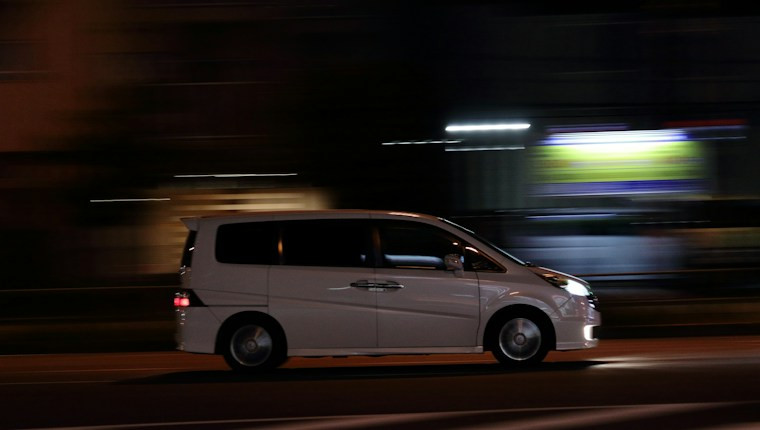
A typical Japanese minivan with sliding doors and three rows of seats, the most common choice for group road trips (illustrative image)
Travelling around Japan as a family of six, three generations together, or a group of seven or eight friends? The first question is always which car to book. This GoodCars guide covers multi-seat rentals only: which class fits how many people and how many bags, how much luggage space is left once the third row is full, why "9-seaters" barely exist in Japan, and which 7- and 8-seaters we actually found on GoodCars /global/ at each pickup point on 13 November 2026.
- 5–6 people: a compact 7-seater (Freed, Sienta class). 6–7 people or lots of bags: an 8-seater (Serena, Noah, Voxy, Stepwgn)
- With all three rows occupied, an 8-seater has room for roughly 2 large suitcases
- Japan's rental market has almost no 9-seaters; the next size up is the 10-seat Hiace, which a category B-only IDP does not cover
- 8-seaters found by GoodCars at the time of writing: Naha from about ¥5,200 a day, New Chitose about ¥8,000, Fukuoka about ¥8,500, Narita about ¥10,000
- At all four points, one 8-seater was cheaper than two small cars
Quick answer: which class for how many people and bags
Japanese multi-seat rentals fall into roughly three sizes. The seat count is only the upper limit; what really decides it is how many bags you have. Here is how GoodCars would choose:
| Group and luggage | Suggested class | Typical models |
|---|---|---|
| 5 people + 3–4 large suitcases | Compact 7-seater (fold the third row for luggage) | Honda Freed, Toyota Sienta |
| 6–7 people, light luggage | 8-seat minivan | Nissan Serena, Toyota Noah/Voxy, Honda Stepwgn |
| 7–8 people + one large case each | Won't fit in one 8-seater → two cars, or ship some bags ahead | — |
| 9–10 people | 10-seat van (strict licence limits) or two cars | Toyota Hiace |
The same model name often comes in both 7- and 8-seat layouts. A 7-seater has two separate second-row seats with a walkway to the third row; an 8-seater has a three-person bench, which adds a seat but means folding a seat to reach the back. Premium models such as the Alphard and Vellfire also come in both layouts. The booking page shows the actual number of seats.

7-seaters usually have two separate second-row seats; 8-seaters have a three-person bench (illustrative image)
How much luggage fits with the third row in use
This is where people misjudge minivans most. Nippon Rent-A-Car, one of Japan's large rental companies, publishes photos of its 8-seat Noah: with all three rows in use, the back takes 2 suitcases of about 75×51×31 cm, and a pushchair only fits if you fold seats down. In other words, with eight people on board you have space for about two big cases.
- If the group fills every seat, plan on no more than one large case per two people.
- The third row folds away to the sides or forwards, which opens up a lot of space but removes 2–3 seats.
- Pushchairs, ski bags and golf bags take a lot of room; count them in.
- If it simply will not fit, send big bags ahead to your next hotel by luggage delivery, or split into two cars.

Count your bags before choosing: with three rows full, an 8-seater takes about 2 large cases (illustrative image)
Why there are almost no 9-seaters, and what your licence allows
Multi-seat rentals in Japan are almost all 7 or 8 seats. Nine-seaters are practically non-existent; the next size up is the 10-seat Toyota Hiace (Toyota's official specifications list a seating capacity of 10). At the time of writing GoodCars found Hiace vans at Narita Airport and Kinshicho Station only.
Check your licence before booking anything above eight seats:
- Most visitors drive on a 1949 Geneva Convention International Driving Permit, together with their home licence and passport. Category B on the IDP covers passenger vehicles with no more than 8 seats in addition to the driver's seat (Aichi Prefectural Police guidance). 7- and 8-seaters fall within category B, while a 10-seat Hiace needs a category D stamp; whether you can rent one still depends on your own licence and the rental company's confirmation.
- Only the 1949 Geneva format is valid in Japan; IDPs in the Vienna Convention format are not accepted.
- Licences from Switzerland, Germany, France, Belgium, Monaco and Taiwan are used with an official Japanese translation instead of an IDP. What you may drive follows the categories of your home licence; confirm with the rental company before booking.
- You can drive for up to 1 year from your entry to Japan, and not beyond the validity of your licence or IDP. Mainland China licences cannot be used in Japan at all.
If you are not sure what your documents cover, ask the supplier before booking rather than finding out at the counter.
Which multi-seaters GoodCars /global/ has at each pickup point
The table shows what GoodCars found on /global/ on 13 November 2026: a weekday pickup in early December, 2-day rental, same-point return, converted to a daily price. We also checked weekdays in late November and mid-January and got the same prices. Click a pickup point to start a search there.
| Pickup point | Multi-seat models found (seats shown in the list) | Approx. per day (JPY) |
|---|---|---|
| Narita Airport | Nissan Serena (8 seats) Honda Stepwgn (7 seats) Toyota Alphard (8 seats) Toyota Alphard (7 seats) Toyota Hiace (10 seats) Toyota Vellfire/Alphard 4WD | 10,000 11,000 11,000 16,000 16,000 17,000 |
| Kinshicho Station (Tokyo) | Nissan Serena (8 seats) Toyota Alphard (8 seats) Toyota Hiace (10 seats) Toyota Alphard (7 seats) | 10,000 11,000 16,000 16,000–27,000 |
| Chiba Station | Toyota Prius Alpha (7 seats) Toyota Noah (7 seats) Toyota Vellfire (8 seats) | 14,200 19,000 36,200 |
| New Chitose Airport | Mitsubishi Delica D:5 (8 seats) Toyota Alphard/Vellfire (8 seats) | 8,000 14,000–23,500 |
| Fukuoka Airport | Honda Odyssey (7 seats) Serena/Noah/Voxy/Stepwgn/Esquire (8 seats) Nissan Caravan (7 seats) | 7,500 8,500 15,000 |
| Naha Airport | Honda Freed (7 seats) Nissan Serena (8 seats) Toyota Voxy (8 seats) Honda Freed 2.0/Mitsubishi Delica D:5 (7 seats) | 4,800 5,200–10,000 6,800 10,000 |
Things to watch:
- The same model can show a different seat count at different points: the Delica D:5 shows 8 seats at New Chitose and 7 at Naha; the Noah shows 7 at Chiba Station and 8 at Fukuoka. Check the number in the list before you book.
- Some listings show 5 seats (for example the Sienta in Fukuoka and the Stepwgn at Kinshicho). That may be a 5-seat version or a labelling issue; the booking page is what counts, and you can ask the supplier first.
- Prices change daily and usually rise at New Year and Golden Week. The booking page shows the actual price, and you can switch the display currency there.
Search minivans on GoodCars /global/
One big car or two small ones?
With eight people, many groups think two small cars will be easier to drive. GoodCars compared prices on the same day at the same pickup point, checked on 13 November 2026:
| Pickup point | Cheapest 5-seater | Two cars per day | One 8-seater per day |
|---|---|---|---|
| Naha Airport | Toyota Passo:3,500 | 7,000 | Nissan Serena:5,200 |
| Fukuoka Airport | Toyota Roomy:5,000 | 10,000 | Serena/Noah/Voxy:8,500 |
| New Chitose Airport | Suzuki Solio:6,000 | 12,000 | Mitsubishi Delica D:5:8,000 |
| Narita Airport | Honda Fit:7,000 | 14,000 | Nissan Serena:10,000 |
Prices change daily, so the booking page always has the final amount. At all four points we checked this time, one 8-seater was cheaper, and the other costs double with two cars:
- Tolls: on Japan's expressways an 8-seat minivan is in the same "regular car" (普通車) class as a small car, and so is the 10-seat Hiace (only minibuses with 11 or more seats are "medium"; kei cars are a separate, cheaper class). Two cars pay two tolls.
- Parking: hotels and sights charge per car.
- Fuel: a minivan uses more fuel, but usually less than two small cars combined.
- Drivers: two cars need at least two drivers, each with full licence documents and registered as a driver.
Two cars do give you more luggage space, easier parking and the freedom to split up. They make sense when the group wants different plans or the bags truly will not fit.

Two cars means two sets of tolls and parking, and two drivers (illustrative image)
Driving a big car in Japan: height and parking limits
Height is where minivans get stuck. Many mechanical multi-storey car parks in Japanese cities have a height limit of about 1.55 m, which rules out almost every 7- and 8-seater. Toyota lists the Noah at about 1.9 m tall (1.925 m for the 4WD), and the 10-seat Hiace at 2.105 m tall and 1.88 m wide.

This car park entrance limits height to 2.07 m: a Noah-class minivan fits, a 10-seat Hiace (2.105 m) does not
- GoodCars suggests asking your hotel, when you book, whether it has flat (ground-level) parking or spaces marked ハイルーフ可 (high-roof OK).
- Every car park entrance shows its height limit (高さ制限). Compare it with your car before driving in.
- In town, choose flat coin parking lots (コインパーキング); they are also easier to reverse into and out of.
Narrow roads and busy sights: practical tips for big cars
A common question to GoodCars is whether a big car is hard to drive in Japan. Residential streets and old town roads are narrow, and one car often has to pull in to let the other pass. An 8-seater is not especially wide, but it is long, and the rear wheels cut inside on tight turns, so take narrow corners slowly.

Japanese residential and old-town streets are narrow; slow down for passing and turning (illustrative image)
- Old cities such as Kyoto: car parks near temples and shrines are small and fill up in peak season. Park on the outskirts and take public transport in. See our Kyoto car rental guide for parking and traffic rules.
- Resort towns such as Karuizawa: peak-season weekends bring traffic and queues for car parks, and a minivan is harder to fit in than a small car. Arrive early. Route ideas are in our Karuizawa and Nikko self-drive route.
- Mountains and countryside: navigation may send you down single-lane roads where reversing a big car is hard. Set the navigation to prefer main roads.

On single-lane country roads a big car is hard to reverse; set navigation to prefer main roads (illustrative image)
Travelling with children: car seats take up seats
Children under 6 must use a child seat in Japan, and a child seat takes up more than one seat's worth of space, so a 7-seater may only carry six once a seat is fitted. Rules, renting a seat and where to install it are covered in the GoodCars guide to family self-driving in Japan, so we will not repeat them here. The one rule for minivans: count the child seats first, then choose the class.
FAQ
Q1. Can I rent a 9-seater in Japan?
Hardly ever. Japanese minivans are mainly 7 or 8 seats, and the next size up is the 10-seat Hiace. At the time of writing GoodCars found the Hiace at Narita Airport and Kinshicho Station, but driving it needs category D on your IDP.
Q2. What is the difference between a 7-seater and an 8-seater?
Usually the second row: two separate seats with a walkway on a 7-seater, a three-person bench on an 8-seater. Pick the 8-seater for maximum people, the 7-seater if older passengers will use the third row.
Q3. Will 6 adults and 6 large suitcases fit in one 8-seater?
Usually not. With all three rows in use, an 8-seater takes about 2 large suitcases. Six people can fold one side of the third row, or take two cars.
Q4. Can I drive the 10-seat Hiace on an International Driving Permit?
Only if your 1949 Geneva IDP has category D. Category B covers up to 8 seats besides the driver, which includes 7- and 8-seaters; whether you can rent one still depends on your licence and the rental company, so confirm before booking.
Q5. The listing's seat count differs from the model's usual spec. Which is right?
The booking page. The same model comes in 7- and 8-seat versions; if in doubt, ask the supplier through GoodCars before you book.
Q6. Are tolls higher for a big car?
Not compared with a regular small car. 7- and 8-seaters and the 10-seat Hiace are all "regular cars" on Japanese expressways, the same rate as a small car; kei cars are a separate, cheaper class. See our Japan expressway and ETC guide for details.
Q7. What should we know about driving two cars together?
Every driver needs their own licence documents and must be registered. Set navigation in each car, agree on a rest area to meet at, and do not try to tailgate each other. Remember tolls and parking are paid twice.
Once you know your headcount and number of bags, pick a pickup point on GoodCars /global/ and compare the minivans.
Book a car in Japan on GoodCars /global/