'%3e%3cpath%20fill='red'%20d='M0%200h720v480H0z'/%3e%3cpath%20fill='%23000095'%20d='M0%200h360v240H0z'/%3e%3cg%20fill='%23fff'%3e%3cpath%20d='m154%20126.9-2.5%209.6%209.4%202.6-1.8-7.1zm46.9%205.1-1.8%207.1%209.4-2.6-2.5-9.6zm-41.8-24-5.1%205.1%201.9%206.9z'/%3e%3cpath%20d='m155.9%20120-1.9%206.9%205.1%205.1z'/%3e%3cpath%20d='m154%20113.1-6.9%206.9%206.9%206.9%201.9-6.9zm14%2027.8%205.1%205.1%206.9-1.9zm18.9%205.1%209.6%202.5%202.6-9.4-7.1%201.8z'/%3e%3cpath%20d='m192%20140.9%207.1-1.8%201.8-7.1zm-31.1-1.8%202.6%209.4%209.6-2.5-5.1-5.1zm19.1%205%206.9%201.9%205.1-5.1z'/%3e%3cpath%20d='m173.1%20146%206.9%206.9%206.9-6.9-6.9-1.9zm-12.2-45.1-9.4%202.6%202.5%209.6%205.1-5.1zm-1.8%2031.1%201.8%207.1%207.1%201.8zm45-12%201.9-6.9-5.1-5.1z'/%3e%3cpath%20d='m168%2099.1-7.1%201.8-1.8%207.1zm32.9%208.9-1.8-7.1-7.1-1.8zm5.1%2018.9%206.9-6.9-6.9-6.9-1.9%206.9z'/%3e%3cpath%20d='m200.9%20108-8.9-8.9-12-3.2-12%203.2-8.9%208.9-3.2%2012%203.2%2012%208.9%208.9%2012%203.2%2012-3.2%208.9-8.9%203.2-12z'/%3e%3cpath%20d='m200.9%20132%205.1-5.1-1.9-6.9zm5.1-18.9%202.5-9.6-9.4-2.6%201.8%207.1zm-6.9-12.2-2.6-9.4-9.6%202.5%205.1%205.1zm-26-6.9-9.6-2.5-2.6%209.4%207.1-1.8zm6.9%201.9-6.9-1.9-5.1%205.1z'/%3e%3cpath%20d='m186.9%2094-6.9-6.9-6.9%206.9%206.9%201.9z'/%3e%3cpath%20d='m192%2099.1-5.1-5.1-6.9%201.9zM173.1%20146l-9.6%202.5%204.5%2016.6%2012-12.2zm-5.1%2019.1%2012%2044.9%2012-44.9-12-12.2zm-7.1-26-9.4-2.6-4.4%2016.4%2016.4-4.4z'/%3e%3cpath%20d='m147.1%20152.9-12%2045.1%2032.9-32.9-4.5-16.6zm-12-20.9L102%20165.1l45.1-12.2%204.4-16.4z'/%3e%3cpath%20d='m154%20126.9-6.9-6.9-12%2012%2016.4%204.5zm0-13.8-2.5-9.6-16.4%204.5%2012%2012z'/%3e%3cpath%20d='M135.1%20108%2090%20120l45.1%2012%2012-12zm90%2024-16.6%204.5%204.4%2016.4%2045.1%2012.2z'/%3e%3cpath%20d='m199.1%20139.1-2.6%209.4%2016.4%204.4-4.4-16.4zm-12.2%206.9-6.9%206.9%2012%2012.2%204.5-16.6zm19.1-19.1%202.5%209.6%2016.6-4.5-12.2-12z'/%3e%3cpath%20d='m192%20165.1%2033.1%2032.9-12.2-45.1-16.4-4.4zm7.1-64.2%209.4%202.6%204.4-16.4-16.4%204.4z'/%3e%3cpath%20d='M225.1%20108%20258%2075.1l-45.1%2012-4.4%2016.4zm-12.2-20.9L225.1%2042%20192%2075.1l4.5%2016.4zm12.2%2044.9%2044.9-12-44.9-12-12.2%2012z'/%3e%3cpath%20d='m206%20113.1%206.9%206.9%2012.2-12-16.6-4.5zm-38-38L135.1%2042l12%2045.1%2016.4%204.4z'/%3e%3cpath%20d='m160.9%20100.9%202.6-9.4-16.4-4.4%204.4%2016.4z'/%3e%3cpath%20d='m147.1%2087.1-45.1-12%2033.1%2032.9%2016.4-4.5zm39.8%206.9%209.6-2.5-4.5-16.4-12%2012z'/%3e%3cpath%20d='M192%2075.1%20180%2030l-12%2045.1%2012%2012z'/%3e%3cpath%20d='m173.1%2094%206.9-6.9-12-12-4.5%2016.4z'/%3e%3c/g%3e%3ccircle%20cx='180'%20cy='120'%20r='51.1'%20fill='%23000095'/%3e%3ccircle%20cx='180'%20cy='120'%20r='45.1'%20fill='%23fff'/%3e%3c/g%3e%3c/svg%3e)
'%20d='m0%200%2016%2011h61%2061%2061%2061%2060L47%2037h61%2061%2060%2061L16%2063h61%2061%2061%2061%2060L47%2089h61%2061%2060%2061L16%20115h61%2061%2061%2061%2060L47%20141h61%2061%2060%2061L16%20166h61%2061%2061%2061%2060L47%20192h61%2061%2060%2061L16%20218h61%2061%2061%2061%2060L0%200'/%3e%3c/svg%3e)

'%20d='M-50-12v24m6%200v-24m6%200v24m76%200V1m0-2v-11m6%200v11m0%202v11m6%200V1m0-2v-11'/%3e%3cpath%20transform='rotate(-33.69006752598)'%20d='M-50-12v24m6%200V1m0-2v-11m6%200v24m76%200V1m0-2v-11m6%200v24m6%200V1m0-2v-11'/%3e%3c/g%3e%3cg%20transform='rotate(33.69006752598)'%3e%3cpath%20fill='%23cd2e3a'%20d='M12%200a18%2018%200%2011-36%200%2024%2024%200%201148%200'/%3e%3cpath%20fill='%230047a0'%20d='M0%200a12%2012%200%201124%200%2024%2024%200%2011-48%200%2012%2012%200%201024%200'/%3e%3c/g%3e%3c/svg%3e)


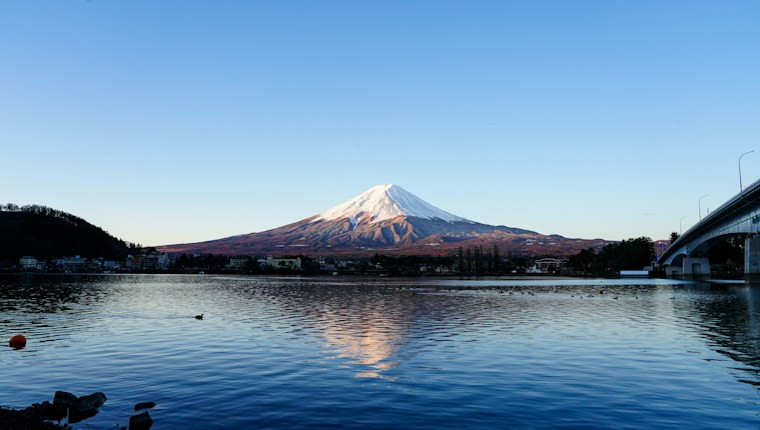
Mount Fuji & Lake Kawaguchiko Self-Drive Route: One to Three Days from Tokyo

GoodCars works with local Japanese rental suppliers, and across every Tokyo-based enquiry we receive, Mount Fuji and the Fuji Five Lakes are the runaway favourite. The logic is simple. Central Tokyo has one of the best rail networks on earth, so a car there is a liability. Change the destination to the lakes and everything flips: timetables, transfers and luggage become the problem, and a car solves all three in a single day.
Whether you should rent a car in Tokyo at all is covered in the Tokyo & Kanto Car Rental Guide, and documents, insurance and cost basics live in the Complete Guide to Renting a Car in Japan. GoodCars will not repeat either here. This article answers one question only: once you have the keys, how do you actually plan the Fuji and Kawaguchiko leg?
- Central Tokyo to Lake Kawaguchiko on the Chuo Expressway is roughly 90 km, about 1 hour 10 minutes when clear, with ETC tolls around 2,600 yen
- Narita Airport straight to the lakes is about 180 km and 2 hours 20 minutes — and you can avoid the Tokyo Metropolitan Expressway entirely
- The enemy on the way home is the Kobotoke Tunnel on the Chuo Expressway: still two lanes inbound, and one of Japan's best-known jam points on weekend afternoons
- The toll road up to the Fifth Station costs roughly 2,800 yen return for a standard car, but private vehicles are barred during the summer climbing season
- The scarce resource here is not parking spaces — it is parking spaces that face Mount Fuji. Arrive late and they are gone
First decide whether this drive is worth it
GoodCars treats "renting a car in Tokyo" and "driving to Mount Fuji" as two separate decisions. The city leg is one we usually talk people out of. The lakes leg is where a car earns its keep, for three reasons.
- The sights are scattered and there is no metro: Kawaguchiko, Oshino, Yamanakako and Arakurayama sit fifteen to thirty minutes apart. By bus you will manage two stops a day; by car, four
- Mount Fuji hides: whether the summit is visible can change within half an hour, and only a car lets you reposition the moment the cloud breaks
- Luggage stops being a problem: hauling large cases onto a limited express and then a local bus is the worst part of this route, and driving skips it entirely
The honest counter-case: if you only have half a day, you are staying in central Tokyo and you are travelling on a weekend, GoodCars would suggest the highway bus instead — that half day has a real chance of being spent in traffic. The barrier on this route is not driving difficulty. It is scheduling.
Getting there from Tokyo and Narita: route, time and tolls

There is one main artery: the Chuo Expressway. Join it on Tokyo's western side, head west, branch at the Otsuki junction onto the Fujiyoshida line, and you arrive at the Kawaguchiko interchange. Distances and times below assume clear traffic.
| From | Main route | Distance | Clear-traffic time | ETC toll |
|---|---|---|---|---|
| West Tokyo (Takaido area) | Chuo Expwy → Kawaguchiko IC | approx. 94 km | approx. 1 h 10 min | approx. 2,640 yen |
| Chofu area | Chuo Expwy → Kawaguchiko IC | approx. 86 km | approx. 1 hour | approx. 2,600 yen |
| Narita Airport | Ken-O Expwy → Chuo Expwy → Kawaguchiko IC | approx. 180 km | approx. 2 h 20 min | varies by route |
Starting from Narita is the option most travellers overlook. Heading west on the Ken-O Expressway connects you to the Chuo Expressway without ever touching the Metropolitan Expressway, which means skipping the hardest driving in Japan. Landing and going straight to the mountain, never entering the city, is the itinerary GoodCars recommends most often to overseas visitors; terminal counters and shuttle timings are covered in the Narita Airport Car Rental Pickup Guide.
One day, two days or three: choosing your framework

The same road produces completely different itineraries depending on how long you have. Copy whichever framework fits.
| Length | Framework | Suits | Biggest risk |
|---|---|---|---|
| One day | Dawn departure → Arakurayama viewpoint → north shore → start home before 3 pm | Tight schedules, one good photo | Return traffic can add two hours |
| Two days | Day 1 arrive afternoon, stay lakeside → Day 2 dawn reflections plus Oshino → return in the evening | First-timers who want golden hour | Peak-season rooms sell out |
| Three days | Add a day east to Lake Yamanaka, or go up to the Fifth Station | Families and older travellers | Bad weather leaves day three empty |
GoodCars recommends two days. The reason is light. Mount Fuji looks best at dawn and dusk, and a day trip catches neither — you arrive into flat midday glare and leave before sunset. One night of accommodation buys you both of the good hours.
- On the expressway before 6 am: westbound weekend traffic builds noticeably from seven
- Photograph first, eat later: morning light and cloud cover both beat the afternoon
- Start home before 3 pm: this is the dividing line for the return leg, explained below
- Two stops only: adding a third is usually how a day trip turns into a night drive
Circling Lake Kawaguchiko: parking is the real variable

The lake loop is a little over twenty kilometres of easy, well-marked road with parking bays throughout. What actually shapes your day is which side you park on. The south shore holds the town and the restaurants; the north shore is the one that faces Mount Fuji, and the difference in value is enormous.
- Oishi Park on the north shore: faces the mountain directly and has a free car park — the best value viewpoint in the area. During the shibazakura and lavender festivals (roughly late April to early May, and late June to early July) it fills very early
- The prefectural lakeside car park: near the ropeway, free, space for around three hundred vehicles including coaches, but strictly first come first served and effectively full by midday in season
- The south shore: easy parking and plenty of food, but not the view — treat it as a lunch stop, not a photo stop
One more thing: most lakeside roads are single carriageway in both directions, so parking, turning and brief stops all demand attention to traffic behind you. The urge to stop the instant the summit appears is universal, but the verge is not a safe place to do it. Use a marked bay.
The Fifth Station: three things to check first

The road to the Fifth Station is a toll mountain road roughly 30 km long, climbing about 1,200 metres, starting near the Kawaguchiko interchange. The surface is wide and well maintained, so it is not a difficult drive — but GoodCars must be clear: you cannot simply go up whenever you like. Check three things before you commit.
| Check | Detail |
|---|---|
| 1. Seasonal restriction | During the summer climbing season (broadly early July to early September) private vehicles are prohibited. You park at a designated transfer car park and continue by shuttle bus or taxi. Buses, taxis and certain electric vehicles are exempt |
| 2. Cost | Outside the restricted period, a standard car pays roughly 2,800 yen for the full return trip (a one-way ticket to the first station is cheaper). During the restriction you instead pay around 1,000 yen to park, plus the shuttle fare |
| 3. Winter and weather | Winter hours are shorter with an earlier evening closure, and the road closes outright for snow or ice. Mountain weather turns fast; dense fog and strong wind are routine |
So the GoodCars position is simple: treat the Fifth Station as a bonus, not a fixture. Go up if conditions allow; if it is restricted or closed, the lakeside and surrounding routes still make a full day. What you must avoid is building an entire day around it and only discovering the closure at the foot of the mountain.
Oshino and Lake Yamanaka: extending day two eastwards

If you skip the Fifth Station on day two, GoodCars suggests heading east instead. Kawaguchiko interchange to the Oshino springs takes about twenty minutes, and Lake Yamanaka lies just beyond, with Mount Fuji in view most of the way. It is the most relaxed stretch of the whole route.
- Oshino Hakkai: a compact spring-water hamlet; one to two hours is about right. Parking is mostly private, around 300 to 500 yen per visit for a standard car, sometimes waived if you spend in the shops
- Lake Yamanaka: the largest of the five lakes, with the most open outlook and an easy loop road — good for driving with no agenda
- Further south: a little over thirty minutes from Oshino or Yamanaka towards Gotemba brings you to a large outlet mall, which makes a solid wet-weather fallback
- A short toll road links Fujiyoshida with Lake Yamanaka, charged in sections at roughly 260 to 540 yen per section for a standard car
- It is short and cheap and worth it when you are pressed; if you are not, the ordinary road costs only about fifteen minutes more and offers better scenery
- Rent an ETC card: this route passes several toll points in a single day, and paying cash at each one is slow
The drive home: the Kobotoke Tunnel decides your departure time

This route has one genuine weakness, and it is the way back. The stretch around the Kobotoke Tunnel on the Tokyo-bound Chuo Expressway is among the most notorious bottlenecks in Japan: it remains two lanes while the sections either side are mostly three, and the uphill approach compounds it. Traffic piles up in exactly the same place every weekend afternoon. Widening work and a new tunnel are under way, but the queues remain the norm for now.
GoodCars reduces the advice to one sentence: on a weekend, either leave before 3 pm or wait until after 7 pm. Depart in between and losing one to two hours is entirely normal.
| Stage | Allow | Notes |
|---|---|---|
| Kawaguchiko → central Tokyo (clear) | 1 h 10 min – 1.5 h | Weekdays or late evening |
| Kawaguchiko → central Tokyo (weekend afternoon) | 2 – 3 hours | Peaks can run longer |
| Refuelling before return | 15 minutes | Fill up in Kawaguchiko town |
| Return paperwork and inspection | 10 – 20 minutes | Longer queues in peak season |
| Branch → airport shuttle | 15 – 30 minutes | Fixed departures; miss one and you wait |
If you are returning the car and flying out the same day, GoodCars suggests reaching the branch at least three and a half hours before departure, with return traffic built into that figure. Confirm the branch's opening hours too — what strands travellers is usually the office closing, not the airport.
- The Fuji Five Lakes sit at roughly eight hundred to one thousand metres. Snow falls from January to March and lakeside roads can ice over morning and evening
- Request winter tyres when you book — it is a paid option that has to be arranged in advance and may not be available on the day
- Road closures follow the official daily bulletin. Winter actually gives the clearest views of Mount Fuji, so it is worth coming — just come prepared
Frequently asked questions
Q1. Is this drive suitable for a first-timer in Japan?
Yes. It is mostly expressway, with wide lanes and clear signage — far easier than central Tokyo. What needs adjusting to is driving on the left from the right-hand seat, so spend fifteen minutes on ordinary roads before joining the expressway. In the experience of GoodCars, this route is an ideal first drive in Japan.
Q2. Can it genuinely be done in a day?
Yes, but the conditions are strict: leave before six, plan only two stops, and start home before three. Miss any one of them and you are likely driving back in the dark and in traffic. If your schedule allows it at all, GoodCars strongly prefers the two-day version.
Q3. Do I have to go up to the Fifth Station?
No. Its appeal is the sensation of standing above the clouds, but private cars are barred during the summer climbing season and snow can close the road in winter, so access is never guaranteed. Plan it as a bonus with the lakes, Oshino and Yamanaka as alternatives and nothing gets derailed.
Q4. Is parking at Lake Kawaguchiko really that hard?
There are plenty of spaces overall, but very few that face Mount Fuji. Oishi Park and the prefectural lakeside car park are both free and popular, and fill before midday in season. GoodCars advises reaching your first viewpoint before 9 am, or deliberately travelling off-peak.
Q5. Do I need an ETC card for this route?
We strongly recommend one. You will pass several toll points on the Chuo Expressway and the local toll roads in a single day. ETC lanes mean no stopping and no change, and rates are usually better than cash. Add it when you book — arranging one later rarely works out.
Q6. Does this route work with young children or older travellers?
Very well, especially the two-day version. No single drive is long, the stops are half an hour apart at most, and there is a good choice of lakeside accommodation. If anyone is prone to motion sickness, weigh up the continuous bends on the Fifth Station road and stay by the lakes instead.
Q7. Can I drive in Japan on my home licence?
Only with the right paperwork. Most nationalities need an International Driving Permit issued under the 1949 Geneva Convention, together with the original licence and passport — permits in the Vienna Convention format are not accepted in Japan. A short list of countries instead uses an official Japanese translation of the licence rather than a permit: Switzerland, Germany, France, Belgium, Monaco, Estonia and Taiwan. Licences from mainland China and Indonesia cannot be used in Japan at all. You may drive for up to one year from your date of entry.