'%3e%3cpath%20fill='red'%20d='M0%200h720v480H0z'/%3e%3cpath%20fill='%23000095'%20d='M0%200h360v240H0z'/%3e%3cg%20fill='%23fff'%3e%3cpath%20d='m154%20126.9-2.5%209.6%209.4%202.6-1.8-7.1zm46.9%205.1-1.8%207.1%209.4-2.6-2.5-9.6zm-41.8-24-5.1%205.1%201.9%206.9z'/%3e%3cpath%20d='m155.9%20120-1.9%206.9%205.1%205.1z'/%3e%3cpath%20d='m154%20113.1-6.9%206.9%206.9%206.9%201.9-6.9zm14%2027.8%205.1%205.1%206.9-1.9zm18.9%205.1%209.6%202.5%202.6-9.4-7.1%201.8z'/%3e%3cpath%20d='m192%20140.9%207.1-1.8%201.8-7.1zm-31.1-1.8%202.6%209.4%209.6-2.5-5.1-5.1zm19.1%205%206.9%201.9%205.1-5.1z'/%3e%3cpath%20d='m173.1%20146%206.9%206.9%206.9-6.9-6.9-1.9zm-12.2-45.1-9.4%202.6%202.5%209.6%205.1-5.1zm-1.8%2031.1%201.8%207.1%207.1%201.8zm45-12%201.9-6.9-5.1-5.1z'/%3e%3cpath%20d='m168%2099.1-7.1%201.8-1.8%207.1zm32.9%208.9-1.8-7.1-7.1-1.8zm5.1%2018.9%206.9-6.9-6.9-6.9-1.9%206.9z'/%3e%3cpath%20d='m200.9%20108-8.9-8.9-12-3.2-12%203.2-8.9%208.9-3.2%2012%203.2%2012%208.9%208.9%2012%203.2%2012-3.2%208.9-8.9%203.2-12z'/%3e%3cpath%20d='m200.9%20132%205.1-5.1-1.9-6.9zm5.1-18.9%202.5-9.6-9.4-2.6%201.8%207.1zm-6.9-12.2-2.6-9.4-9.6%202.5%205.1%205.1zm-26-6.9-9.6-2.5-2.6%209.4%207.1-1.8zm6.9%201.9-6.9-1.9-5.1%205.1z'/%3e%3cpath%20d='m186.9%2094-6.9-6.9-6.9%206.9%206.9%201.9z'/%3e%3cpath%20d='m192%2099.1-5.1-5.1-6.9%201.9zM173.1%20146l-9.6%202.5%204.5%2016.6%2012-12.2zm-5.1%2019.1%2012%2044.9%2012-44.9-12-12.2zm-7.1-26-9.4-2.6-4.4%2016.4%2016.4-4.4z'/%3e%3cpath%20d='m147.1%20152.9-12%2045.1%2032.9-32.9-4.5-16.6zm-12-20.9L102%20165.1l45.1-12.2%204.4-16.4z'/%3e%3cpath%20d='m154%20126.9-6.9-6.9-12%2012%2016.4%204.5zm0-13.8-2.5-9.6-16.4%204.5%2012%2012z'/%3e%3cpath%20d='M135.1%20108%2090%20120l45.1%2012%2012-12zm90%2024-16.6%204.5%204.4%2016.4%2045.1%2012.2z'/%3e%3cpath%20d='m199.1%20139.1-2.6%209.4%2016.4%204.4-4.4-16.4zm-12.2%206.9-6.9%206.9%2012%2012.2%204.5-16.6zm19.1-19.1%202.5%209.6%2016.6-4.5-12.2-12z'/%3e%3cpath%20d='m192%20165.1%2033.1%2032.9-12.2-45.1-16.4-4.4zm7.1-64.2%209.4%202.6%204.4-16.4-16.4%204.4z'/%3e%3cpath%20d='M225.1%20108%20258%2075.1l-45.1%2012-4.4%2016.4zm-12.2-20.9L225.1%2042%20192%2075.1l4.5%2016.4zm12.2%2044.9%2044.9-12-44.9-12-12.2%2012z'/%3e%3cpath%20d='m206%20113.1%206.9%206.9%2012.2-12-16.6-4.5zm-38-38L135.1%2042l12%2045.1%2016.4%204.4z'/%3e%3cpath%20d='m160.9%20100.9%202.6-9.4-16.4-4.4%204.4%2016.4z'/%3e%3cpath%20d='m147.1%2087.1-45.1-12%2033.1%2032.9%2016.4-4.5zm39.8%206.9%209.6-2.5-4.5-16.4-12%2012z'/%3e%3cpath%20d='M192%2075.1%20180%2030l-12%2045.1%2012%2012z'/%3e%3cpath%20d='m173.1%2094%206.9-6.9-12-12-4.5%2016.4z'/%3e%3c/g%3e%3ccircle%20cx='180'%20cy='120'%20r='51.1'%20fill='%23000095'/%3e%3ccircle%20cx='180'%20cy='120'%20r='45.1'%20fill='%23fff'/%3e%3c/g%3e%3c/svg%3e)
'%20d='m0%200%2016%2011h61%2061%2061%2061%2060L47%2037h61%2061%2060%2061L16%2063h61%2061%2061%2061%2060L47%2089h61%2061%2060%2061L16%20115h61%2061%2061%2061%2060L47%20141h61%2061%2060%2061L16%20166h61%2061%2061%2061%2060L47%20192h61%2061%2060%2061L16%20218h61%2061%2061%2061%2060L0%200'/%3e%3c/svg%3e)

'%20d='M-50-12v24m6%200v-24m6%200v24m76%200V1m0-2v-11m6%200v11m0%202v11m6%200V1m0-2v-11'/%3e%3cpath%20transform='rotate(-33.69006752598)'%20d='M-50-12v24m6%200V1m0-2v-11m6%200v24m76%200V1m0-2v-11m6%200v24m6%200V1m0-2v-11'/%3e%3c/g%3e%3cg%20transform='rotate(33.69006752598)'%3e%3cpath%20fill='%23cd2e3a'%20d='M12%200a18%2018%200%2011-36%200%2024%2024%200%201148%200'/%3e%3cpath%20fill='%230047a0'%20d='M0%200a12%2012%200%201124%200%2024%2024%200%2011-48%200%2012%2012%200%201024%200'/%3e%3c/g%3e%3c/svg%3e)


Sapporo Car Rental Guide: City Pickup vs New Chitose Airport — Which One Makes Sense?

If you are searching for "Sapporo car rental", you are probably stuck on one question: you are staying in central Sapporo, so where should you actually pick up the car — at a downtown branch, or at New Chitose Airport the moment you land?
Let us be upfront, because honesty is how GoodCars works: GoodCars currently has no pickup location in central Sapporo. What we offer is pickup at New Chitose Airport. So this guide will not push you toward the airport blindly — instead, it lays out what driving in Sapporo is really like and compares both pickup options, so you can decide what fits your itinerary. The conclusion is yours to make.
- For sightseeing inside Sapporo, you do not need a car: subway, streetcar and walking cover it
- Downtown parking runs roughly 200–330 yen per 30 minutes; hotel parking is usually charged separately at around 1,000–2,500 yen per night
- If your trip centers on Lake Toya, Furano-Biei or eastern Hokkaido, pick up at New Chitose Airport
- Otaru as a day trip: the JR rapid train takes about 35 minutes — do not rent a car just for Otaru
- In winter, compacted snow and deep ruts make city streets harder to drive than rural highways
The short answer: your itinerary decides the pickup point
Before comparing prices, look at your trip type. The whole Sapporo rental decision fits in one table:
| Your trip type | What GoodCars suggests |
|---|---|
| Central Sapporo only (Odori, Tanukikoji, Susukino) | No car needed — transit plus walking |
| Sapporo plus an Otaru day trip | No car needed — the JR rapid is faster |
| Two city days first, then a road trip | City branch pickup, or JR back to New Chitose (compared below) |
| Straight into Lake Shikotsu / Furano / eastern Hokkaido | Pick up at New Chitose Airport, book online first |
One-line version: in Sapporo, a rental car is for leaving the city, not for touring it. Here is the reasoning behind each row.
Driving in central Sapporo: great transit, expensive parking

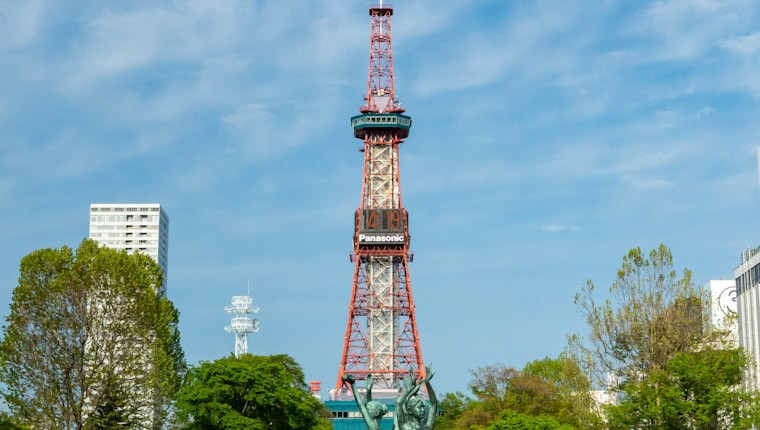
Sapporo has some of the best public transport in Japan: three subway lines through the core, a streetcar loop around Susukino, plus buses and JR. Odori Park, the TV Tower, Tanukikoji arcade and Nijo Market all sit within a short walk or a couple of subway stops. For city sightseeing, a car does not help — it bites back, through parking fees.
- Coin parking: downtown lots charge roughly 200–330 yen per 30 minutes, with daytime caps of about 900–1,800 yen depending on the lot and time band.
- Hotel parking: almost always billed separately in central Sapporo, typically around 1,000–2,500 yen per night.
- Finding a space: around Susukino and Odori, weekends and event days mean circling the block.

The usual outcome of bringing a car into central Sapporo: it sleeps in the hotel car park all day while you pay for the privilege. GoodCars' advice is blunt — keep the car off the road on city days, and start your rental from the day you leave Sapporo. That is one day of rental plus parking saved.
Winter in the city is harder than the open road

Most people assume winter driving is hardest on mountain roads. For visitors it is usually the opposite — the city is the hard part. At intersections, constant stop-and-go polishes compacted snow into slick ice; plowed snow banks swallow entire lanes; deep ruts in side streets grab your steering wheel; and residential streets sit low on the plowing priority list.
- No winter driving experience? Leave winter city errands entirely to the subway — that is local consensus, not scare talk.
- For the full winter-driving picture (black ice, following distance, and when not to drive at all), see the GoodCars Hokkaido car rental guide.
- If you do drive in winter, arrange both pickup and return at the airport end, so you are not hunting for a branch office on snowy downtown streets.
Staying downtown and driving later: the city pickup option
"Tonight in Sapporo, road trip starts in two days" is the classic dilemma. City pickup does exist: the streets around Sapporo Station and Odori host branch offices of the major Japanese rental companies, and collecting a car there the next morning saves you a trip back to the airport.
But GoodCars will say it plainly: GoodCars has no branch in central Sapporo at the moment, so downtown pickup means booking directly with those operators. Before you decide, three practical costs of city pickup are worth knowing:
- Smaller fleets: downtown branches carry fewer vehicle types, and peak seasons — Snow Festival, summer holidays — sell out early.
- Your first kilometers are city streets: in winter that means compacted-snow intersections and one-way lanes right out of the gate.
- One-way fees: picking up downtown and returning at the airport may add a drop-off charge — confirm before booking.
In other words, "city pickup is more convenient" does not always hold in Sapporo — especially when tomorrow's destination is Furano or Lake Toya, since the time difference to reach the expressway from downtown versus the airport is smaller than you would think.
New Chitose Airport pickup: smoother for most itineraries

GoodCars placed its Hokkaido pickup point at New Chitose Airport on purpose. For a Hokkaido road trip, airport pickup has advantages a downtown branch cannot match:
- Drive away right after landing: collect your bags, complete pickup, go — no dragging suitcases onto a packed train first.
- The widest vehicle choice: the airport area concentrates the largest rental fleet in Hokkaido, with better availability of family vans and 4WD than city branches.
- Winter-ready cars: Hokkaido rentals generally come with snow tires as standard in winter (confirm with your booking plan), and the airport end has the deepest winter-equipped fleet.
- Simple returns: drop the car, ride the shuttle to the terminal, check in — no cross-town dash with luggage.
What if you want two city nights first? The honest answer: take the JR Rapid Airport train back to the airport for pickup. Sapporo Station to New Chitose takes about 40 minutes, with trains roughly every 10–12 minutes through the day, for a fare in the low-1,000-yen range. Ride out light in the morning, pick up the car and head straight to Furano or Lake Toya, with big luggage forwarded by courier or stored at the hotel the night before — that is the seasoned traveler's play.
GoodCars partners with local Japanese suppliers at New Chitose Airport. Book online with transparent pricing, and add your vehicle class, insurance and child seats in one flow. Winter and holiday inventory goes fast — reserve early.
Check New Chitose Airport rental optionsTrips that need no rental car at all

- Otaru as a day trip: the JR rapid runs direct in about 35 minutes, roughly 3 trains per hour. Driving takes about 50 minutes on the expressway plus tolls and Otaru parking. The train wins — do not rent a car for Otaru. Only drive there if Otaru is a stop on a longer loop, say toward the Shakotan Peninsula.
- Central Sapporo only: Odori Park, Tanukikoji, the Curb Market, the Mt. Moiwa night view (by ropeway) — subway, streetcar and your feet cover all of it.
- Jozankei Onsen: direct buses run from the city; a pure hot-spring overnight does not justify a car.
If that list is your whole trip, congratulations — you just saved the rental and the parking. GoodCars would rather you spend that budget where it counts.
Trips that should start with airport pickup

Flip it around: if your plan includes any of the following, driving is close to mandatory, and New Chitose is the natural pickup point:
- The central lakes line: Lake Shikotsu, Lake Toya, Noboribetsu Onsen — closer from the airport than from downtown, with no backtracking.
- Furano and Biei: flower fields and patchwork hills with sparse public transport; only a car does them justice.
- North of Asahikawa and eastern Hokkaido: Sounkyo, Lake Akan, Shiretoko — long-distance country where rail does not reach the good parts.
- Traveling with kids, elders or big luggage: stop-anywhere freedom that JR and buses cannot offer.
For Hokkaido-wide planning — distances, seasonal road conditions and expressway passes — GoodCars has a full guide: the Hokkaido car rental guide. For rental basics in Japan such as documents, insurance and road rules, see the complete Japan car rental guide.
GoodCars' New Chitose Airport pickup point lets you sort vehicle and insurance online in one sitting, in an interface built for international travelers. Land, drive, and give your time to Hokkaido's roads.
Book New Chitose Airport car rentalFAQ
Q1. Does GoodCars have a pickup location in central Sapporo?
Not at the moment. GoodCars' Hokkaido pickup point is New Chitose Airport. If you need downtown pickup, book directly with a city branch operator; if your trip centers on the lakes, Furano or eastern Hokkaido, GoodCars recommends airport pickup as the smoother option.
Q2. I am staying downtown and need the car in two days — what is the best pickup plan?
Two routes: pick up at a downtown branch (closer, but smaller fleets and winter city streets from the first meter), or ride the JR rapid about 40 minutes back to New Chitose (bigger fleet, straight onto the expressway). For destinations outside the city, GoodCars suggests the latter.
Q3. How long from New Chitose Airport to central Sapporo?
The JR Rapid Airport train takes about 40 minutes, roughly every 10–12 minutes in the daytime, for a fare in the low-1,000-yen range; the airport bus takes about 60–80 minutes. Driving the Hokkaido Expressway takes about an hour — add margin in winter.
Q4. How much is parking in central Sapporo?
Coin lots downtown run roughly 200–330 yen per 30 minutes with daytime caps around 900–1,800 yen; overnight hotel parking is usually a separate 1,000–2,500 yen. These are market ranges and vary by lot and time band.
Q5. Is winter driving in central Sapporo feasible?
With winter experience, yes — expect polished-ice intersections, slick stop lines and lanes narrowed by snow banks. Without it, honestly, no: tour the city by subway and save the driving for rural highways or a summer visit.
Q6. Do I need a car for Otaru?
Not for a day trip: the JR rapid takes about 35 minutes, around 3 times an hour, beating the car on time, tolls and parking. A car only makes sense when Otaru is one stop on a longer coastal loop.
Q7. What documents do I need to rent a car in Hokkaido?
Most nationalities need a 1949 Geneva Convention IDP plus home license and passport; some, such as Taiwan and several European countries, use an official Japanese translation of their license instead. See the GoodCars complete Japan car rental guide for the full breakdown.