'%3e%3cpath%20fill='red'%20d='M0%200h720v480H0z'/%3e%3cpath%20fill='%23000095'%20d='M0%200h360v240H0z'/%3e%3cg%20fill='%23fff'%3e%3cpath%20d='m154%20126.9-2.5%209.6%209.4%202.6-1.8-7.1zm46.9%205.1-1.8%207.1%209.4-2.6-2.5-9.6zm-41.8-24-5.1%205.1%201.9%206.9z'/%3e%3cpath%20d='m155.9%20120-1.9%206.9%205.1%205.1z'/%3e%3cpath%20d='m154%20113.1-6.9%206.9%206.9%206.9%201.9-6.9zm14%2027.8%205.1%205.1%206.9-1.9zm18.9%205.1%209.6%202.5%202.6-9.4-7.1%201.8z'/%3e%3cpath%20d='m192%20140.9%207.1-1.8%201.8-7.1zm-31.1-1.8%202.6%209.4%209.6-2.5-5.1-5.1zm19.1%205%206.9%201.9%205.1-5.1z'/%3e%3cpath%20d='m173.1%20146%206.9%206.9%206.9-6.9-6.9-1.9zm-12.2-45.1-9.4%202.6%202.5%209.6%205.1-5.1zm-1.8%2031.1%201.8%207.1%207.1%201.8zm45-12%201.9-6.9-5.1-5.1z'/%3e%3cpath%20d='m168%2099.1-7.1%201.8-1.8%207.1zm32.9%208.9-1.8-7.1-7.1-1.8zm5.1%2018.9%206.9-6.9-6.9-6.9-1.9%206.9z'/%3e%3cpath%20d='m200.9%20108-8.9-8.9-12-3.2-12%203.2-8.9%208.9-3.2%2012%203.2%2012%208.9%208.9%2012%203.2%2012-3.2%208.9-8.9%203.2-12z'/%3e%3cpath%20d='m200.9%20132%205.1-5.1-1.9-6.9zm5.1-18.9%202.5-9.6-9.4-2.6%201.8%207.1zm-6.9-12.2-2.6-9.4-9.6%202.5%205.1%205.1zm-26-6.9-9.6-2.5-2.6%209.4%207.1-1.8zm6.9%201.9-6.9-1.9-5.1%205.1z'/%3e%3cpath%20d='m186.9%2094-6.9-6.9-6.9%206.9%206.9%201.9z'/%3e%3cpath%20d='m192%2099.1-5.1-5.1-6.9%201.9zM173.1%20146l-9.6%202.5%204.5%2016.6%2012-12.2zm-5.1%2019.1%2012%2044.9%2012-44.9-12-12.2zm-7.1-26-9.4-2.6-4.4%2016.4%2016.4-4.4z'/%3e%3cpath%20d='m147.1%20152.9-12%2045.1%2032.9-32.9-4.5-16.6zm-12-20.9L102%20165.1l45.1-12.2%204.4-16.4z'/%3e%3cpath%20d='m154%20126.9-6.9-6.9-12%2012%2016.4%204.5zm0-13.8-2.5-9.6-16.4%204.5%2012%2012z'/%3e%3cpath%20d='M135.1%20108%2090%20120l45.1%2012%2012-12zm90%2024-16.6%204.5%204.4%2016.4%2045.1%2012.2z'/%3e%3cpath%20d='m199.1%20139.1-2.6%209.4%2016.4%204.4-4.4-16.4zm-12.2%206.9-6.9%206.9%2012%2012.2%204.5-16.6zm19.1-19.1%202.5%209.6%2016.6-4.5-12.2-12z'/%3e%3cpath%20d='m192%20165.1%2033.1%2032.9-12.2-45.1-16.4-4.4zm7.1-64.2%209.4%202.6%204.4-16.4-16.4%204.4z'/%3e%3cpath%20d='M225.1%20108%20258%2075.1l-45.1%2012-4.4%2016.4zm-12.2-20.9L225.1%2042%20192%2075.1l4.5%2016.4zm12.2%2044.9%2044.9-12-44.9-12-12.2%2012z'/%3e%3cpath%20d='m206%20113.1%206.9%206.9%2012.2-12-16.6-4.5zm-38-38L135.1%2042l12%2045.1%2016.4%204.4z'/%3e%3cpath%20d='m160.9%20100.9%202.6-9.4-16.4-4.4%204.4%2016.4z'/%3e%3cpath%20d='m147.1%2087.1-45.1-12%2033.1%2032.9%2016.4-4.5zm39.8%206.9%209.6-2.5-4.5-16.4-12%2012z'/%3e%3cpath%20d='M192%2075.1%20180%2030l-12%2045.1%2012%2012z'/%3e%3cpath%20d='m173.1%2094%206.9-6.9-12-12-4.5%2016.4z'/%3e%3c/g%3e%3ccircle%20cx='180'%20cy='120'%20r='51.1'%20fill='%23000095'/%3e%3ccircle%20cx='180'%20cy='120'%20r='45.1'%20fill='%23fff'/%3e%3c/g%3e%3c/svg%3e)
'%20d='m0%200%2016%2011h61%2061%2061%2061%2060L47%2037h61%2061%2060%2061L16%2063h61%2061%2061%2061%2060L47%2089h61%2061%2060%2061L16%20115h61%2061%2061%2061%2060L47%20141h61%2061%2060%2061L16%20166h61%2061%2061%2061%2060L47%20192h61%2061%2060%2061L16%20218h61%2061%2061%2061%2060L0%200'/%3e%3c/svg%3e)

'%20d='M-50-12v24m6%200v-24m6%200v24m76%200V1m0-2v-11m6%200v11m0%202v11m6%200V1m0-2v-11'/%3e%3cpath%20transform='rotate(-33.69006752598)'%20d='M-50-12v24m6%200V1m0-2v-11m6%200v24m76%200V1m0-2v-11m6%200v24m6%200V1m0-2v-11'/%3e%3c/g%3e%3cg%20transform='rotate(33.69006752598)'%3e%3cpath%20fill='%23cd2e3a'%20d='M12%200a18%2018%200%2011-36%200%2024%2024%200%201148%200'/%3e%3cpath%20fill='%230047a0'%20d='M0%200a12%2012%200%201124%200%2024%2024%200%2011-48%200%2012%2012%200%201024%200'/%3e%3c/g%3e%3c/svg%3e)


Furano & Biei Self-Drive Route | Flower Field Seasons, 1-Day & 2-Day Itineraries

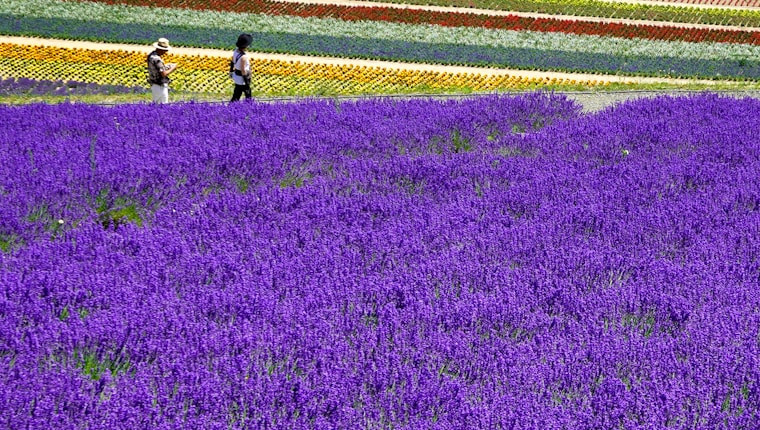
If you can drive only one route in Hokkaido in summer, most travellers give the same answer: Furano and Biei. Lavender farms, striped flower fields, patchwork hills and the unreal blue of the Shirogane Blue Pond — all of it scattered across farm roads and hillsides that buses barely reach and the little JR Furano Line serves only a few times a day. A rental car is the only way to string it all together.
This is the GoodCars route guide to Furano and Biei: driving routes and real drive times from New Chitose Airport and Sapporo, the month-by-month flower calendar, how to link Farm Tomita to the Blue Pond, concrete one-day and two-day plans, and how to behave on Biei's narrow farm roads. For the basics — how renting in Japan works, insurance, documents — see the GoodCars Japan Car Rental Complete Guide and Hokkaido Car Rental Complete Guide; this article stays on the route.
- New Chitose Airport → Furano: about 110–150 km depending on route, 2–2.5 hours
- Lavender window: colour from late June, peak early-to-mid July, cut by mid August
- Furano → Biei on Route 237: about 33 km, 40–45 minutes
- One day covers the highlights — but two days is how this route is meant to be driven
- Biei's farm lanes are narrow, farm vehicles have priority, and never step into the fields
Why Furano & Biei Practically Require a Car
The transport reality first: the JR Furano Line runs a handful of trains a day, and sightseeing buses operate only on limited peak-season dates, stopping at two or three headline spots. Yet the whole point of Furano and Biei is how scattered they are — Farm Tomita sits in Nakafurano, Shikisai-no-oka south of Biei, the Blue Pond out toward Shirogane Onsen, the Patchwork Road north of town. Every pair of stops is a 15–30 minute drive apart. Public transport manages two stops a day; a car strings together five or six with ease.
Better still, the best moments here are usually not the named sights but the roads between them: rolling wheat fields, dead-straight farm roads, a lone tree on a ridge. Stopping wherever it is safe and legal to do so is a privilege only drivers get. GoodCars suggests making Furano–Biei the core leg of your Hokkaido trip, with a day either side for Sapporo or Asahikawa.
Getting There: New Chitose Airport / Sapporo → Furano

Most Furano–Biei road trips start at New Chitose Airport — GoodCars' Hokkaido pickup point — heading straight north after landing. The main options (normal-conditions estimates; allow more in peak summer and much more in winter):
| Leg | Route | Distance / time |
|---|---|---|
| New Chitose Airport → Furano | Doto Expressway (Chitose-Higashi IC → Shimukappu IC), then local roads north | ~110–150 km / ~2–2.5 h |
| New Chitose Airport → Furano | Do-o Expressway (Mikasa IC) → Lake Katsurazawa → Routes 452/38 | ~150 km / ~2 h 15 min |
| Sapporo → Furano | Do-o Expressway (Sapporo IC → Mikasa IC) → Katsurazawa road | ~120 km / ~2–2.5 h |
| Furano → Biei | Route 237 straight north | ~33 km / ~40–45 min |
| Biei town → Blue Pond | Prefectural Road 966 toward Shirogane Onsen | ~17 km / ~20–25 min |
| Blue Pond → Shirahige Falls | Continue toward Shirogane Onsen | ~3 km / ~5 min |
Which way north? In a hurry, take the Shimukappu expressway option; for a scenic drive, take Mikasa and Lake Katsurazawa. One important warning: after leaving the expressway at Mikasa IC there are almost no convenience stores, toilets or petrol stations until Furano — fill the tank and stock up before the hills. The road is winding but easy in summer; winter is a different world entirely — see the winter chapter of the GoodCars Hokkaido Car Rental Complete Guide.
Documents in brief: most nationalities need a 1949 Geneva Convention International Driving Permit (IDP) plus home licence and passport; drivers from Switzerland, Germany, France, Belgium, Monaco, Estonia and Taiwan use their licence with an official Japanese translation instead. Full details in the GoodCars Japan Car Rental Complete Guide.
GoodCars partners with local Japanese suppliers. Book your New Chitose Airport pickup online — transparent pricing, with coverage, ETC card and child seats added in one flow — and drive straight to Furano.
Check New Chitose Airport rental dealsThe Flower Calendar: When to Come

Flowers are the headline act, so the month you choose decides which Furano you get (the pattern below repeats each year; actual bloom shifts with the weather, so check the farms' official flower reports before you go):
- Late June: early lavender varieties start colouring; crowds are still thin — a sweet spot.
- Early to mid July: peak lavender, whole hillsides purple — and the year's peak crowds and room rates. Book cars and rooms early.
- Late July to mid August: lavender is progressively harvested, but poppies, marigolds and salvia keep the striped fields blazing, with sunflowers taking over.
- September: late-season colour plus cosmos; cool weather, far fewer people.
- October to spring: the fields go dormant; the show shifts to autumn foliage and snow (see the off-season chapter below).
Ticket basics: Farm Tomita is free to enter, with free parking; Shikisai-no-oka is open year-round with an admission fee during the flower season (per official announcements), tractor-bus rides extra. GoodCars tip: arrive at Farm Tomita before 9 a.m. on a weekday and both the crowds and the parking stress halve.
Linking the Stops: Farm Tomita to the Blue Pond

Run the stops south to north and you never double back:
- Farm Tomita (Nakafurano): the definitive lavender farm — striped fields, lavender soft-serve, melon stalls. Allow 1–1.5 hours.
- Hinode Park & Kanno Farm (Kamifurano): easy stops along Route 237; the hilltop lavender viewpoint is superb. 30–40 minutes each.
- Shikisai-no-oka (Biei, Panorama Road): the signature striped flower field with the Tokachi peaks behind. About an hour.
- Blue Pond & Shirahige Falls (toward Shirogane Onsen): milky blue water and bare larches, bluest on sunny mornings; the falls are 3 km on. An hour for both.
- Patchwork Road (north Biei): the Ken & Mary tree, the Seven Stars tree and the quilted hills — here the drive itself is the sight. A leisurely loop takes about an hour.
An easy mistake to avoid: the Blue Pond and the Patchwork Road sit on opposite sides of Biei — southeast and northwest — with 20–30 minutes of driving between them. Do not plan them as neighbours.
The One-Day Plan: Highlights at a Sprint
The one-day version suits travellers already staying in Sapporo, Asahikawa or Furano. Picking up at New Chitose the same morning means nearly 5 hours of driving before sightseeing — in that case, do only the Furano side or only the Biei side. A reference plan from Sapporo:
| Time | Plan | Driving |
|---|---|---|
| 07:00 | Leave Sapporo (Do-o Expressway → Mikasa IC → Katsurazawa road) | ~2–2.5 h |
| 09:30 | Farm Tomita: lavender and striped fields | ~1.5 h stay |
| 11:00 | North toward Biei, pausing at Hinode Park in Kamifurano | ~40–60 min |
| 12:00 | Lunch in Biei town (curry udon, pork-bowl) | — |
| 13:00 | Shikisai-no-oka | ~15 min from town |
| 14:30 | Blue Pond + Shirahige Falls | ~25–30 min |
| 16:00 | Loop the Patchwork Road by car | ~30 min to north Biei |
| 17:00 | Return to Sapporo (or head south toward your drop-off) | ~2.5 h |
The trade-off is plain: every stop becomes a drive-by, and you spend the best afternoon light on the road. GoodCars' honest take — if you can possibly spare the night, read on.
The Two-Day Plan: How This Route Is Meant to Be Driven

Day 1 | New Chitose Airport → the Furano side: pick up in the morning and drive north (2–2.5 h), reaching Nakafurano around midday. Spend the afternoon on the Furano side: Farm Tomita → Hinode Park → Furano town (cheese factory, winery, Ningle Terrace). Stay overnight in Furano or Biei; try the local robata grill or soup curry for dinner.
Day 2 | The Biei side → home: leave at 8 a.m. and take the Blue Pond first, when the light is best and the car park emptiest (mornings are bluest), plus Shirahige Falls; then Shikisai-no-oka, lunch in Biei town, a slow afternoon on the Patchwork Road, and the drive back toward New Chitose in the early evening (2.5–3 h — leave margin for refuelling and returning the car).
The other win of the two-day plan is flexibility: on a grey day, shift the Blue Pond to whenever the light improves; on a peak-July weekend, revisit Farm Tomita right at opening on Day 2 before the daytime crowds. With a third day, continue to Asahikawa (Asahiyama Zoo, ~40 minutes) or the Tokachidake observation point and turn the route into a loop.
Driving Biei's Hills: Etiquette, Fuel and Supplies

Biei's scenery is farmland at work, not a stage set. GoodCars asks every renter to keep these rules:
- Never step into a field. Not one step — soles can carry crop disease, and in bad cases an entire harvest must be destroyed. This is the number-one source of tourism friction in Biei. Photograph from the road.
- Some farm lanes are closed to cars (the lane by the Oyako trees, for example). Respect 立入禁止 / 車両進入禁止 signs even when the sat-nav points you in.
- Do not stop on farm lanes or shoulders for photos. Tractors and trucks have priority; blocking a lane blocks someone's workday. Park at the proper lots and walk.
- Curves, crests and short sightlines everywhere — slow down for oncoming cars, and watch for foxes and deer at dawn and dusk.
- The Blue Pond car park is automated, a few hundred yen per visit for regular cars (per official announcements). It fills by mid-morning in season; early is the only fix.
Fuel and supplies
Furano and Biei both have petrol stations in town, but the hill country, the Shirogane Onsen road and the Mikasa–Furano mountain stretch have essentially none, and rural stations close early. Follow the Hokkaido rule: refuel whenever the gauge passes half, and fill up near Chitose before returning the car, keeping the receipt. Convenience stores cluster in the two towns and along Route 237 — stock water and snacks before heading into the hills.
Is It Worth Coming Outside Flower Season?

The honest answer: yes, but it is a different trip.
- Autumn (late September–October): golden hills, foliage around the Blue Pond, crowds gone, room rates down — the photographers' quiet season. Road conditions match summer; fine for first-timers.
- Winter (November–early April): snow hides the pond's blue, but a seasonal evening illumination runs after sunset (dates per official announcements), and the snowfields and frosted trees are their own spectacle. However — this route in winter is snow driving end to end, and the Katsurazawa mountain road and Biei's lanes are a real risk without winter experience. GoodCars' position matches the Hokkaido Car Rental Complete Guide: without snow-driving experience, use JR and buses in winter and save the road trip for summer and autumn.
- Spring (May–mid June): melting snow, fresh green and shibazakura, with the big fields still waking up — for travellers who want the roads to themselves.
Peak lavender fortnight is the tightest rental window of the Hokkaido year. GoodCars' New Chitose Airport pickup: car, CDW and NOC coverage, ETC card and child seats in one online flow, in plain English. Plan set? Book the car.
Book your Hokkaido rental car nowFAQ
Q1. When is the lavender at its best?
The yearly pattern: colour from late June, peak in early-to-mid July, harvest finished by mid August. Mid-July weekends are the crowd peak — go on a weekday if you can, and check the farms' official bloom reports before travelling.
Q2. How long is the drive from New Chitose Airport to Furano?
About 110–150 km depending on route, 2–2.5 hours: the Doto Expressway via Shimukappu when in a hurry, or the Do-o Expressway via Mikasa and Lake Katsurazawa for scenery. After Mikasa IC there are almost no supply points — refuel and stock up first.
Q3. Can I do Furano and Biei in one day?
From Sapporo or Asahikawa, yes — the four headline stops at about an hour each, at a sprint. Same-day return from New Chitose is not recommended: nearly 5 hours of driving; do one side only. If you can stay a night, the two-day version is a different experience.
Q4. Does the Blue Pond charge admission? What about parking?
The pond itself is free; the car park is automated, a few hundred yen per visit for regular cars (per official announcements). Arrive before 9 a.m. in season, and pair it with Shirahige Falls 3 km on.
Q5. I don't speak Japanese — how do I set the navigation?
Japanese car navis work best with a phone number or Mapcode, both listed on every sight's official page. Google Maps works too, but in Biei's hills it sometimes picks narrow farm lanes — if the road shrinks, do not follow. Ask the counter staff to set your first destination at pickup.
Q6. How bad are the crowds and parking in season?
On peak-July weekends, Route 237 around Farm Tomita clogs and the Blue Pond car park fills from mid-morning. The three fixes: weekdays, early starts (before 9 a.m. at each stop), and staying locally. Outside those windows the route barely jams at all.
Q7. I've never driven on snow — can I drive to the winter illumination?
GoodCars' honest answer: no. The route is packed snow and ice end to end in winter, and driving mountain roads at night after the illumination doubles the risk for first-timers. Use JR, buses or an illumination shuttle tour in winter — and keep the self-drive version for summer and autumn.