'%3e%3cpath%20fill='red'%20d='M0%200h720v480H0z'/%3e%3cpath%20fill='%23000095'%20d='M0%200h360v240H0z'/%3e%3cg%20fill='%23fff'%3e%3cpath%20d='m154%20126.9-2.5%209.6%209.4%202.6-1.8-7.1zm46.9%205.1-1.8%207.1%209.4-2.6-2.5-9.6zm-41.8-24-5.1%205.1%201.9%206.9z'/%3e%3cpath%20d='m155.9%20120-1.9%206.9%205.1%205.1z'/%3e%3cpath%20d='m154%20113.1-6.9%206.9%206.9%206.9%201.9-6.9zm14%2027.8%205.1%205.1%206.9-1.9zm18.9%205.1%209.6%202.5%202.6-9.4-7.1%201.8z'/%3e%3cpath%20d='m192%20140.9%207.1-1.8%201.8-7.1zm-31.1-1.8%202.6%209.4%209.6-2.5-5.1-5.1zm19.1%205%206.9%201.9%205.1-5.1z'/%3e%3cpath%20d='m173.1%20146%206.9%206.9%206.9-6.9-6.9-1.9zm-12.2-45.1-9.4%202.6%202.5%209.6%205.1-5.1zm-1.8%2031.1%201.8%207.1%207.1%201.8zm45-12%201.9-6.9-5.1-5.1z'/%3e%3cpath%20d='m168%2099.1-7.1%201.8-1.8%207.1zm32.9%208.9-1.8-7.1-7.1-1.8zm5.1%2018.9%206.9-6.9-6.9-6.9-1.9%206.9z'/%3e%3cpath%20d='m200.9%20108-8.9-8.9-12-3.2-12%203.2-8.9%208.9-3.2%2012%203.2%2012%208.9%208.9%2012%203.2%2012-3.2%208.9-8.9%203.2-12z'/%3e%3cpath%20d='m200.9%20132%205.1-5.1-1.9-6.9zm5.1-18.9%202.5-9.6-9.4-2.6%201.8%207.1zm-6.9-12.2-2.6-9.4-9.6%202.5%205.1%205.1zm-26-6.9-9.6-2.5-2.6%209.4%207.1-1.8zm6.9%201.9-6.9-1.9-5.1%205.1z'/%3e%3cpath%20d='m186.9%2094-6.9-6.9-6.9%206.9%206.9%201.9z'/%3e%3cpath%20d='m192%2099.1-5.1-5.1-6.9%201.9zM173.1%20146l-9.6%202.5%204.5%2016.6%2012-12.2zm-5.1%2019.1%2012%2044.9%2012-44.9-12-12.2zm-7.1-26-9.4-2.6-4.4%2016.4%2016.4-4.4z'/%3e%3cpath%20d='m147.1%20152.9-12%2045.1%2032.9-32.9-4.5-16.6zm-12-20.9L102%20165.1l45.1-12.2%204.4-16.4z'/%3e%3cpath%20d='m154%20126.9-6.9-6.9-12%2012%2016.4%204.5zm0-13.8-2.5-9.6-16.4%204.5%2012%2012z'/%3e%3cpath%20d='M135.1%20108%2090%20120l45.1%2012%2012-12zm90%2024-16.6%204.5%204.4%2016.4%2045.1%2012.2z'/%3e%3cpath%20d='m199.1%20139.1-2.6%209.4%2016.4%204.4-4.4-16.4zm-12.2%206.9-6.9%206.9%2012%2012.2%204.5-16.6zm19.1-19.1%202.5%209.6%2016.6-4.5-12.2-12z'/%3e%3cpath%20d='m192%20165.1%2033.1%2032.9-12.2-45.1-16.4-4.4zm7.1-64.2%209.4%202.6%204.4-16.4-16.4%204.4z'/%3e%3cpath%20d='M225.1%20108%20258%2075.1l-45.1%2012-4.4%2016.4zm-12.2-20.9L225.1%2042%20192%2075.1l4.5%2016.4zm12.2%2044.9%2044.9-12-44.9-12-12.2%2012z'/%3e%3cpath%20d='m206%20113.1%206.9%206.9%2012.2-12-16.6-4.5zm-38-38L135.1%2042l12%2045.1%2016.4%204.4z'/%3e%3cpath%20d='m160.9%20100.9%202.6-9.4-16.4-4.4%204.4%2016.4z'/%3e%3cpath%20d='m147.1%2087.1-45.1-12%2033.1%2032.9%2016.4-4.5zm39.8%206.9%209.6-2.5-4.5-16.4-12%2012z'/%3e%3cpath%20d='M192%2075.1%20180%2030l-12%2045.1%2012%2012z'/%3e%3cpath%20d='m173.1%2094%206.9-6.9-12-12-4.5%2016.4z'/%3e%3c/g%3e%3ccircle%20cx='180'%20cy='120'%20r='51.1'%20fill='%23000095'/%3e%3ccircle%20cx='180'%20cy='120'%20r='45.1'%20fill='%23fff'/%3e%3c/g%3e%3c/svg%3e)
'%20d='m0%200%2016%2011h61%2061%2061%2061%2060L47%2037h61%2061%2060%2061L16%2063h61%2061%2061%2061%2060L47%2089h61%2061%2060%2061L16%20115h61%2061%2061%2061%2060L47%20141h61%2061%2060%2061L16%20166h61%2061%2061%2061%2060L47%20192h61%2061%2060%2061L16%20218h61%2061%2061%2061%2060L0%200'/%3e%3c/svg%3e)

'%20d='M-50-12v24m6%200v-24m6%200v24m76%200V1m0-2v-11m6%200v11m0%202v11m6%200V1m0-2v-11'/%3e%3cpath%20transform='rotate(-33.69006752598)'%20d='M-50-12v24m6%200V1m0-2v-11m6%200v24m76%200V1m0-2v-11m6%200v24m6%200V1m0-2v-11'/%3e%3c/g%3e%3cg%20transform='rotate(33.69006752598)'%3e%3cpath%20fill='%23cd2e3a'%20d='M12%200a18%2018%200%2011-36%200%2024%2024%200%201148%200'/%3e%3cpath%20fill='%230047a0'%20d='M0%200a12%2012%200%201124%200%2024%2024%200%2011-48%200%2012%2012%200%201024%200'/%3e%3c/g%3e%3c/svg%3e)


Hokkaido Car Rental Complete Guide | Four Seasons, HEP Expressway Pass & Long-Distance Planning

If there is one place in Japan where skipping the rental car means missing half the trip, it is Hokkaido. Japan's northern island is vast, its railways connect only the major cities, and its best scenery — the flower fields of Furano, the patchwork hills of Biei, the lakes and wilderness of eastern Hokkaido — sits far from any station. With a car, Hokkaido opens up completely.
Driving here also comes with homework of its own: distances are routinely underestimated, winter roads are a different world entirely, and expressway tolls add up — unless you use a flat-rate pass reserved for foreign visitors. This is the GoodCars complete guide to renting a car in Hokkaido: New Chitose Airport pickup, seasonal road conditions, the HEP expressway pass, and how to plan long distances properly.
- Sparse railways and scattered sights make self-driving the default choice in Hokkaido
- Most visitors need a 1949 Geneva Convention International Driving Permit (IDP) plus home licence and passport
- Don't underestimate distances: New Chitose to Hakodate is about 250 km — keep day plans under 300 km
- HEP: unlimited Hokkaido expressway use for foreign visitors, sold in 4–8 day passes
- Winter rentals usually include studless tires, but snow driving is for experienced drivers only
Why Hokkaido Practically Requires a Car
- Railways cover only the trunk lines. Trains link Sapporo, Otaru, Asahikawa and Hakodate, but the hills of Biei, the lakeshores of Toya and Shikotsu, and most of eastern Hokkaido see a handful of buses a day at best.
- The scenery is an area, not a line. Hokkaido's beauty is scattered across the whole landscape — a viewpoint hill, a dead-straight farm road, a café above the fields. Only a car gets you there, and the freedom to stop is the whole point.
- Luggage and family logistics. Winter coats and boots, camping gear in summer, small children and grandparents — one rental car solves what bus transfers make painful.
GoodCars' honest advice: if your itinerary never leaves central Sapporo, skip the car. The moment you step beyond the city, budget for one.
Documents: What You Need Before You Fly
Japanese rental counters check documents strictly — incomplete paperwork means a refusal on the spot. For most nationalities, you need all three of:
- An International Driving Permit (IDP) under the 1949 Geneva Convention — Japan only recognises this format. IDPs issued under the 1968 Vienna Convention are not valid in Japan.
- Your home driving licence — the IDP is only valid together with the original licence.
- Your passport — you may drive for up to one year from entry, within the validity of your documents.
Picking Up at New Chitose Airport
Nine out of ten Hokkaido road trips start at New Chitose Airport (CTS). After arrival, report to the rental counter as shown on your booking voucher, then ride the company shuttle to the nearby depot — allow 30–60 minutes for the whole process. Practical tips:
- Return with a wide margin. The depot shuttle back to the terminal takes time; leave at least 90 minutes before boarding, more in winter.
- Add buffer in snow season. Shuttles and vehicle checks slow down on snowy days — add 30 minutes each way.
- Photograph the car at pickup. Every scratch, dent and wheel mark — your best protection at return.
- Rent an ETC card at pickup. You will want it for tolls, and it is required for the HEP pass.
GoodCars partners with local Japanese suppliers, and New Chitose Airport pickup can be booked entirely online — transparent pricing, with insurance, ETC card and child seats added in one flow.
Check New Chitose Airport rental dealsHokkaido Is Bigger Than You Think: Distance Planning
Treating Hokkaido like a single city is the classic first-timer mistake. Distances between stops run to hundreds of kilometres. Typical drive times in normal conditions:
| Route | Distance | Drive time (summer) |
|---|---|---|
| New Chitose Airport → Sapporo | ~50 km | ~1 h via expressway |
| New Chitose Airport → Otaru | ~80 km | ~1.5 h |
| New Chitose Airport → Lake Toya | ~90 km | ~1.5 h |
| New Chitose Airport → Furano | ~110 km | ~2 h |
| New Chitose Airport → Asahikawa | ~140 km | ~2 h via expressway |
| New Chitose Airport → Hakodate | ~250 km | ~3.5–4 h |
| New Chitose Airport → Shiretoko (Utoro) | ~370 km | ~5.5 h and up |
The GoodCars rule of thumb: keep each day under 300 km with a break every 90 minutes; in winter, multiply the times above by 1.5 and halve your daily distance. Two Hokkaido-specific notes:
- Wildlife is a daily reality. Ezo deer are most active at dawn and dusk — slow down at animal-warning signs. A collision with an animal counts as an accident: call the police and the rental company.
- Straight does not mean fast. Hokkaido's long, empty straights are exactly where speed enforcement operates.

Fuel: refill at half a tank
Stations are dense around Sapporo, but in eastern and northern Hokkaido the gap between stations can exceed 50 km and rural stations close early. Local habit: once the gauge passes half, take the next station. Most rentals take regular petrol (レギュラー, red pump); return the car full and keep the receipt.
Four Seasons, Four Different Roads

Summer (June–August): the golden season
Long days, dry roads, flowers in full bloom — the friendliest season for first-timers. The Furano lavender and Biei patchwork roads are the classic circuit; cars and rooms sell out, so book early.
Spring (April–May) and Autumn (September–October): fewer crowds
Spring brings clean roads, leftover snow on the peaks and fresh green below; autumn foliage burns down from the Daisetsuzan range to the lakes — Sounkyo and Lake Shikotsu are famous spots. Fewer tourists, lower prices: GoodCars' quiet favourite. Watch for early-morning frost in the hills.

Winter (November–March): beautiful — know your limits

Winter Hokkaido is breathtaking, but GoodCars says this plainly: snow driving is a separate skill. Compacted snow, invisible black ice and whiteout blizzards cause tourist accidents every year. Honest guidance:
- No snow-driving experience? Take JR trains and buses in winter, or save the road trip for summer and autumn. That is the local consensus, not scaremongering.
- If you do drive: the good news is that Hokkaido rentals generally come with studless winter tires as standard in winter, usually at no extra charge (confirm on your plan). Consider a 4WD model.
- Halve daily distances, stick to main roads, and arrive before sunset; mountain passes close in winter — check closure information before setting out.
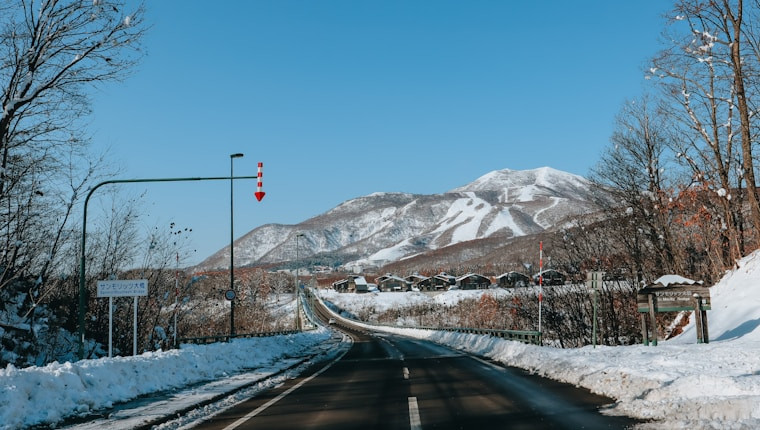
- Triple your following distance. The red-and-white arrows above the roadside (yabane) mark the road edge when snow hides everything.
HEP: Unlimited Expressway Driving for Foreign Visitors

Hokkaido's expressway tolls are not cheap, but foreign visitors hold a trump card — the Hokkaido Expressway Pass (HEP): flat-rate, unlimited use of Hokkaido's expressways for the period. Key rules:
- Eligibility: visitors holding a non-Japanese passport (Japanese citizens with permanent residency abroad also qualify).
- Duration: 4 to 8 days; for longer trips, combine two passes (for example 7 + 4 days).
- Price: roughly ¥7,700 for 4 days up to about ¥15,400 for 8 days — confirm current pricing on the official announcement.
- How to get it: apply at pickup through a participating rental company, together with an ETC card rental (card fee separate).
- Limits: ordinary passenger cars and kei cars only.
The maths is simple: any itinerary with a long leg like Sapporo⇄Hakodate or Sapporo⇄Asahikawa pays for the pass; if you stay around Sapporo and Otaru, plain ETC per-use billing is cheaper. Unsure? Send your route to GoodCars support and we will run the numbers.
Classic Routes That Actually Work

- Central lakes loop (2–3 days): New Chitose → Lake Shikotsu → Lake Toya → Noboribetsu Onsen → Sapporo. Short legs, great roads — the best first Hokkaido drive.
- Furano–Biei line (2–3 days): New Chitose → Furano → Biei → Asahikawa → Sapporo. The summer flower classic, with Asahiyama Zoo on the way.
- Eastern wilderness (4–5 days): New Chitose → Obihiro → Lake Akan → Shiretoko. Hokkaido's ultimate scenery, but nearly 400 km one way — don't force it into too few days.
- Southern Hakodate line (2–3 days): New Chitose → Lake Toya → Hakodate night view → Onuma Park. About 250 km one way; stay a night in Hakodate before turning back.
Whichever line you choose, it starts at New Chitose Airport — book the flight, and let GoodCars have the car ready.
GoodCars' New Chitose Airport pickup: choose your car, CDW and NOC coverage, ETC card and child seats in one online flow, in plain English. Winter fleets run tight — book ahead.
Book your Hokkaido rental car nowFAQ
Q1. What documents do I need to rent a car in Hokkaido?
For most nationalities: a 1949 Geneva Convention IDP, your home licence and your passport — all three together. Drivers from Switzerland, Germany, France, Belgium, Monaco, Estonia and Taiwan instead use their licence plus an official Japanese translation. Licences from mainland China and Indonesia cannot be used in Japan.
Q2. Do winter tires cost extra?
In Hokkaido, rentals in winter are generally fitted with studless tires as standard, usually at no extra charge — unlike much of Honshu where they are a paid option. Confirm on your booking plan; add 4WD if your route includes mountain roads.
Q3. I've never driven on snow. Can I drive Hokkaido in winter?
GoodCars' honest answer: don't. Packed snow, black ice and blizzards are real risks for first-timers. Winter Hokkaido works beautifully with JR trains, buses and day tours — save the road trip for summer or autumn.
Q4. Where do I buy the HEP? Can I add it later?
The HEP must be applied for at pickup through a participating rental company, together with an ETC card; it usually cannot be added afterwards. Decide before you book. Eligibility is limited to visitors with non-Japanese passports.
Q5. How long is the drive from New Chitose Airport to Sapporo?
About 1 hour (~50 km) via the Do-o Expressway; allow 1.5 hours or more in winter. If you land in the evening, stay in Chitose or Sapporo and start the long legs the next morning.
Q6. What if I hit a deer or have an accident?
Whatever the size, call the police first to obtain an accident report, then contact the rental company and follow instructions — without a police report, insurance may not pay. Animal collisions are treated the same way, and downtime can trigger an NOC (non-operation charge); GoodCars recommends taking both CDW and NOC coverage.
Q7. How far should I plan to drive per day?
Under 300 km a day in summer, under 150 km in winter, with a break every 90 minutes. Hokkaido's value lies in the stops along the way — an overstuffed itinerary misses the best of it.