'%3e%3cpath%20fill='red'%20d='M0%200h720v480H0z'/%3e%3cpath%20fill='%23000095'%20d='M0%200h360v240H0z'/%3e%3cg%20fill='%23fff'%3e%3cpath%20d='m154%20126.9-2.5%209.6%209.4%202.6-1.8-7.1zm46.9%205.1-1.8%207.1%209.4-2.6-2.5-9.6zm-41.8-24-5.1%205.1%201.9%206.9z'/%3e%3cpath%20d='m155.9%20120-1.9%206.9%205.1%205.1z'/%3e%3cpath%20d='m154%20113.1-6.9%206.9%206.9%206.9%201.9-6.9zm14%2027.8%205.1%205.1%206.9-1.9zm18.9%205.1%209.6%202.5%202.6-9.4-7.1%201.8z'/%3e%3cpath%20d='m192%20140.9%207.1-1.8%201.8-7.1zm-31.1-1.8%202.6%209.4%209.6-2.5-5.1-5.1zm19.1%205%206.9%201.9%205.1-5.1z'/%3e%3cpath%20d='m173.1%20146%206.9%206.9%206.9-6.9-6.9-1.9zm-12.2-45.1-9.4%202.6%202.5%209.6%205.1-5.1zm-1.8%2031.1%201.8%207.1%207.1%201.8zm45-12%201.9-6.9-5.1-5.1z'/%3e%3cpath%20d='m168%2099.1-7.1%201.8-1.8%207.1zm32.9%208.9-1.8-7.1-7.1-1.8zm5.1%2018.9%206.9-6.9-6.9-6.9-1.9%206.9z'/%3e%3cpath%20d='m200.9%20108-8.9-8.9-12-3.2-12%203.2-8.9%208.9-3.2%2012%203.2%2012%208.9%208.9%2012%203.2%2012-3.2%208.9-8.9%203.2-12z'/%3e%3cpath%20d='m200.9%20132%205.1-5.1-1.9-6.9zm5.1-18.9%202.5-9.6-9.4-2.6%201.8%207.1zm-6.9-12.2-2.6-9.4-9.6%202.5%205.1%205.1zm-26-6.9-9.6-2.5-2.6%209.4%207.1-1.8zm6.9%201.9-6.9-1.9-5.1%205.1z'/%3e%3cpath%20d='m186.9%2094-6.9-6.9-6.9%206.9%206.9%201.9z'/%3e%3cpath%20d='m192%2099.1-5.1-5.1-6.9%201.9zM173.1%20146l-9.6%202.5%204.5%2016.6%2012-12.2zm-5.1%2019.1%2012%2044.9%2012-44.9-12-12.2zm-7.1-26-9.4-2.6-4.4%2016.4%2016.4-4.4z'/%3e%3cpath%20d='m147.1%20152.9-12%2045.1%2032.9-32.9-4.5-16.6zm-12-20.9L102%20165.1l45.1-12.2%204.4-16.4z'/%3e%3cpath%20d='m154%20126.9-6.9-6.9-12%2012%2016.4%204.5zm0-13.8-2.5-9.6-16.4%204.5%2012%2012z'/%3e%3cpath%20d='M135.1%20108%2090%20120l45.1%2012%2012-12zm90%2024-16.6%204.5%204.4%2016.4%2045.1%2012.2z'/%3e%3cpath%20d='m199.1%20139.1-2.6%209.4%2016.4%204.4-4.4-16.4zm-12.2%206.9-6.9%206.9%2012%2012.2%204.5-16.6zm19.1-19.1%202.5%209.6%2016.6-4.5-12.2-12z'/%3e%3cpath%20d='m192%20165.1%2033.1%2032.9-12.2-45.1-16.4-4.4zm7.1-64.2%209.4%202.6%204.4-16.4-16.4%204.4z'/%3e%3cpath%20d='M225.1%20108%20258%2075.1l-45.1%2012-4.4%2016.4zm-12.2-20.9L225.1%2042%20192%2075.1l4.5%2016.4zm12.2%2044.9%2044.9-12-44.9-12-12.2%2012z'/%3e%3cpath%20d='m206%20113.1%206.9%206.9%2012.2-12-16.6-4.5zm-38-38L135.1%2042l12%2045.1%2016.4%204.4z'/%3e%3cpath%20d='m160.9%20100.9%202.6-9.4-16.4-4.4%204.4%2016.4z'/%3e%3cpath%20d='m147.1%2087.1-45.1-12%2033.1%2032.9%2016.4-4.5zm39.8%206.9%209.6-2.5-4.5-16.4-12%2012z'/%3e%3cpath%20d='M192%2075.1%20180%2030l-12%2045.1%2012%2012z'/%3e%3cpath%20d='m173.1%2094%206.9-6.9-12-12-4.5%2016.4z'/%3e%3c/g%3e%3ccircle%20cx='180'%20cy='120'%20r='51.1'%20fill='%23000095'/%3e%3ccircle%20cx='180'%20cy='120'%20r='45.1'%20fill='%23fff'/%3e%3c/g%3e%3c/svg%3e)
'%20d='m0%200%2016%2011h61%2061%2061%2061%2060L47%2037h61%2061%2060%2061L16%2063h61%2061%2061%2061%2060L47%2089h61%2061%2060%2061L16%20115h61%2061%2061%2061%2060L47%20141h61%2061%2060%2061L16%20166h61%2061%2061%2061%2060L47%20192h61%2061%2060%2061L16%20218h61%2061%2061%2061%2060L0%200'/%3e%3c/svg%3e)

'%20d='M-50-12v24m6%200v-24m6%200v24m76%200V1m0-2v-11m6%200v11m0%202v11m6%200V1m0-2v-11'/%3e%3cpath%20transform='rotate(-33.69006752598)'%20d='M-50-12v24m6%200V1m0-2v-11m6%200v24m76%200V1m0-2v-11m6%200v24m6%200V1m0-2v-11'/%3e%3c/g%3e%3cg%20transform='rotate(33.69006752598)'%3e%3cpath%20fill='%23cd2e3a'%20d='M12%200a18%2018%200%2011-36%200%2024%2024%200%201148%200'/%3e%3cpath%20fill='%230047a0'%20d='M0%200a12%2012%200%201124%200%2024%2024%200%2011-48%200%2012%2012%200%201024%200'/%3e%3c/g%3e%3c/svg%3e)


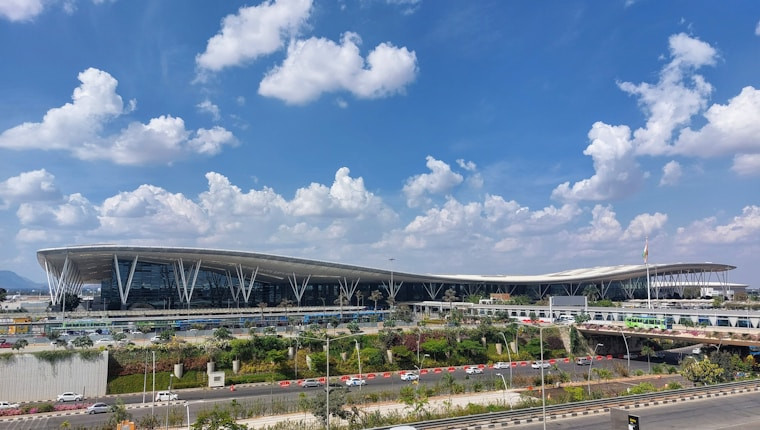
Fukuoka Airport Car Rental Pick-Up Guide | 10-Minute Shuttles & the International Terminal Route

Almost every Kyushu road trip starts in the same place: Fukuoka Airport (FUK). The universal booking-to-return process for renting a car in Japan — documents, insurance, vehicle inspection, refuelling rules — is already covered in the GoodCars complete guide to renting a car in Japan, so this article will not repeat it. It does one job only: walking you through what actually happens at Fukuoka Airport after you land — which terminal the rental counters are really in, how the international and domestic routes differ, how long the shuttle takes, how to join the expressway on your first leg, why evening flights are the real trap, and how much buffer the return needs.
- Fukuoka Airport states it plainly: rental car counters are on the 1st floor of the International Terminal, and there are no rental counters inside the Domestic Terminal — the opposite of most Japanese airports
- The domestic side has no counters but does have each company's rental car pick-up area, where you wait for the shuttle as instructed on your voucher
- After check-in a free shuttle runs to the off-airport depot — roughly 5 to 10 minutes depending on the company
- Fukuoka Airport is unusually close to the city: about 5 minutes by subway to Hakata Station and about 11 minutes to Tenjin — which makes your pick-up timing far more flexible
- Urban expressway ramps sit right beside the airport, and the network connects straight through to the Kyushu Expressway at Dazaifu IC
- The airport has a night curfew (scheduled flights land by about 10pm), but rental depots close even earlier — evening arrivals need their own plan
The big difference: counters are in the International Terminal, not Domestic

If you have rented at New Chitose or most other Japanese airports, unlearn the habit before you arrive in Fukuoka. The airport's own rental car page is unambiguous: rental company counters are located on the 1st floor of the International Passenger Terminal, and there are no rental company counters in the Domestic Passenger Terminal. Eight operators are listed officially (TOYOTA Rent a Car, Nippon Rent-A-Car, Times Car, ORIX, NISSAN, Avis/Budget, NICONICO and SKY), and beyond that you follow your own company's instructions.
For overseas visitors this is good news: you arrive on an international flight, clear customs, walk down to the 1st floor, and the counters are right there — no terminal transfer needed. Two groups do need to plan ahead:
- Arriving on a domestic connection (from Tokyo, Osaka and so on): you will not find rental counters in the Domestic Terminal. Most companies instead operate a rental car pick-up area near the 1st-floor arrivals exits — some designate a spot around a specific lettered exit, others have their own depot a few minutes' walk from the south exit. Some ask you to phone a dedicated pick-up line on arrival. The exact spot differs by company, so follow your voucher.
- Moving between the two terminals: a free inter-terminal connecting bus runs between Domestic and International, taking roughly 10 minutes. During peak hours (about 7am to 6pm) it departs every 5 to 6 minutes; off-peak the gap stretches to 15 to 30 minutes, with the last services around 11pm. Board at the south stop (Stop A) on the domestic side and at Stop A on the international side.
The shuttle route: check in, ride free, collect at the depot

As at most Japanese airports, the vehicles are not parked at the terminal. Depots are spread around the airport perimeter, and the flow is three steps:
- Step one: check in at the 1st-floor counter in the International Terminal — or, on the domestic side, at your company's pick-up area or designated meeting point. Show your voucher, licence and passport.
- Step two: ride the company's free shuttle to the depot. Distances vary, but published figures cluster around 5 to 10 minutes; a few domestic-side depots are close enough to walk in roughly three minutes.
- Step three: paperwork, vehicle inspection, and away you go.
From wheels-down to actually driving, allow 40 to 60 minutes on a good day — immigration and baggage claim alone eat a chunk of that — and more during holidays and peak season. Two habits GoodCars recommends every time: photograph or film every scratch, dent and kerbed wheel during the inspection, because those three minutes are your strongest protection at drop-off; and before pulling out, spend two minutes on the seat and mirrors and locate the wipers and indicators — on a right-hand-drive car the stalks are reversed compared with left-hand-drive markets, and it is better to discover that in the depot car park than at a junction.
GoodCars works with local Japanese suppliers, so you can reserve a Fukuoka Airport pick-up online with transparent pricing — choose your car class, damage waiver, ETC card and child seats in one go, then simply follow the route in this article on the day.
Check Fukuoka Airport rental optionsBeing close to the city is Fukuoka's biggest advantage — use it properly

Fukuoka's most underrated asset is simply where it is. The airport subway station reaches Hakata Station in about 5 minutes and Tenjin in about 11 minutes for a fare in the 260-yen bracket — unusually close by the standards of major Japanese airports. Three ways to turn that into an actual advantage:
- You do not have to collect the car the moment you land. If day one is Hakata, Nakasu and Tenjin, ride the subway into town, then come back for the car the next morning. You skip a night of central-Fukuoka parking, which is not cheap and is often charged separately by hotels.
- The reverse also holds. If you are heading straight for Dazaifu, Yufuin or Aso, collect on arrival — the expressway ramps are next to the airport, so there is no reason to drive into the city first and back out again.
- ⚠️ But the subway station is at the Domestic Terminal. There is no station at the International Terminal, so international arrivals must take the free connecting bus first. Budget those 10 minutes rather than assuming the train is right outside customs.
For the bigger decision — whether this Kyushu itinerary justifies a car at all, and for how many days — the GoodCars complete guide to renting a car in Kyushu has the cross-prefecture drive times and cost structure, so we will not duplicate them here.
Your first leg: the urban expressway onto the Kyushu Expressway

The first twenty minutes are the nerve-wracking part, and Fukuoka is kind to newcomers here: urban expressway ramps sit right beside the airport, so you are not forced to thread through surface streets. Three main directions:
- South (Dazaifu, Kumamoto, Kagoshima): join the Fukuoka Urban Expressway and head towards Tsukiguma, where the network connects directly to the Kyushu Expressway at Dazaifu IC — no need to exit in between. Note that this interchange collects both the NEXCO toll and the urban expressway toll, which an ETC card handles without any fumbling.
- East (Yufuin, Beppu, Oita): same start on the Kyushu Expressway, then branch onto the Oita Expressway at Tosu JCT.
- Into the city (Hakata, Tenjin): a very short hop, but the centre is full of one-way streets and parking is expensive. The GoodCars view is blunt — keep the car for the inter-prefecture legs, not for the city.
Opening hours and evening flights: the curfew is not your real limit

Fukuoka Airport sits beside the city and is ringed by housing, so it operates under a firm night curfew: scheduled flights take off and land between roughly 7am and 10pm, with exceptions only for bad weather, medical emergencies and similar. The good news is that Fukuoka has no genuine red-eye arrivals, which makes it far simpler than New Chitose or Kansai.
The thing that actually catches people out is the depot's own opening hours. Airport-area depots commonly run somewhere in the 8am-to-8pm bracket, and some International Terminal desks close earlier still (around 6pm). In other words, a 9pm arrival lands at a functioning airport whose rental counters shut hours ago. How GoodCars suggests planning it:
- Always enter your flight number when booking, so a modest delay gives the depot a reason to wait or reschedule.
- Landing after 7pm: check whether that pick-up point's hours can absorb it. If not, do not force it — Fukuoka is 5 subway minutes from the city, so staying in Hakata the first night and collecting in the morning costs you almost nothing. That flexibility is Fukuoka's own advantage.
- Early-morning departures: same logic reversed. Return the car the evening before, stay near the airport or Hakata, and ride the subway back.
- Before booking, check that your arrival time plus roughly an hour for immigration and bags still falls inside opening hours. If you are unsure, ask the GoodCars team and we will confirm it for you.
The return leg: fuel, buffer and getting back to your terminal

Work the return backwards: refuel, drop the car, shuttle to the terminal, then check-in and security. The GoodCars rules of thumb:
- Full-tank return: there are stations around the airport and along the main roads, but fill up earlier, in the city or on a main road, rather than gambling on the one nearest the depot being empty. Rental cars normally take Regular petrol, and you must keep the receipt — some companies specify the nearest station to their depot or will not accept self-service receipts, so ask when booking. Return it short and you will usually be charged a refuelling fee based on distance driven.
- Buffer: for international departures, start the return process at least 2 hours before boarding (90 minutes is workable for domestic). You still have the shuttle ahead of you — and if your depot serves the domestic side while you fly international, add another 10 minutes for the inter-terminal bus.
- ⚠️ The terminal mismatch is Fukuoka's classic drop-off trap. Picking up on the international side and returning on the domestic side (or the reverse) does happen. Read the return location carefully when you book and build the connecting bus into your buffer.
- Final check: retrieve the ETC card, clear your belongings and rubbish, confirm the odometer and fuel gauge, and you are on the shuttle within minutes.
Common Fukuoka pick-up problems — and how to avoid them
GoodCars has collected the situations that most often go wrong at Fukuoka Airport into one table. Skim it before you fly:
| What goes wrong | Why it happens | How to avoid it |
|---|---|---|
| No rental counter in the Domestic Terminal | Counters are on the 1st floor of the International Terminal only | On domestic arrivals, go to the pick-up area or call the shuttle line on your voucher |
| Expecting a subway right outside customs | The station is at the Domestic Terminal, not International | Take the free connecting bus first; allow an extra 10 minutes |
| Evening arrival with nowhere to collect | The airport is still open but the depot has closed | Collect the next morning; stay in Hakata, 5 subway minutes away |
| Missing an international departure | Shuttle and inter-terminal bus were not counted | Begin the return at least 2 hours before boarding |
| Charged a refuelling fee | Tank not full, or the receipt was rejected | Fill with Regular on a main road and keep the receipt |
| Wanting KEP after collecting the car | KEP must match the rental period and needs an ETC card | Decide when booking and arrange both at the counter |
| Surprised by a double toll | Dazaifu IC collects NEXCO and urban expressway tolls together | Rent the ETC card so nothing is calculated at the barrier |
Fukuoka runs tight on availability over holidays and peak season, and late bookers are often left with oversized vehicles or nothing at all. Reserve online with GoodCars — car class, insurance, ETC card and child seats in one place — then just follow the route above on the day.
Book your Fukuoka Airport rental carFrequently asked questions
Q1. Which terminal has the rental car counters at Fukuoka Airport?
According to the airport itself, rental company counters are on the 1st floor of the International Passenger Terminal, and there are none inside the Domestic Passenger Terminal. International arrivals simply clear customs and go down to the 1st floor; passengers arriving on domestic connections meet their company's shuttle at the designated pick-up area instead.
Q2. How long from landing to actually driving away?
Around 40 to 60 minutes on a smooth day: immigration and baggage, counter check-in, a 5 to 10 minute shuttle to the depot, then paperwork and inspection. Add another 30 minutes over holidays and in peak season.
Q3. How do I move between the Domestic and International Terminals?
Take the free connecting bus, which takes about 10 minutes. It runs every 5 to 6 minutes at peak times (roughly 7am to 6pm) and every 15 to 30 minutes off-peak, with last services around 11pm. Board at the south stop (Stop A) on the domestic side and at Stop A on the international side.
Q4. Is Fukuoka Airport really that close to the city?
Yes — the airport subway station is about 5 minutes from Hakata Station and about 11 minutes from Tenjin, for a fare in the 260-yen bracket. The station is at the Domestic Terminal, so international arrivals ride the free connecting bus first. That proximity is what lets you choose freely between collecting on arrival or the next morning.
Q5. Can I collect a car late at night?
Scheduled flights operate roughly between 7am and 10pm, so there are no overnight arrivals — but rental depots typically close around 8pm, so a late-evening flight may still leave you without a car. If you land late, stay in Hakata for the first night and collect in the morning.
Q6. How much buffer does the return need?
Start at least 2 hours before boarding for international departures, or about 90 minutes for domestic. If your depot is on the opposite side to your departure terminal, add roughly 10 minutes for the connecting bus. Refuel with Regular beforehand and keep the receipt.
Q7. What is different about booking a Fukuoka pick-up through GoodCars?
You book through the GoodCars interface, then on the day simply report to the counter or meeting point named on your voucher — the on-the-ground route is exactly as described above. Your voucher carries the meeting location and contact details, so a delayed flight or a counter you cannot find can be sorted out immediately.