


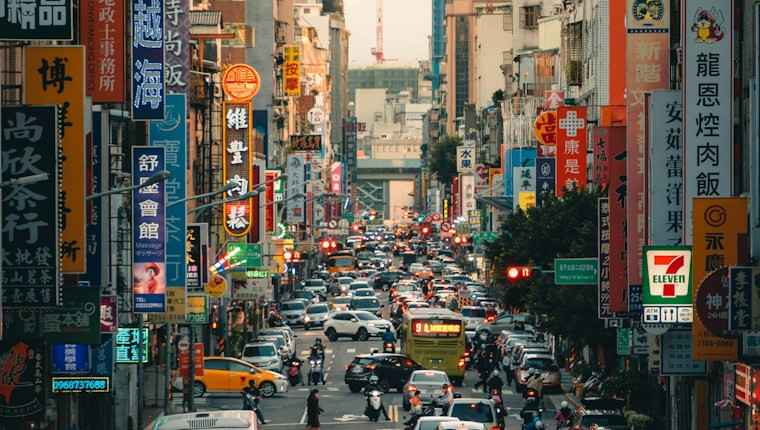
Driving in Taiwan: Complete Traffic Rules Guide for Foreign Drivers

Planning to drive in Taiwan? Whether you're picking up a rental car at Taoyuan International Airport or starting a self-drive road trip from Taipei, understanding Taiwan's traffic rules is essential for a safe, confident journey. This guide covers everything foreign drivers need to know — from which side of the road to drive on, to navigating Taiwan's legendary scooter traffic, speed limits, ETC highway tolls, and key rules that differ from your home country.
Step One: Do You Need an International Driving Permit (IDP)?
Before anything else, confirm whether you need an International Driving Permit (IDP) to legally drive in Taiwan. Most foreign nationals require both their home country license AND an IDP. The IDP must be obtained in your home country before you travel — it cannot be issued in Taiwan.
🌍 Who Needs an IDP to Drive in Taiwan?
- Reciprocity basis: a valid IDP issued by a country with a reciprocal arrangement with Taiwan, plus your original home-country license and passport, lets you drive for up to 30 days after entry; stays of more than 30 days require an IDP endorsement (visa) from a Taiwan motor vehicles office (valid for up to 1 year). Whether a country qualifies is determined by the MOTC Highway Bureau's list of driving-license reciprocity with major countries (Japanese visitors are the exception: bring your Japanese license plus an official Chinese translation — a Japan-issued IDP is not accepted in Taiwan.)
- Check before you go: if your country is not on the Highway Bureau's reciprocity list, an IDP issued there may not be valid in Taiwan — contact GoodCars before booking
- Apply at least 2 weeks before departure through the official issuer in your country (for example AAA in the US or the Post Office in the UK)
- Your IDP must be valid for your whole trip — most are valid for 1 year from the issue date, though some countries issue longer ones — and it must be accompanied by your original home license at all times
🚗 Check the price first
Enter your dates, pick-up branch and car type — GoodCars quotes you instantly online and you can lock the car in without waiting for a reply.
Check rates & bookDrive on the Right Side of the Road
Taiwan follows right-hand traffic — cars drive on the right side, with the steering wheel on the left. This is the same as the US, Europe, and mainland China. If you come from a left-hand traffic country (Japan, UK, Australia, Hong Kong), the first few hours on the road require extra vigilance.
⚠️ Watch Out: Common Mistakes from Left-Side Drivers
- Drifting left after turns: After making any turn, your instinct may pull you to the left lane. Consciously steer right immediately after every turn until the habit resets
- Wrong indicator / wiper stalk: Taiwan cars have the turn signal and wiper on opposite sides from UK/Japanese cars — give yourself time to confirm before your first turn
- Parking lot exits: Without clear lane markings, left-side drivers often instinctively pull left. Pause, confirm, then proceed on the right
- Driving alone is riskier: A co-pilot passenger to remind you makes adapting much faster and safer
Speed Limits in Taiwan

Taiwan speed limits are in kilometers per hour (km/h), shown on white circular signs. Speed cameras are common throughout Taiwan, particularly on national highways and near school zones.
🚗 Taiwan Speed Limits by Road Type
- National Freeway (Guodao / 國道): 100–110 km/h max, 60 km/h minimum (yes, going too slowly on the freeway is also illegal)
- Provincial roads / expressways: 70–90 km/h depending on section
- Urban roads: 50–60 km/h on main roads; 30–40 km/h on smaller streets
- School / hospital / market zones: 30 km/h — marked with "慢速行駛" (slow) signs
- Mountain roads: Posted at 30–40 km/h, often with sharp curves and limited visibility — treat with caution regardless of the posted limit
💡 Fines: speeding is fined under Taiwan's Road Traffic Management and Penalty Act — the further over the limit, the heavier the fine, and serious speeding can lead to license suspension
Critical Traffic Rules You Must Know
Several Taiwan traffic rules differ significantly from other countries — especially those that Americans, British, Japanese, and Korean drivers may assume are universal.
🚦 5 Taiwan Traffic Rules That Surprise Foreign Drivers
- No right turn on red (default rule): Unlike the US, Taiwan prohibits turning right at a red light unless there is a specific green arrow sign permitting it. Fine: per the Road Traffic Management and Penalty Act. This catches many American drivers off guard.
- Yield to pedestrians at crosswalks — strictly enforced: Taiwan has significantly increased enforcement of pedestrian right-of-way. Failing to yield at a marked crosswalk: fine per the Road Traffic Management and Penalty Act + demerit points
- No handheld mobile phone use: Holding your phone while driving is fined per the Road Traffic Management and Penalty Act. Use a mount + voice control (Google Maps hands-free works well)
- Seatbelts: all occupants, all seats: everyone must buckle up, including rear passengers; violations are fined per the Road Traffic Management and Penalty Act
- Zero tolerance for drunk driving: Legal limit is 0.15 mg/L (breath) / 0.03% BAC — well below the 0.08% limit in the US. Fines are imposed under Article 35 of the Road Traffic Management and Penalty Act, with license suspension, and passengers in the car are fined too; 0.25 mg/L (breath) or above is a criminal offence
Taiwan's Scooter Traffic — Unique and Unavoidable

With over 14 million registered scooters for a population of 23 million, Taiwan has one of the highest scooter densities in the world. At red lights, scooters stream to the front of intersections. In traffic, they weave between cars. This is not chaos — it follows predictable patterns. Here's how to share the road safely.
🛵 How to Co-Exist with Scooters in Taiwan
- Scooter waiting boxes at intersections: The box directly in front of the stop line is reserved for scooters. Cars must stop behind the line, not in the scooter box.
- Two-stage left turns (兩段左轉): Scooters at many intersections are required to make left turns in two stages, using a designated waiting area. Cars make normal left turns but be aware of repositioning scooters.
- Check before opening your door: "Dooring" — opening your car door into an oncoming scooter — is a common and serious accident in Taiwan. Always check mirrors and blind spots before opening any door when parked on the street.
- Expect scooters from blind spots: Scooters pass between lanes of slow-moving traffic. Leave buffer space, avoid sudden lane changes, and be patient at intersections.
- Scooter-only lanes: Some roads have designated scooter lanes marked with white dashed lines in a separate area. Cars may not enter these lanes.
🚗 Drive Taiwan with Confidence — GoodCars
GoodCars (固得租車) serves foreign visitors with translation-app support at the branch (some branches can assist in English), pre-installed eTag for highway tolls, and 30+ locations across Taiwan including near Taoyuan Airport and major HSR stations. Economy cars to SUVs available.
Book Your Rental CarHighway Tolls: ETC — No Cash Needed
Taiwan's national freeways (Guodao) are fully cashless electronic toll roads. There are no cash toll booths — gantries overhead read the eTag transponder installed in your vehicle. GoodCars vehicles come with eTag pre-installed. Freeway charges are calculated by distance traveled and settled when you return the car — no action required on your part.
💳 GoodCars ETC Setup — Zero Hassle
- eTag pre-installed in every vehicle: No registration, no top-up, no action needed
- Settled at return: ETC tolls are settled when you return the car; if you need an itemized breakdown, ask the branch staff
- Toll rate: rental cars are charged by actual distance at a flat NT$1.2 per km (the daily 20 km free allowance and long-distance discount do not apply, per the GoodCars FAQ); the exact amount is settled when you return the car
Roundabouts in Taiwan
Taiwan has relatively few roundabouts compared to the UK or Australia, but they appear in some planned cities and mountain road areas. Rules follow international convention: yield to vehicles already in the roundabout, enter when clear, travel counterclockwise, and signal right before your exit.
Parking Rules

🅿️ Parking Color Code in Taiwan
- Red solid lines: Absolutely no parking — your car will be towed immediately. Towing and storage fees apply
- Yellow solid lines: No parking, but brief stopping to drop off/pick up passengers is permitted (engine on, driver in seat)
- White parking bays: Paid parking — either coin meters, parking ticket machines, or city-specific apps
- Best practice for visitors: Use indoor parking lots whenever possible — clear pricing, protection from weather, and no risk of towing
Fuel in Taiwan
Taiwan has three grades of gasoline: 92, 95, and 98 octane, plus diesel. Most rental cars use 95 unleaded gasoline — confirm the fuel type when you pick up your vehicle from GoodCars. GoodCars cars come with a fuel card: when you refuel, ask the attendant to fill up and pay with the card (self-service pumps may not accept it), so there are no fuel bills for you and no need to refuel before return. Gas stations are operated mainly by CPC (China Petroleum Corporation) and Formosa Petrochemical (台塑). You'll find both full-service stations (attendants fill your car) and self-service stations (about NT$2/liter cheaper).
Emergency Contact Numbers
📞 Key Emergency Numbers in Taiwan
- Police: 110
- Fire / Ambulance: 119
- National Freeway hotline for incidents and roadside assistance (free, 24 h): 1968
- Taiwan Tourism Hotline (English service): 0800-011-765
- GoodCars: if the car breaks down or you have an accident, contact your pickup branch first and follow their instructions
Navigation Apps for Driving in Taiwan
📱 Best Navigation Apps for Taiwan
- Google Maps: Most reliable for Taiwan — supports English, pre-download offline maps for remote areas like Taroko Gorge or the East Rift Valley where signal drops
- Waze: Excellent for live traffic updates, speed camera alerts, and freeway routing — popular with locals and useful for weekend freeway congestion avoidance
- Apple Maps: Significantly improved for Taiwan in recent years — good option for iPhone users who prefer seamless CarPlay integration
💡 Download Google Maps Taiwan offline before your trip — mobile signal in mountain areas (Alishan, Hehuan Mountain, Taroko) can be intermittent
Frequently Asked Questions
Q1: Can I turn right at a red light in Taiwan?
No — not by default. In Taiwan, right turns at red lights are prohibited unless a specific green arrow sign explicitly permits it at that intersection. This is different from the US (where right-on-red is generally allowed) and surprises many American drivers.
Q2: How do I pay highway tolls if there are no cash booths?
Taiwan's national freeways are fully electronic. GoodCars vehicles have eTag pre-installed — you simply drive through the gantries normally. Tolls are tallied by distance and settled at car return. No cash, no stops, no action needed.
Q3: What fuel does my rental car use?
Most GoodCars vehicles use 95 octane unleaded gasoline (95 無鉛). Confirm at pickup. Gas stations are widely available throughout Taiwan — look for the green CPC logo or Formosa Petrochemical stations.
Q4: Is it safe to drive on Taiwan mountain roads?
Taiwan mountain roads (to Alishan, Taroko Gorge, Hehuanshan) are winding with steep gradients. Drive at 30–40 km/h, stay in your lane, and use the designated passing areas to let oncoming traffic through. After heavy rain, check road closures — landslides can temporarily block mountain routes.
Q5: What happens if I get a traffic fine?
Traffic fines are mailed to the registered address of the vehicle (the rental company). GoodCars handles fines according to your rental agreement — ask your pickup branch for details. Always drive within the rules to avoid this — Taiwan's speed cameras are frequent.
Q6: What should I do in case of an accident?
Stop safely, turn on hazard lights, photograph damage and license plates, call 110 (police), then contact your pickup branch and follow their instructions. If anyone is injured, call 119 (ambulance) simultaneously. Do not agree to settle privately and leave without a police report — the official report is required for insurance claims.
🌟 Ready to Explore Taiwan by Car?
GoodCars operates 30+ locations across Taiwan — at Taoyuan Airport, Taipei Main Station, and near HSR stations in Taichung, Tainan, and Kaohsiung. Economy sedans to SUVs, and, at staffed branches, staff who use translation apps (some branches can assist in English).
View Car Options & Book Now📸 Photo Credits
All images in this article are sourced from Unsplash (unsplash.com) under their free commercial license, used for illustrative purposes only. They do not depict actual GoodCars vehicles or customers.
⚠️ AI-Assisted Content Notice
This article was written with AI assistance. Traffic regulations, fines, and road conditions in Taiwan may change. Always verify current rules with Taiwan's Directorate General of Highways or the English tourism hotline at 0800-011-765 before your trip. GoodCars reserves the right to adjust rental pricing and terms.